
Oatmeal Molasses Rolls are one of my favorite breads when dinner needs something warm, soft, and homemade without turning the whole day into a baking project. They have a tender crumb, a lightly chewy bite from the oats, and a deep sweetness from molasses that never pushes them into dessert territory.
I especially love making these rolls when soup simmers on the stove or when a simple roast chicken needs something extra on the table. The dough feels forgiving, the ingredients stay familiar, and the smell that fills the kitchen while they bake makes even an ordinary weeknight feel a little cozier.
If yeast bread has ever made you nervous, these Oatmeal Molasses Rolls make a friendly place to start.
- Why You’ll Love These Oatmeal Molasses Rolls
- Ingredients for Soft Oatmeal Molasses Rolls
- How to Make Oatmeal Molasses Rolls
- Yeast Bread Tips That Make a Difference
- Tips for Perfect Oatmeal Dinner Rolls
- Make-Ahead Oatmeal Molasses Rolls
- What to Serve With Oatmeal Molasses Rolls
- How to Store and Reheat Oatmeal Molasses Rolls
- Common Questions
- Your Next Cozy Batch of Homemade Rolls
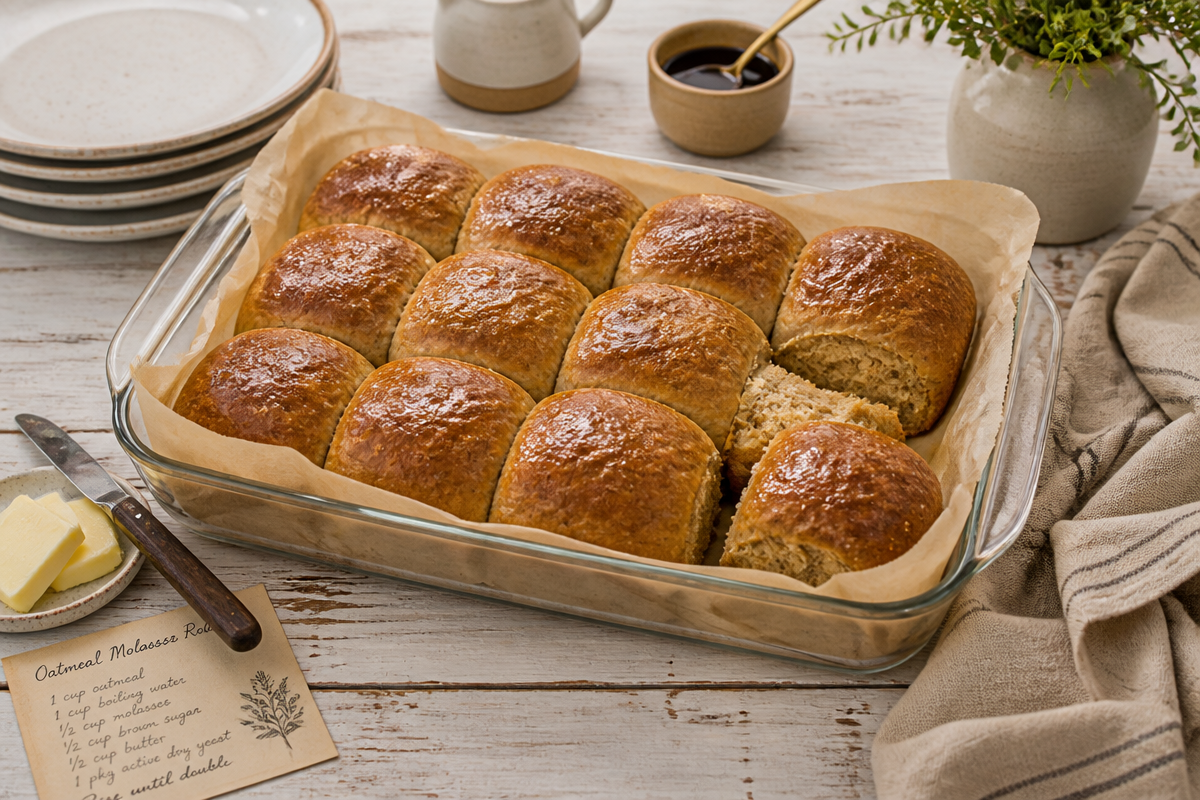
Why You’ll Love These Oatmeal Molasses Rolls
These rolls look rustic, and that’s exactly what I like about them.
They don’t need perfectly shaped tops or complicated techniques. Instead, you shape soft pieces of dough into simple balls, tuck them into a baking dish, and let them rise until they’re puffy enough to touch.
Once baked, they come out golden on top and incredibly soft inside.
Soft, Fluffy Rolls With Deep Molasses Flavor
Molasses gives these rolls more than sweetness.
It brings a dark, warm flavor that works beautifully with oats and butter. Still, the rolls don’t taste overwhelmingly strong because regular molasses has a gentler flavor than blackstrap.
Meanwhile, rolled oats absorb moisture and soften as the dough rests. That keeps the crumb tender without making the rolls feel heavy.
The result lands somewhere between a traditional dinner roll and a hearty oatmeal bread.
They’re wonderful with butter while still warm.
However, they also work beside soups, chili, roasted meats, and holiday dinners.
If homemade rolls always disappear quickly at your table, you may also like my Honey Butter Pull Apart Rolls. For another homemade bread project, Focaccia Bread gives you a completely different texture while still keeping the process approachable.
Why Oats Work So Well in Dinner Rolls
Rolled oats bring a little more structure than flour alone.
However, you don’t want to add them dry and hope for the best.
Instead, soften the oats with warm milk or water before mixing the dough. This short soak allows the oats to absorb moisture early.
Therefore, they don’t pull as much moisture away from the dough later.
Old-fashioned rolled oats give you the most noticeable oatmeal character. Quick oats also work, although they create a slightly smoother texture.
I don’t recommend steel-cut oats here because they stay much firmer and need a different amount of liquid and cooking time.
The oat mixture should look thick and soft after about 10 minutes.
Once you stir in the molasses, it takes on a warm caramel-brown color that eventually gives the baked rolls their rustic appearance.
Ingredients for Soft Oatmeal Molasses Rolls
One reason I return to this recipe is that the ingredients stay simple.
Most of them probably already live in your pantry or refrigerator.
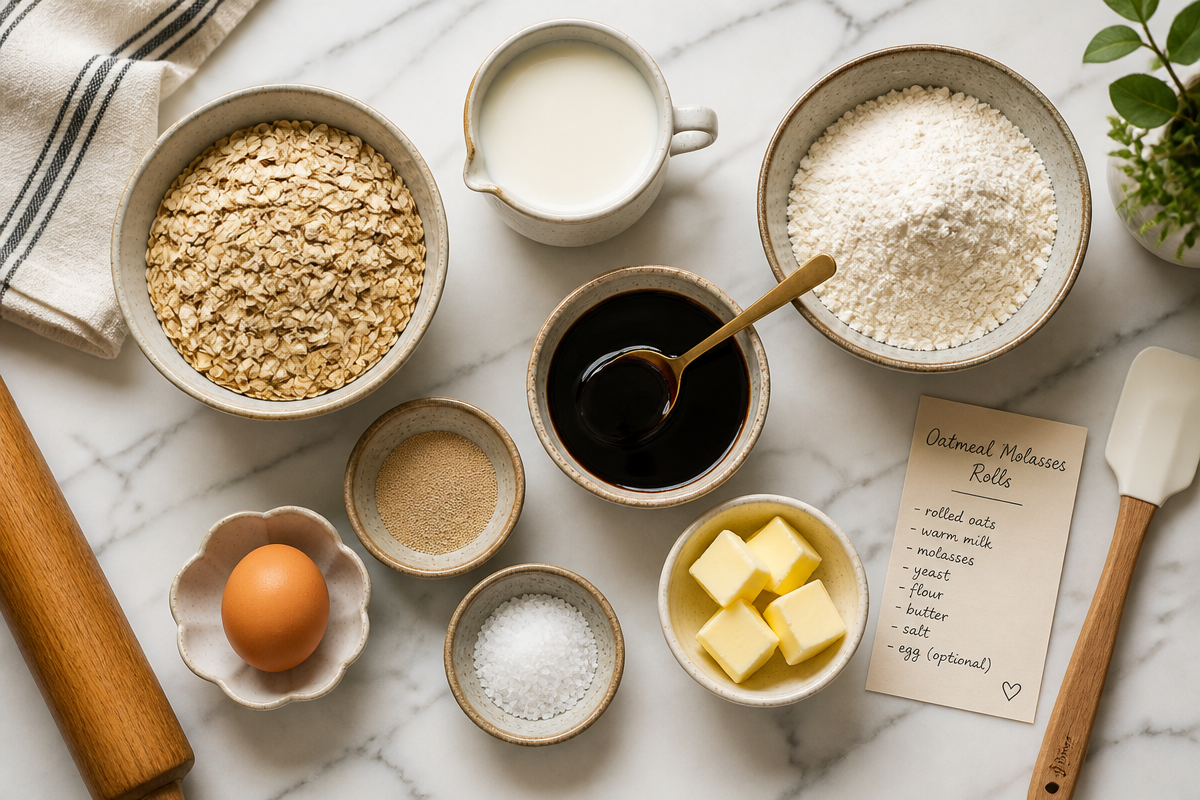
What You’ll Need
For a batch of about 12 to 15 rolls, you’ll need:
- 1 cup old-fashioned rolled oats
- 1 1/4 cups warm milk or warm water
- 1/4 cup regular molasses
- 2 1/4 teaspoons active dry yeast or instant yeast
- 3 to 3 1/2 cups all-purpose flour
- 3 tablespoons melted unsalted butter
- 1 large egg, optional
- 1 1/2 teaspoons salt
- Extra melted butter for brushing
You can use bread flour instead of all-purpose flour.
Bread flour gives the rolls a little more chew, while all-purpose flour keeps them especially tender.
The egg remains optional.
I like using one because it adds richness and gives the dough a little extra structure. Still, the rolls work without it.
| Ingredient | What It Adds | Easy Swap |
|---|---|---|
| Rolled oats | Tender texture and hearty flavor | Quick oats |
| Molasses | Deep sweetness and color | Dark honey for a milder flavor |
| All-purpose flour | Soft bread structure | Bread flour |
| Butter | Richness and soft crumb | Neutral oil |
For another cozy bake built around everyday ingredients, try Cornbread Recipe. If you want something slightly sweeter for breakfast instead, Cranberry Orange Bread makes a lovely option.
Regular Molasses vs. Blackstrap Molasses
For these Oatmeal Molasses Rolls, regular molasses gives the best balance.
It tastes deep and slightly caramel-like without becoming bitter.
Blackstrap molasses tastes much stronger. It also has a darker, more mineral flavor that can easily dominate a soft dinner roll.
If blackstrap is all you have, use less of it and add a little honey or brown sugar.
For example, try 2 tablespoons blackstrap molasses plus 1 to 2 tablespoons honey.
Taste matters here because different brands vary.
The goal is a warm molasses flavor, not a bitter loaf.
How to Make Oatmeal Molasses Rolls
Bread dough becomes much easier when you focus on texture instead of watching the clock every second.
The dough will tell you when it’s ready.
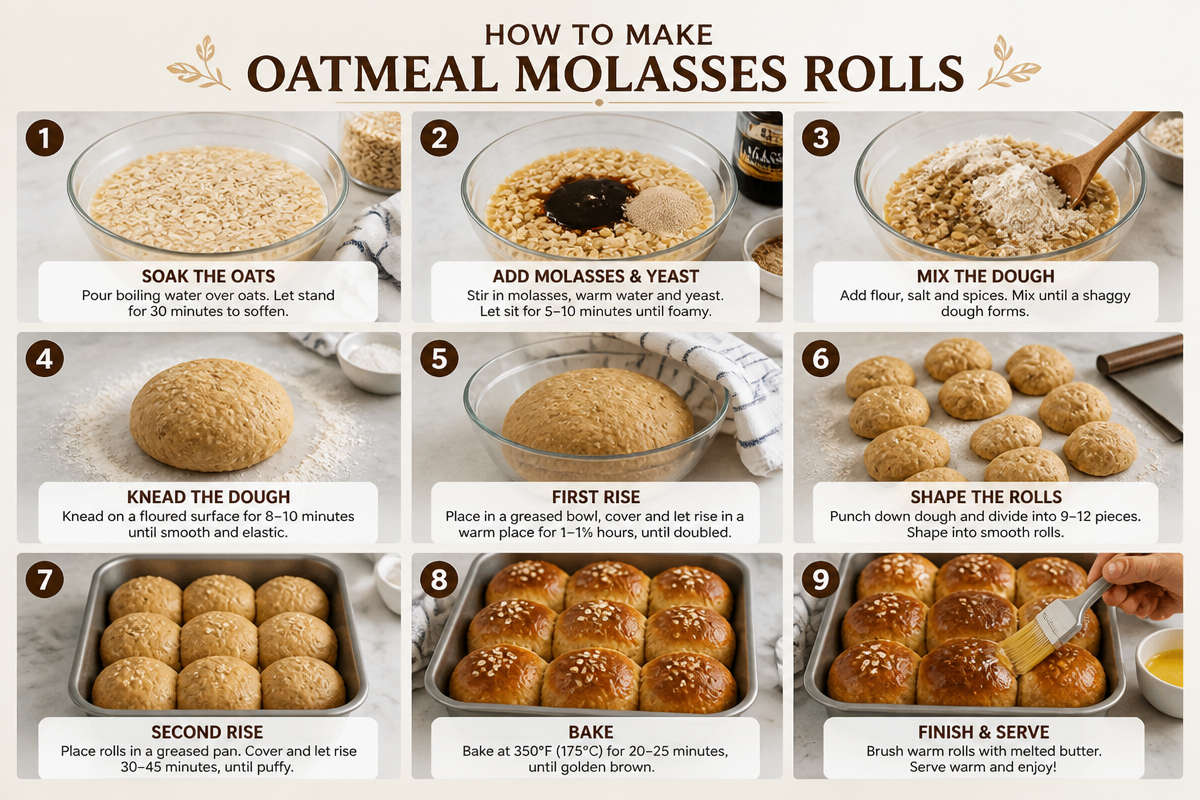
Step-by-Step Directions
1. Soften the oats. Add the rolled oats to a large mixing bowl. Pour warm milk or water over them and stir. Let the mixture sit for about 10 minutes.
The oats should soften and absorb some of the liquid.
2. Add the molasses and yeast. Stir the molasses into the warm oat mixture.
If you’re using active dry yeast, add it now and let the mixture sit for 5 to 10 minutes. You should see some foam on top.
If you’re using instant yeast, you can mix it directly with the flour.
3. Add the butter, salt, and egg. Stir in the melted butter once it has cooled slightly.
Next, add the salt and egg if you’re using one.
4. Add the flour gradually. Start with about 3 cups.
Mix until a soft dough begins to form.
Then add more flour a little at a time only if the dough feels too wet to handle.
The finished dough should remain soft and slightly tacky.
Don’t force it to become completely dry.
5. Knead the dough. Knead by hand for about 6 to 8 minutes, or use a stand mixer with a dough hook.
The dough should gradually feel smoother and more elastic.
6. Let it rise. Place the dough in a lightly greased bowl.
Cover it and leave it in a warm spot until it roughly doubles in size, usually 60 to 90 minutes.
7. Shape the rolls. Gently press down the dough, then divide it into 12 to 15 pieces.
Shape each piece into a smooth ball.
Arrange the balls in a greased 9-by-13-inch baking dish.
8. Let the rolls rise again. Cover the pan and let the rolls rise for about 30 to 45 minutes.
They should look noticeably puffy and may begin touching one another.
9. Bake. Heat the oven to 375°F.
Bake the rolls for about 18 to 24 minutes, or until the tops look golden brown.
If they darken too quickly, loosely cover the pan with foil during the final few minutes.
10. Brush with butter. As soon as the rolls come out of the oven, brush the tops with melted butter.
That final step gives them softer tops and an irresistible buttery finish.
How the Dough Should Feel
Soft dough makes soft rolls.
This sounds simple, but it’s one of the biggest differences between tender dinner rolls and dense ones.
At first, the dough may feel sticky.
That’s normal.
As you knead, the flour hydrates and the dough becomes smoother.
If you keep adding flour every time the dough touches your fingers, you can accidentally make it too stiff.
Instead, add flour slowly.
A slightly tacky dough that releases from the bowl while still feeling soft usually lands in the right place.
Humidity also matters.
On a humid day, you may need a little more flour. During a dry winter afternoon, you may need slightly less.
For another yeast-bread recipe where texture matters just as much, Homemade Garlic Bread makes a useful next baking project.
Yeast Bread Tips That Make a Difference
Yeast doesn’t need complicated treatment.
It mainly needs reasonable warmth, enough time, and dough that isn’t overloaded with flour.
How Warm Should the Liquid Be?
Your milk or water should feel comfortably warm.
If it feels painfully hot, it’s too hot for yeast.
For active dry yeast, warm liquid helps wake it up.
After about 5 to 10 minutes, you should notice bubbles or foam forming.
If nothing happens, your yeast may be old.
The liquid may also have been too hot or too cool.
When using instant yeast, you don’t need to bloom it first. Still, warm liquid helps the dough begin rising sooner.
How to Tell When the Dough Has Risen Enough
Don’t rely only on minutes.
Kitchen temperatures change throughout the year, so rising time can shift quite a bit.
Instead, look for volume.
During the first rise, the dough should grow to about twice its original size.
Gently press one finger into the dough.
If the indentation slowly begins filling back in, the dough is usually ready.
If it springs back immediately, give it more time.
During the second rise, the rolls should look soft and puffy.
They don’t need to double perfectly.
However, they should clearly look larger than when you first shaped them.
This second rise matters because it gives you that fluffy pull-apart texture.
Tips for Perfect Oatmeal Dinner Rolls
A few small choices make these rolls much more dependable.
Don’t Add Too Much Flour
Flour varies depending on how you measure it.
Scooping directly from a flour container can pack extra flour into the cup.
Instead, spoon flour into the measuring cup and level the top.
Better yet, add flour gradually as the dough comes together.
Stop when the dough becomes soft and workable.
A slightly sticky dough may feel inconvenient, but it usually bakes into a more tender roll.
Give the Second Rise Enough Time
The second rise gives shaped rolls their airy interior.
If you bake them too early, they may still taste good, but they can come out tighter.
Let the rolls become visibly puffy.
In a warm kitchen, this may happen in 30 minutes.
In a cooler kitchen, it might take closer to an hour.
For another soft homemade bread with a gentle rise, Sourdough Discard Bread makes a great recipe to keep nearby.
Make-Ahead Oatmeal Molasses Rolls
These rolls work especially well for holidays because you can shape them ahead.
Overnight Refrigerator Method
Make the dough and complete the first rise.
Next, shape the rolls and place them in the baking pan.
Cover the pan tightly and refrigerate overnight.
The next day, remove the pan from the refrigerator and let the rolls sit at room temperature until they look puffy.
Depending on your kitchen, this may take 45 to 90 minutes.
Then bake them at 375°F as directed.
This method works nicely when you want fresh rolls for dinner without spending the entire afternoon waiting on dough.
Can You Freeze Them?
Yes.
I prefer freezing baked rolls instead of raw dough.
Let the rolls cool completely.
Then place them in a freezer-safe bag or airtight container.
Freeze for up to about 2 months for the best texture.
When you’re ready to serve them, thaw at room temperature.
Then wrap the rolls loosely in foil and warm them in a low oven.
Brush with a little butter after reheating if you want them to taste especially fresh.
What to Serve With Oatmeal Molasses Rolls
These rolls can go almost anywhere a classic dinner roll would.
Their mild molasses sweetness pairs especially well with savory, cozy meals.
Soups, Chicken, and Comfort Food
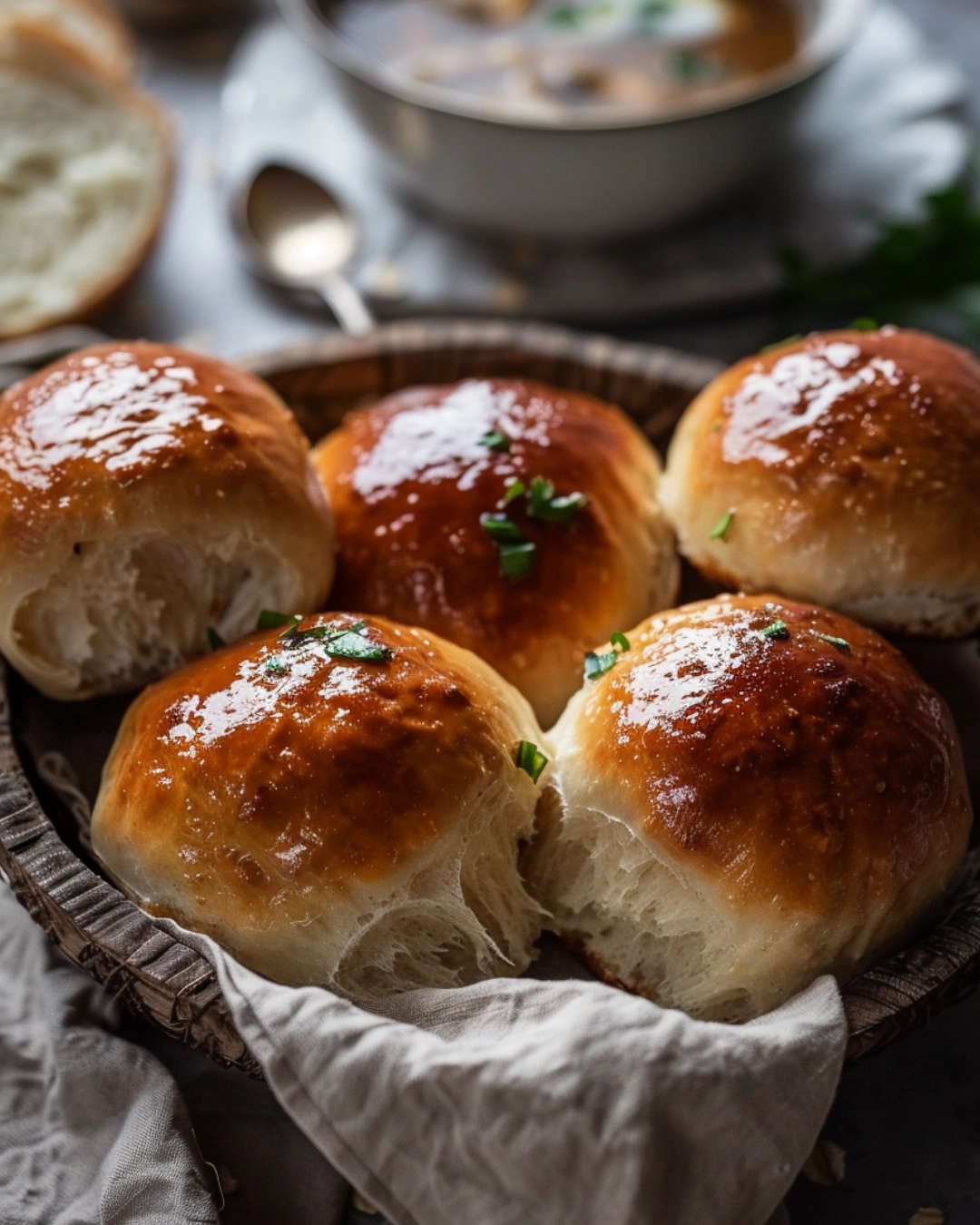
Serve them beside soup and use the soft interior to soak up every last spoonful.
For example, Chicken and Mushroom Soup pairs beautifully with warm rolls.
They also work beside roast chicken, turkey, pot roast, chili, and stews.
For a heartier meatless meal, pair them with High Protein Lentil and Spinach Soup.
The slight sweetness in the molasses balances savory broth particularly well.
Butter, Honey, and Leftover Ideas
Freshly baked rolls don’t need much.
A swipe of salted butter does the job.
However, you can also serve them with honey butter, cinnamon butter, or apple butter.
The next morning, split leftover rolls and toast them lightly.
They make a great base for eggs.
You can also use them for little chicken sandwiches or mini breakfast sandwiches.
Because the rolls stay fairly soft, they’re especially good for sliders.
How to Store and Reheat Oatmeal Molasses Rolls
Homemade bread tastes best fresh, but these rolls hold up surprisingly well.
Room Temperature Storage
Let the rolls cool completely.
Then place them in an airtight container or sealed bag.
Keep them at room temperature for about 2 to 3 days.
Avoid refrigerating them unless necessary because the refrigerator can make bread stale faster.
Best Reheating Method
For one roll, microwave it for about 10 to 15 seconds.
For several rolls, wrap them loosely in foil and warm them in a 300°F oven for about 10 minutes.
A tiny brush of butter after warming brings back that fresh-from-the-oven feeling.
Common Questions
Can I make Oatmeal Molasses Rolls without an egg?
Yes. The egg adds a little richness, but the rolls still turn out soft without it.
What if I only have quick oats?
You can use them. The texture is slightly less hearty, but the rolls will still be tender and tasty.
Can I use whole wheat flour?
Yes, but I recommend starting with half whole wheat and half all purpose. All whole wheat can make them heavier unless you add a bit more liquid.
Why did my rolls turn out dense?
Most often it’s too much flour or not enough rising time. Next time, keep the dough softer and let it rise until it looks truly puffy.
Can I freeze these rolls?
Absolutely. Freeze them baked and cooled in a freezer bag. Thaw at room temp, then warm in the oven still wrapped in foil.
Your Next Cozy Batch of Homemade Rolls
Oatmeal Molasses Rolls bring together everything I want from homemade dinner bread: soft centers, golden tops, subtle sweetness, and a little heartiness from the oats.
More importantly, they don’t demand perfection.
Keep the dough soft, give it enough time to rise, and don’t rush the second proof. Then brush those warm tops with butter as soon as they leave the oven.
Serve them with soup, chicken, chili, or simply tear one open while it’s still warm and add a generous smear of butter.
For other approaches to this style of bread, you can also read Food52’s Heavenly Oatmeal-Molasses Rolls, Sally’s Baking Addiction’s Oatmeal Molasses Dinner Rolls, and The Wimpy Vegetarian’s Oatmeal Rolls with Molasses.
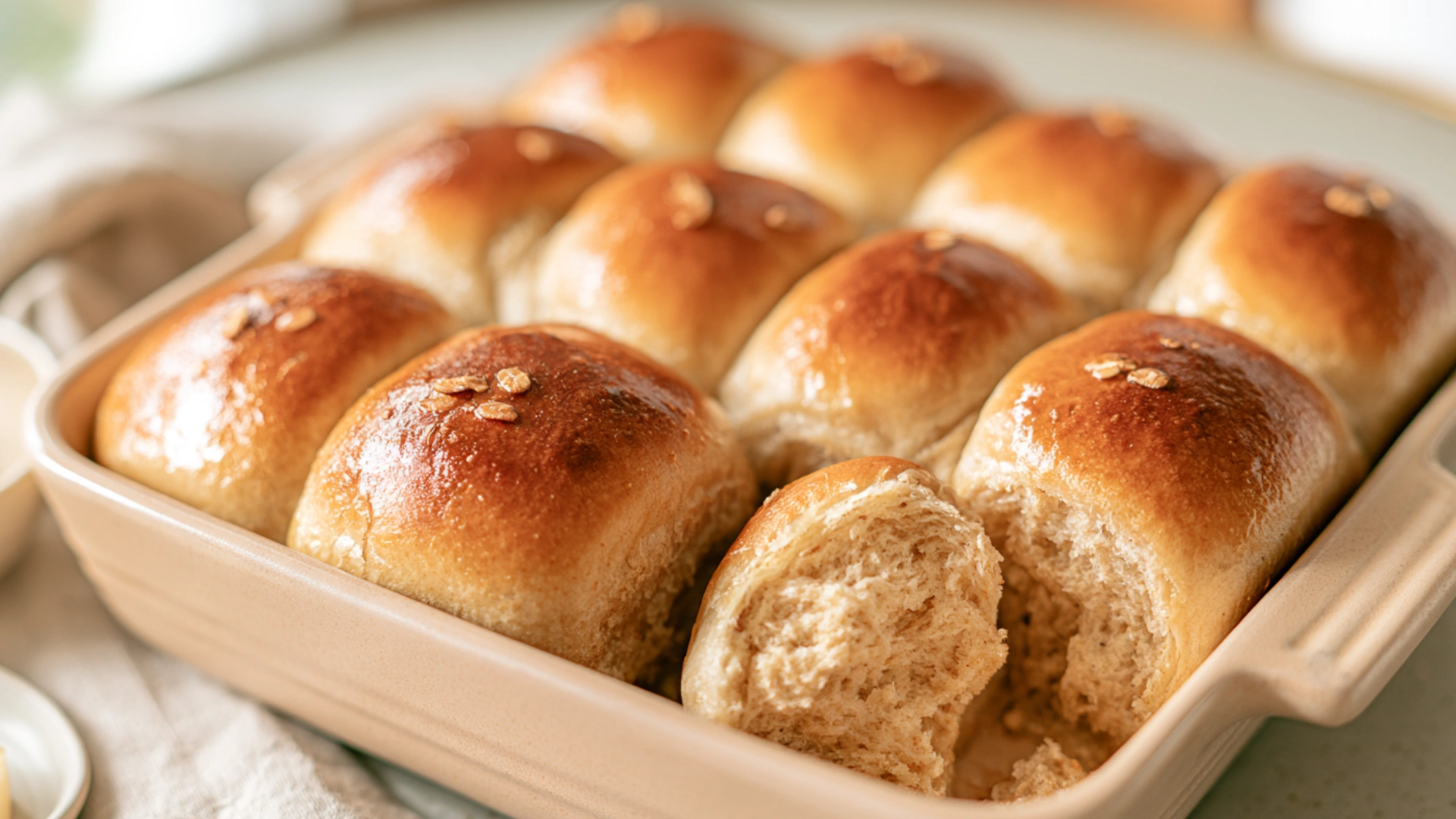

Oatmeal Molasses Rolls
Ingredients
Method
- Soften the oats by pouring warm water or milk over them and letting them sit for about 10 minutes.
- Stir in the molasses and add the yeast. If using active dry yeast, let it get foamy. For instant yeast, mix it with the flour.
- Mix in melted butter, salt, and the egg (if using). Gradually add flour until a soft dough forms.
- Knead the dough by hand or with a mixer until smooth and elastic, about 6 to 8 minutes.
- Place the dough in a greased bowl, cover it, and let it rise until doubled in size, about 60 to 90 minutes.
- Punch down the dough, divide it into 12 to 15 equal pieces, and shape each piece into a ball.
- Place the shaped rolls in a buttered baking dish and cover them to let puff up for 30 to 45 minutes.
- Preheat the oven to 375°F (190°C). Bake the rolls for 18 to 24 minutes until golden and sounding hollow when tapped.
- Brush with melted butter immediately after removing from the oven.