
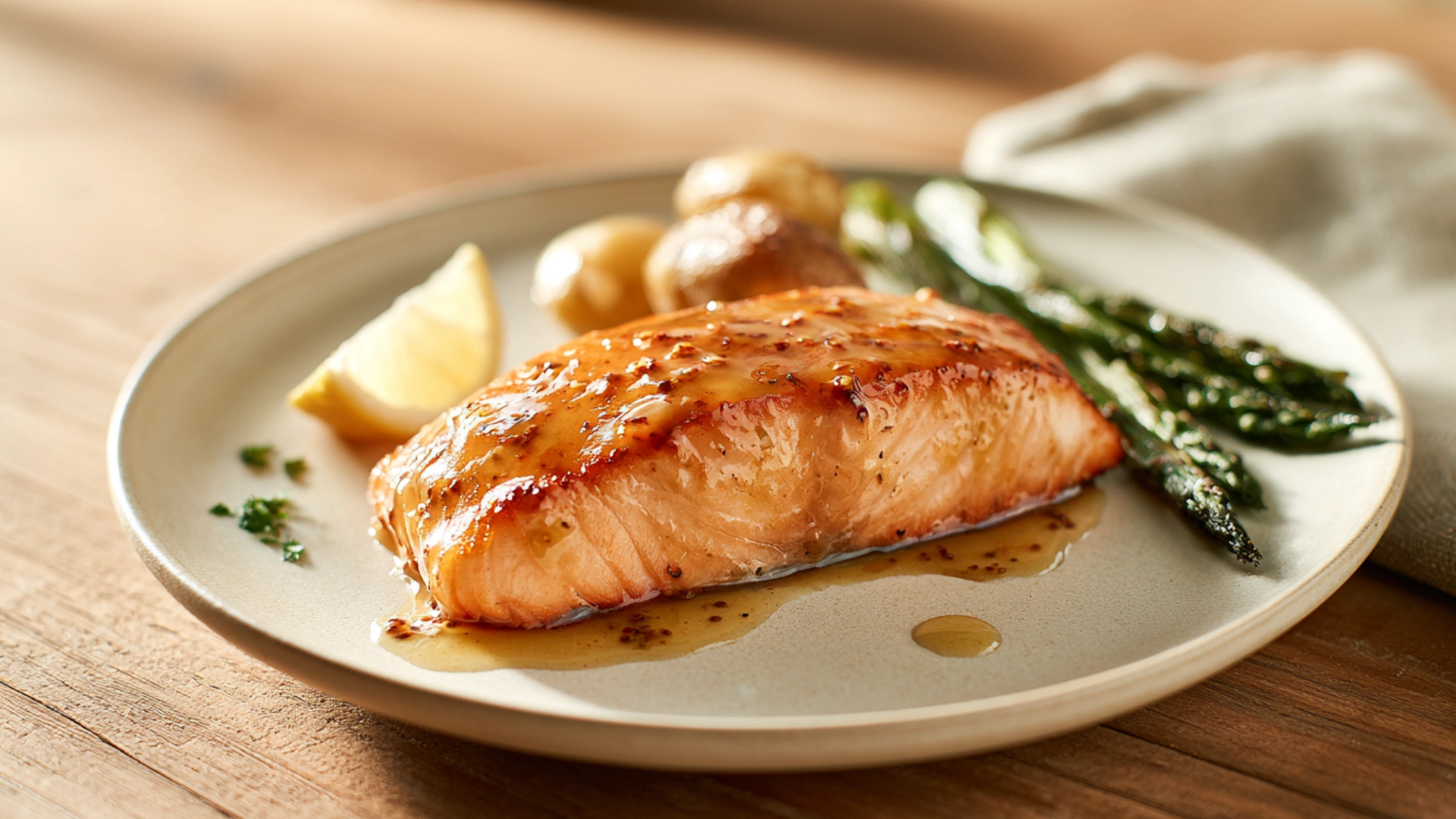
Honey Mustard Salmon is my go to dinner for those nights wheHoney Mustard Salmon: Easy 30-Minute Weeknight Dinner
Honey Mustard Salmon is one of my favorite dinners for nights when I want something that feels special without spending an hour at the stove. The salmon cooks quickly, the glaze comes together in minutes, and the sweet-tangy honey mustard sauce does most of the flavor work for you. Better yet, you can make this recipe in a skillet or bake it in the oven, depending on how much attention you want to give dinner.
I started making this salmon on busy evenings when I wanted real food but had almost no patience left for complicated cooking. After a few tries, I learned that a thick salmon fillet, a hot pan, and a balanced glaze can turn a simple dinner into something I actually look forward to. The salmon stays juicy and flaky, while the honey mustard sauce turns glossy and slightly sticky around the edges.
If salmon sometimes feels boring, this Honey Mustard Salmon recipe may change your mind.
- How to Make Honey Mustard Salmon in 30 Minutes
- The Best Honey Mustard Sauce for Salmon
- Skillet or Oven Honey Mustard Salmon
- How to Tell When Honey Mustard Salmon Is Done
- What to Serve With Honey Mustard Salmon
- Storing, Reheating, and Making Honey Mustard Salmon Ahead
- Common Questions
- Easy Honey Mustard Salmon for Busy Weeknights
How to Make Honey Mustard Salmon in 30 Minutes
The best part about this recipe is how little prep it needs. You don’t need special equipment or a long ingredient list.
I usually buy salmon fillets that measure around 1 to 1 1/2 inches thick. Thicker fillets give you a little more room for error because they stay juicy while the outside browns.
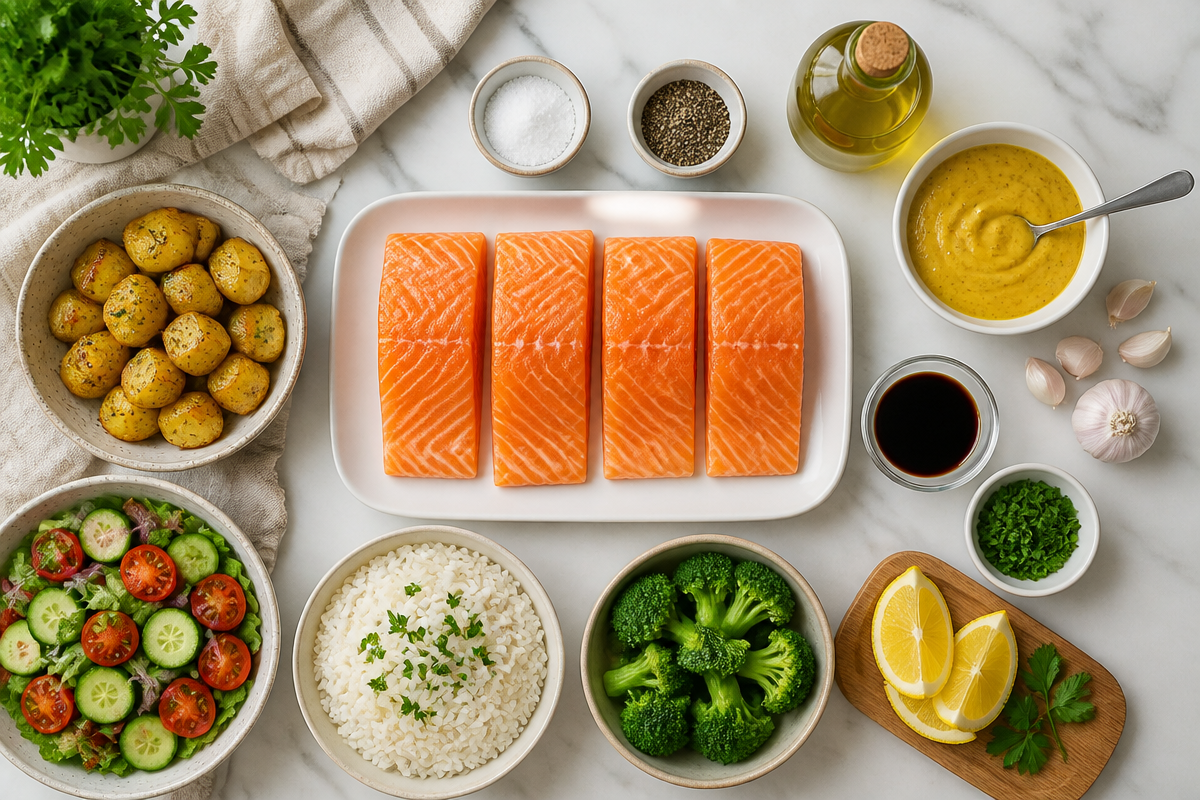
Ingredients You’ll Need
For four servings, gather:
- 4 salmon fillets, about 5 to 6 ounces each
- Salt, to taste
- Black pepper, to taste
- 1 tablespoon olive oil or melted butter
- Lemon wedges, optional
- Chopped parsley, optional
- Red pepper flakes, optional
For the honey mustard sauce:
- 3 tablespoons honey
- 2 tablespoons Dijon mustard
- 1 tablespoon whole-grain mustard, optional
- 1 small garlic clove, finely grated
- 1 teaspoon low-sodium soy sauce
- 1 tablespoon fresh lemon juice or apple cider vinegar
The ingredient list stays short, but each part matters.
Honey gives the sauce sweetness and helps create those sticky edges. Meanwhile, Dijon mustard adds tang and a little sharpness.
Garlic gives the glaze more depth, while soy sauce brings savory balance. Finally, lemon juice cuts through the richness of the salmon.
For another easy fish dinner with plenty of flavor, try my Cowboy Butter Salmon. You can also bookmark Lemon Herb Butter Salmon and Asparagus when you want salmon and vegetables in one simple meal.
| Ingredient | What It Adds | Easy Swap |
|---|---|---|
| Honey | Sweetness and sticky glaze | Maple syrup |
| Dijon mustard | Tangy flavor | Yellow mustard |
| Lemon juice | Fresh acidity | Apple cider vinegar |
| Soy sauce | Savory balance | Tamari |
Quick Skillet Method
First, pat the salmon dry with paper towels.
This simple step matters because surface moisture can keep the fish from browning properly.
Next, season both sides with salt and black pepper.
Heat a large skillet over medium heat and add the olive oil. Once the pan feels hot, place the salmon in the skillet.
If your salmon has skin, place the skin side down first.
Cook the salmon for about 4 minutes without constantly moving it. Giving the fish time against the hot pan helps it develop a better surface.
Then flip each fillet carefully.
Cook the second side for another 2 to 3 minutes.
Meanwhile, whisk the honey, Dijon mustard, whole-grain mustard, garlic, soy sauce, and lemon juice in a small bowl.
Lower the skillet heat slightly, then spoon the sauce over the salmon.
Let the glaze bubble gently for 1 to 2 minutes. As it heats, it should become glossy and cling to the fish.
Finally, remove the skillet from the heat and let the salmon rest for a minute before serving.
That short rest gives the center time to settle while the sauce stays warm and shiny.
The Best Honey Mustard Sauce for Salmon
The sauce makes this Honey Mustard Salmon stand out.
I want the glaze sweet enough to complement the fish but tangy enough that dinner doesn’t feel sugary. Dijon mustard and fresh lemon juice keep that balance in check.
How to Balance Honey Mustard Sauce
Start with three tablespoons honey and two tablespoons Dijon mustard.
Then taste.
If you prefer a sharper sauce, add another teaspoon of Dijon. If your mustard tastes especially strong, add a little more honey.
Whole-grain mustard isn’t required, but I love the small mustard seeds and extra texture it adds.
Fresh garlic also makes the sauce taste more complete. One small grated clove goes a long way, so you don’t need much.
The soy sauce may sound unexpected, yet even one teaspoon adds a savory note that keeps the glaze from tasting one-dimensional.
Finally, lemon juice brightens everything.
You can use apple cider vinegar instead if that’s what you have.
One thing I avoid is pouring refrigerator-cold sauce into an extremely hot skillet. Instead, I mix the sauce before I start cooking so it can lose some of its chill.
Then I lower the heat before adding it.
That approach helps the glaze bubble gently rather than splatter or scorch.
If you love salmon with sweet-and-savory sauces, Pomegranate Glazed Salmon makes a great variation. Meanwhile, Garlic Butter Salmon and Mushroom leans richer and more savory.
How to Keep the Glaze From Burning
Honey can burn when exposed to strong heat for too long.
Therefore, I add the honey mustard sauce near the end rather than coating the raw salmon before searing it in the skillet.
First, cook the salmon almost all the way through.
Then lower the heat and add the glaze.
The sauce only needs a minute or two to thicken slightly.
If it reduces too quickly, add a teaspoon of water or lemon juice.
On the other hand, if the sauce looks thin, let it bubble for another 20 to 30 seconds.
Keep an eye on the edges.
You’re looking for a glossy, lightly sticky finish rather than dark caramelization.
Skillet or Oven Honey Mustard Salmon
Both cooking methods work well.
The skillet gives you slightly more browning, while the oven gives you a more hands-off dinner.
I switch between them based on the night.
Skillet Method for Fast Browning
The skillet method takes around 10 minutes once the pan heats up.
It works especially well when you’re cooking two to four fillets.
Choose a heavy skillet if possible because it holds heat well.
Start with a little oil, then add the salmon only after the pan has heated.
If your fillets have skin, cook the skin side first.
The skin helps protect the fish from direct heat while the flesh cooks.
After you flip the salmon, finish the second side briefly, then add the sauce.
Because the skillet reduces the glaze quickly, you get glossy edges and a concentrated honey mustard flavor.
For another weeknight-friendly fish meal, Texas Roadhouse Grilled Salmon gives you a different cooking style. If you want something spicier, Cajun Salmon and Shrimp brings plenty of heat.
Oven Method for a Hands-Off Dinner
Preheat the oven to 400°F.
Line a sheet pan with parchment paper or foil for easier cleanup.
Pat the salmon dry, season it with salt and pepper, then place the fillets on the pan.
Spoon the honey mustard sauce over each piece.
Bake for about 10 to 12 minutes, depending on thickness.
Thicker salmon may need another couple of minutes.
If you want more color on top, switch the oven to broil during the last 1 to 2 minutes.
Stay nearby because the honey in the glaze can darken quickly.
The oven method also makes it easy to turn this into a one-pan dinner.
Asparagus and green beans work particularly well because they cook quickly.
Toss the vegetables with a little olive oil, salt, and pepper, then arrange them around the salmon.
For thicker vegetables, cut them into smaller pieces so everything finishes at roughly the same time.
How to Tell When Honey Mustard Salmon Is Done
Overcooking salmon can turn a beautiful fillet dry surprisingly quickly.
Fortunately, a few simple signs can help you catch it at the right moment.
Visual Signs and Temperature
Start by looking at the color.
Raw salmon looks darker and somewhat translucent. As it cooks, the flesh becomes more opaque.
Next, gently press the thickest part with a fork.
When the salmon separates easily into moist flakes, it’s usually close to ready.
Texture gives you another clue.
Cooked salmon should feel lightly firm and springy rather than mushy or hard.
A food thermometer gives you more precision.
The USDA recommends cooking fish to an internal temperature of 145°F. If you prefer salmon at that level of doneness, check the thickest part of the fillet and remove it from the heat when it reaches the target temperature.
Remember that the fish retains heat briefly after cooking, so don’t leave it in the skillet longer than necessary.
Mistakes That Can Dry Out Salmon
One of the biggest mistakes is choosing fillets with very different thicknesses.
A thin tail piece can finish several minutes before a thick center-cut fillet.
Whenever possible, choose pieces with similar thickness.
Another common mistake is cooking over high heat from start to finish.
Medium heat gives you better control.
Also, don’t repeatedly flip the fish.
Cook one side, flip once, finish the second side, and add the glaze.
Finally, remember that the sauce doesn’t need a long cooking time.
The honey mustard glaze should bubble just long enough to coat the fish.
What to Serve With Honey Mustard Salmon
Honey Mustard Salmon already brings sweetness, tang, and richness, so I usually pair it with simple sides.
Fresh vegetables, rice, potatoes, and crisp salads all work.
Easy Weeknight Side Dishes
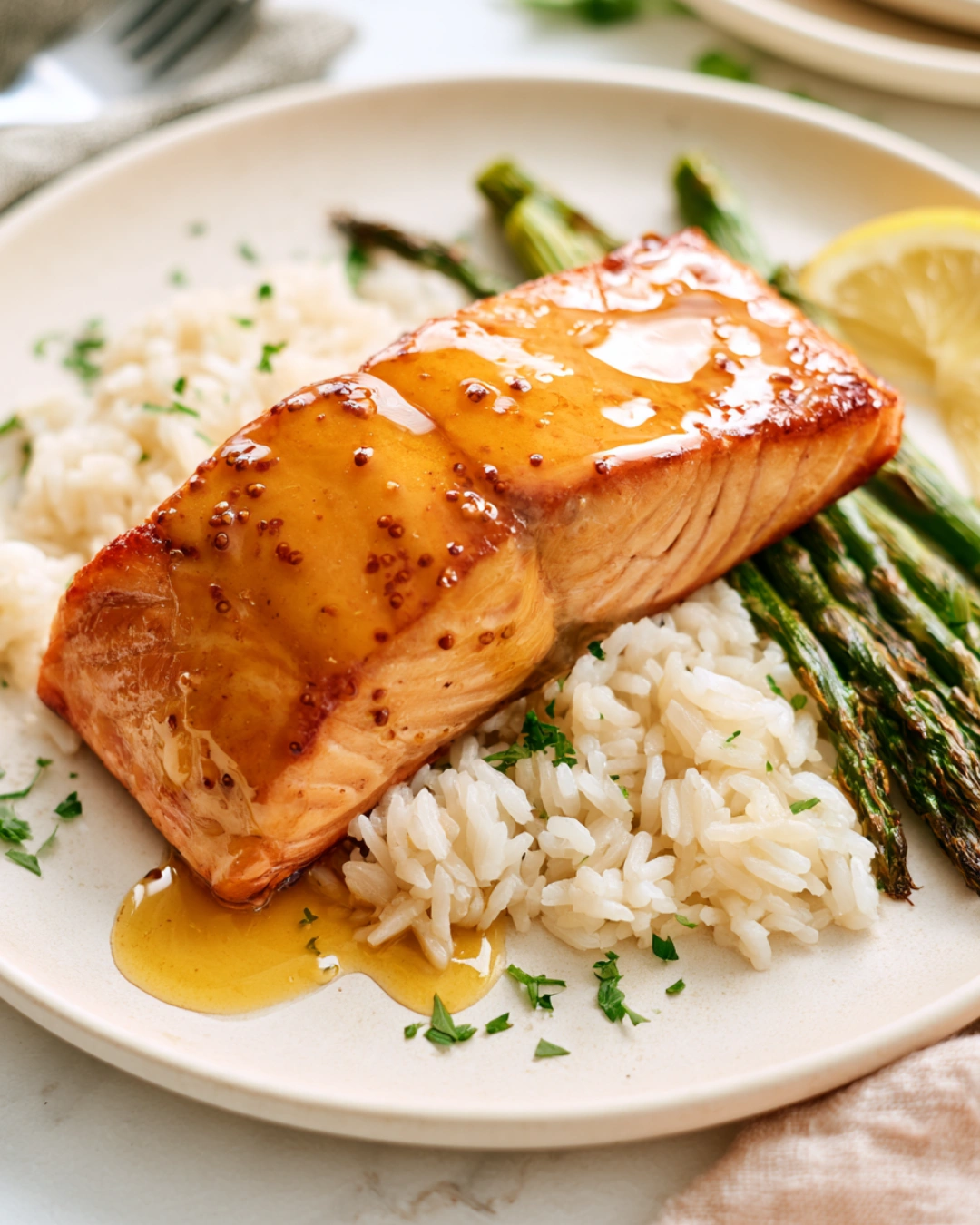
Jasmine rice makes one of the easiest pairings because it absorbs any honey mustard sauce that runs onto the plate.
Brown rice works too if you want something a little nuttier.
For potatoes, try roasted baby potatoes, mashed potatoes, or simple boiled potatoes tossed with butter and parsley.
Broccoli and asparagus also pair naturally with salmon.
If you use the oven method, you can roast asparagus right beside the fish.
For something fresh, add a simple green salad with lemon vinaigrette.
Crusty bread also works surprisingly well because you can use it to pick up the extra glaze.
When I want a vegetable-forward dinner, I also like Maple Roasted Brussels Sprouts. Another colorful choice is Green Bean Salad with Feta and Cranberries.
Building a Dinner for Guests
This salmon looks polished enough for company even though the recipe stays simple.
For guests, I usually serve one fillet per person with roasted vegetables and either rice or potatoes.
Then I add lemon wedges and chopped parsley right before serving.
The fresh garnish cuts through the golden glaze and adds color without requiring extra work.
If you’re cooking several fillets, I recommend the oven method.
A sheet pan holds more salmon than most skillets, and you won’t have to cook in batches.
You can also mix the honey mustard sauce earlier in the day and refrigerate it.
Bring it out while the oven heats so it loses some of its chill before you spoon it onto the fish.
Storing, Reheating, and Making Honey Mustard Salmon Ahead
Freshly cooked salmon has the best texture, but leftovers can still make an excellent lunch.
The key is reheating gently.
How to Store Leftover Salmon
Allow the salmon to cool, then place it in an airtight container.
Store it in the refrigerator for up to 3 days.
Keep any extra honey mustard sauce in a separate covered container.
When you’re ready to reheat, use low heat.
In the oven, place the salmon in a covered baking dish and warm it at around 300°F until heated through.
You can also reheat it gently in a skillet over low heat.
Add a teaspoon of water before covering the pan to create a little steam.
I avoid blasting leftover salmon at high heat because it dries out quickly.
You can also skip reheating altogether.
Cold leftover salmon tastes great flaked over a salad or grain bowl.
Can You Make the Honey Mustard Sauce Ahead?
Yes.
Mix the honey mustard sauce up to 3 days ahead and store it in a covered container in the refrigerator.
Stir it before using.
The honey may make the sauce feel thicker when cold, so let it sit at room temperature briefly while you prepare the salmon.
You can also prep the sides ahead.
Cook rice, trim asparagus, or wash salad greens earlier in the day.
Then dinner becomes mostly about cooking the fish.
Common Questions
Can I use frozen salmon?
Yes. Just thaw it fully in the fridge overnight if you can, then pat it very dry before cooking. Extra moisture is the enemy of good browning.
Is this recipe very sweet?
Not if you balance it. Start with less honey, taste the sauce, and add more if you want. Dijon and lemon keep it from going sugary.
Can I make the sauce ahead of time?
Totally. Mix it up to 3 days ahead and keep it in the fridge. Stir before using. If it thickens, just let it sit at room temp for a few minutes.
What if I do not like Dijon mustard?
Use yellow mustard for a milder flavor, or do half mustard and half mayo for a creamier vibe. It changes the taste, but it is still really good.
How do I keep salmon from sticking?
Use a hot pan, a little oil, and do not try to flip too early. If it is sticking, it usually needs another 30 to 60 seconds to release.
Easy Honey Mustard Salmon for Busy Weeknights
Honey Mustard Salmon has become one of those recipes I can make without turning dinner into a project. The ingredients stay simple, the sauce takes only a few minutes to mix, and the salmon cooks quickly whether you choose the skillet or oven method.
The biggest thing to remember is timing.
Pat the salmon dry, avoid overcooking it, and add the honey mustard glaze near the end when you’re using a skillet. That way, the fish stays juicy while the sauce becomes glossy without burning.
Then serve it with rice, roasted vegetables, potatoes, or a fresh salad.
Once you’ve made this Honey Mustard Salmon a few times, you’ll probably stop thinking of salmon as a special-occasion ingredient. It works just as well on a busy Tuesday night, which is exactly why I keep coming back to it.
For more inspiration, you can also compare approaches from Gimme Some Oven’s Honey Mustard Salmon, Serious Eats’ Honey-Mustard Salmon, and The Mediterranean Dish’s Honey Mustard Salmon.

Honey Mustard Salmon
Ingredients
Method
- Pat the salmon dry with paper towels. This helps it brown instead of steaming. Season both sides with salt and pepper.
- Heat a large skillet over medium heat and add a little olive oil. Place the salmon in the pan (skin side down if it has skin). Cook about 4 minutes without messing with it.
- Flip the salmon and cook for 2 to 3 minutes more. Lower the heat a bit if your pan runs hot.
- Spoon the honey mustard sauce over the top and let it bubble for 1 to 2 minutes until it looks glossy and slightly thickened.
- Take it off the heat and rest it for a minute to enhance tenderness.