
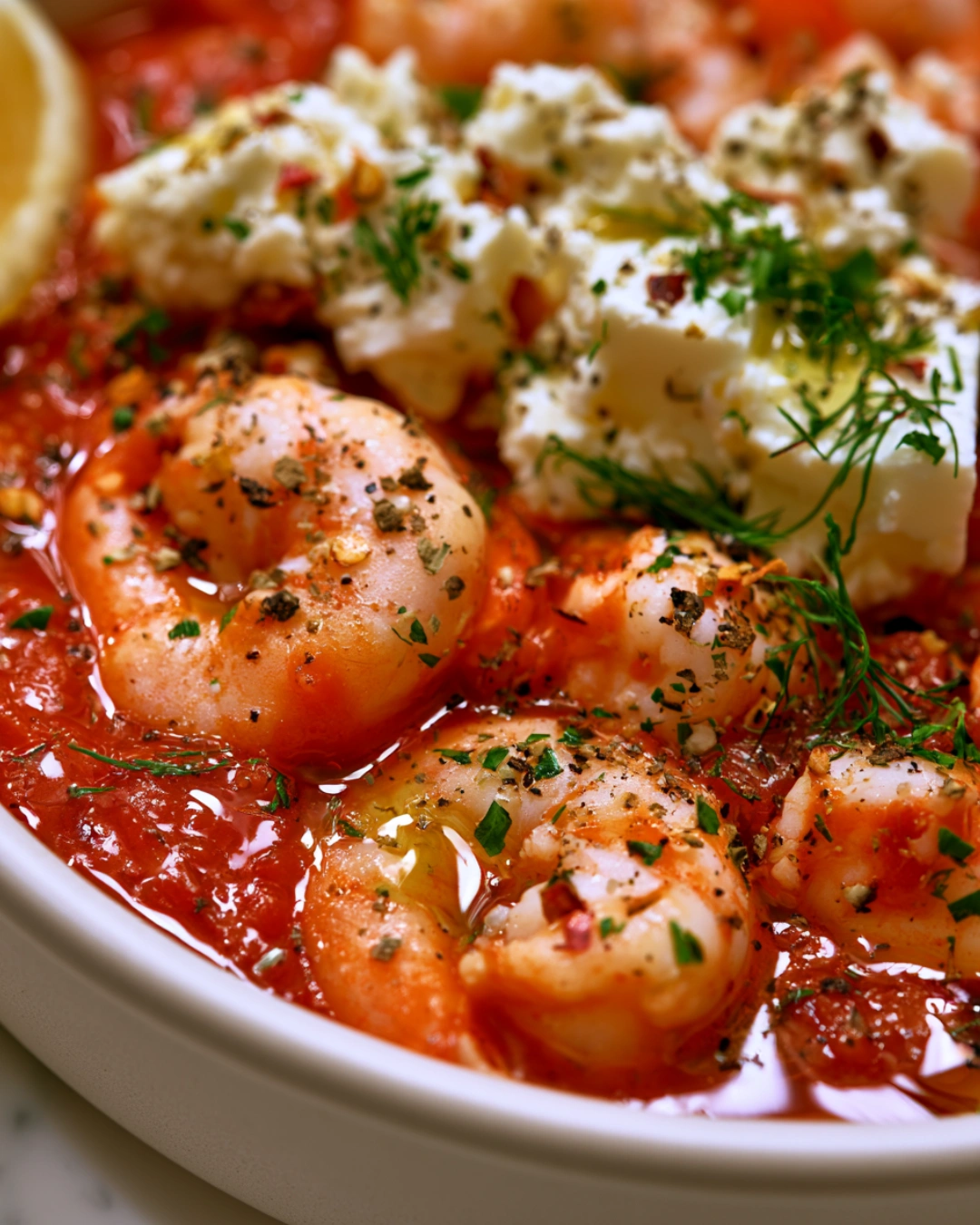
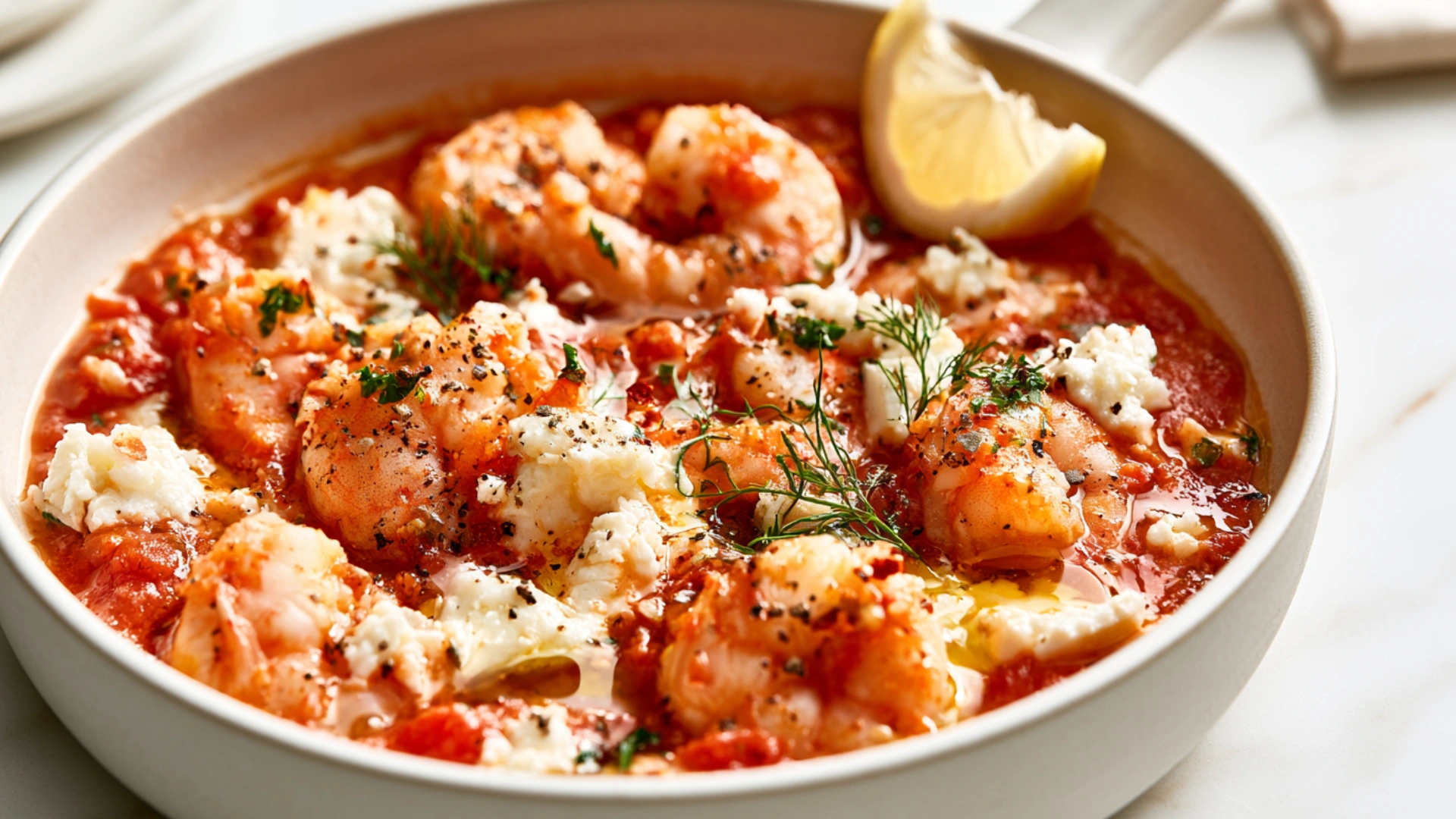
Greek Shrimp with Tomatoes and Feta is one of those dinners I make when I want something that feels special without spending the whole evening in the kitchen. Juicy shrimp simmer in a bright tomato and garlic sauce, while salty feta softens into creamy pockets throughout the pan. A little oregano, lemon, olive oil, and fresh herbs pull everything together.
I first started making this when I wanted a seafood dinner that didn’t involve breading, frying, or juggling several pans. Now it has become one of my favorite quick dinners because the sauce does most of the work. Add warm bread, rice, or orzo, and you have a colorful, satisfying meal that feels like something you’d order at a relaxed seaside restaurant.
- Why You’ll Love This Greek Shrimp with Tomatoes and Feta
- Greek Shrimp Recipe Highlights
- Ingredients for Greek Shrimp with Tomatoes and Feta
- Ingredient Substitutions
- Kitchen Tools You’ll Need
- How to Make Greek Shrimp with Tomatoes and Feta
- Expert Tips for the Best Greek Shrimp
- Common Mistakes to Avoid
- Greek Shrimp Variations
- What to Serve with Greek Shrimp
- How to Store Greek Shrimp with Tomatoes and Feta
- How to Reheat Greek Shrimp
- Can You Freeze Greek Shrimp?
- Meal Prep Tips
- Nutrition Benefits
- Common Questions
- A quick pep talk before you cook
Why You’ll Love This Greek Shrimp with Tomatoes and Feta
There are plenty of reasons this recipe keeps making its way back onto my dinner table. Most importantly, it delivers bold flavor without requiring complicated cooking techniques.
Ready Fast Enough for Weeknights
Shrimp cooks incredibly quickly. Therefore, once the tomato sauce develops its flavor, dinner moves fast.
The sauce takes only several minutes to simmer, and the shrimp needs just a few minutes to cook through. As a result, this is the kind of dinner you can make when you’re already hungry instead of starting a recipe that keeps everyone waiting for an hour.
Big Flavor from Simple Ingredients
Garlic, tomatoes, oregano, olive oil, feta, and lemon aren’t complicated ingredients. However, together they create an incredibly flavorful sauce.
The tomatoes bring sweetness and acidity. Meanwhile, feta contributes salty richness, and lemon adds freshness right before serving.
One-Pan Cleanup
You only need one large skillet for the main dish.
That alone makes Greek Shrimp with Tomatoes and Feta especially useful on busy nights when cooking sounds good but washing several pans absolutely does not.
Easy to Serve Several Ways
Some nights I serve it with crusty bread and call dinner done.
Other nights, I spoon the shrimp and sauce over rice, orzo, or pasta. You can also serve it with roasted potatoes and a crisp salad when you want a fuller spread.
If you enjoy feta-forward side dishes, this green bean salad with feta and cranberries also fits nicely into a Mediterranean-inspired meal.
Greek Shrimp Recipe Highlights
| Recipe Detail | Information |
|---|---|
| Prep Time | 10 minutes |
| Cook Time | 20 minutes |
| Total Time | 30 minutes |
| Servings | 4 |
| Cuisine | Greek-inspired |
| Method | Stovetop |
| Difficulty | Easy |
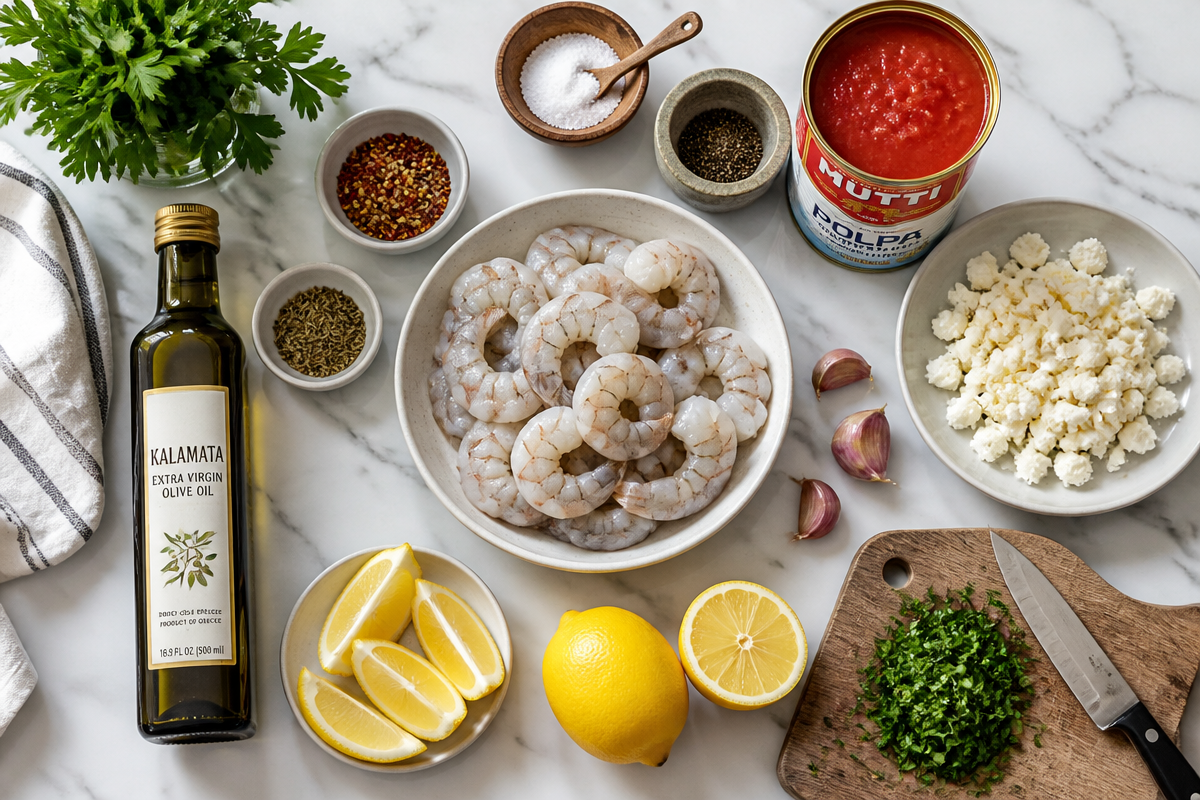
Ingredients for Greek Shrimp with Tomatoes and Feta
The ingredient list stays intentionally simple. Because there aren’t many ingredients, though, each one contributes something important to the final dish.
| Ingredient | Suggested Amount | Purpose |
|---|---|---|
| Large shrimp | 1½ lb, peeled and deveined | Main protein |
| Extra-virgin olive oil | 2 tbsp | Builds the sauce base |
| Garlic | 4 cloves, minced | Adds savory flavor |
| Crushed tomatoes | 1 can, 28 oz | Creates the tomato sauce |
| Tomato paste | 1 tbsp | Adds concentrated tomato flavor |
| Dried oregano | 1 tsp | Adds classic herb flavor |
| Red pepper flakes | ¼ tsp, optional | Adds gentle heat |
| Feta cheese | 6 oz, crumbled | Adds creamy, salty richness |
| Fresh lemon juice | 1–2 tbsp | Brightens the finished dish |
| Fresh parsley or dill | ¼ cup | Adds freshness |
| Salt and black pepper | To taste | Balances the flavors |
Choosing the Best Shrimp
Medium or large shrimp both work, although I prefer large shrimp because they’re easier to monitor and less likely to overcook before you notice.
Peeled and deveined shrimp saves time. Tail-on shrimp looks attractive for serving, but tail-off makes the finished dish easier to eat.
If you’re using frozen shrimp, thaw it completely first. Then pat it very dry before cooking.
Block Feta vs. Pre-Crumbled Feta
Block feta packed in brine gives you the best texture for this recipe.
It usually tastes creamier and less dry than pre-crumbled feta. Crumble it yourself right before adding it to the skillet.
The pieces soften in the warm tomato sauce without disappearing completely, which gives you those little creamy pockets throughout the pan.
Crushed or Diced Tomatoes?
Crushed tomatoes create a smoother sauce that coats the shrimp nicely.
However, diced tomatoes work if you prefer a chunkier texture. You may simply need to simmer them a few minutes longer.
Fresh Tomatoes
Fresh ripe tomatoes can replace canned tomatoes during tomato season.
Chop them, then cook them until they release their juices and break down into a sauce. Since fresh tomatoes vary in moisture and sweetness, adjust the simmering time as needed.
Ingredient Substitutions
This recipe gives you plenty of room to adapt dinner based on what’s already in your kitchen.
Scallops Instead of Shrimp
Scallops pair beautifully with tomatoes and feta.
However, they cook differently, so sear them separately and add them toward the end rather than simmering them for too long.
White Fish
Firm white fish can also work.
Cut it into large pieces and gently simmer it in the tomato sauce until cooked through.
Goat Cheese
A mild goat cheese can replace feta when necessary.
The flavor won’t taste exactly the same, but you’ll still get creamy tang against the tomatoes.
Add Spinach
Fresh spinach is one of the easiest additions.
Fold a few handfuls into the hot tomato sauce shortly before adding the feta. It wilts quickly and gives you another vegetable without adding much work.
Add Kalamata Olives
If you love briny flavors, sliced Kalamata olives fit naturally here.
Add them while the tomato sauce simmers so their flavor spreads throughout the pan.
Add Capers
A spoonful of capers gives the sauce another salty, sharp element.
Because feta already contains plenty of salt, taste before seasoning the finished dish.
Kitchen Tools You’ll Need
You don’t need specialty equipment for Greek Shrimp with Tomatoes and Feta.
A large skillet with enough room to hold the shrimp in a relatively even layer matters most.
You’ll also need a cutting board, chef’s knife, citrus juicer if you have one, wooden spoon or spatula, and measuring spoons.
A wide skillet works better than a narrow saucepan because the tomato sauce reduces more efficiently and the shrimp cooks more evenly.
How to Make Greek Shrimp with Tomatoes and Feta
This recipe moves quickly once the shrimp enters the skillet. Therefore, I recommend prepping the garlic, feta, lemon, and herbs before you turn on the stove.
Step 1: Prepare the Shrimp
Pat the shrimp thoroughly dry with paper towels.
Then season lightly with salt and black pepper.
Don’t season too aggressively because the feta will bring additional salt later.
Dry shrimp cooks much more cleanly than wet shrimp. Excess water can dilute the sauce and encourage steaming.
Step 2: Start the Garlic
Heat the olive oil in a large skillet over medium heat.
Add the minced garlic and stir for about 30 seconds.
You want the garlic fragrant but not brown.
Once it starts smelling wonderful, move directly to the tomatoes.
Step 3: Build the Tomato Sauce
Pour in the crushed tomatoes.
Then stir in the tomato paste, oregano, and red pepper flakes if you’re using them.
Bring the sauce to a gentle simmer.
Let it cook uncovered for about 8 to 10 minutes, stirring occasionally.
During this time, the tomatoes mellow, the garlic spreads through the sauce, and everything thickens slightly.
This simmering stage matters. If you immediately add shrimp to watery tomatoes, the finished dish won’t taste nearly as developed.
Step 4: Taste the Sauce Before Adding Shrimp
Before the shrimp goes into the pan, taste the tomato sauce.
Adjust the black pepper and salt if needed.
However, keep the feta in mind. I usually leave the sauce slightly under-salted before adding the cheese because feta can change the seasoning quickly.
Step 5: Add the Shrimp
Nestle the shrimp into the simmering tomato sauce in a single layer as much as possible.
Cook for around 2 to 3 minutes, then turn each shrimp.
Continue cooking until the shrimp turns opaque and just cooks through.
Large shrimp usually needs only a few minutes total.
The key word here is just.
Shrimp can move from tender to rubbery surprisingly quickly, so don’t leave the pan simmering while you wander away to prep your garnish.
Step 6: Add the Feta
Reduce the heat to low.
Scatter crumbled feta evenly over the shrimp and tomato sauce.
You have two options here.
For softer feta, cover the skillet for about a minute or two so the heat gently warms it.
For more distinct feta pieces, leave the skillet uncovered and simply allow the cheese to soften from the heat underneath.
I prefer the second option because I like getting visible feta in each serving.
Step 7: Finish with Lemon and Herbs
Remove the skillet from the heat.
Squeeze fresh lemon juice across the top, then scatter chopped parsley or dill over everything.
Taste one last time.
Add more black pepper, lemon, or herbs if needed.
Then serve immediately while the shrimp stays tender and the feta is still warm.
Expert Tips for the Best Greek Shrimp
Simple recipes depend on the little details. These are the things that consistently give me better results.
Don’t Overcook the Shrimp
This matters more than anything else.
When shrimp turns opaque and forms a loose curve, it’s usually ready.
You don’t need to aggressively boil it in the sauce. Gentle simmering does the job.
Simmer the Tomatoes First
Give the tomato sauce time to develop before adding seafood.
Those extra minutes concentrate the tomatoes and allow the oregano and garlic to blend into the sauce.
Use Feta in Brine When Possible
Block feta generally tastes creamier and fresher.
Pre-crumbled feta still works, but the texture can stay drier and more granular.
Add Lemon at the End
Cooking lemon juice for too long can dull its brightness.
Instead, squeeze it over the finished skillet after turning off the heat.
That keeps the fresh citrus flavor noticeable.
Watch the Salt
Tomatoes, feta, olives, and capers can all contribute sodium.
Therefore, season lightly at the beginning and adjust after the feta joins the pan.
Don’t Crowd the Shrimp Too Much
A wide skillet gives the shrimp more even exposure to the sauce and heat.
If you’re doubling the recipe, use an especially large pan rather than stacking the shrimp on top of one another.
Common Mistakes to Avoid
Even a quick seafood dinner can go wrong when a few details get rushed.
Adding Wet Shrimp
Thawed shrimp often releases plenty of water.
Pat it dry thoroughly before adding it to the skillet.
Burning the Garlic
Garlic only needs a short time in the oil.
If it browns too deeply, it can give the entire tomato sauce a bitter flavor.
Adding the Shrimp Too Early
The tomatoes need time to simmer first.
If the shrimp goes in immediately, you’ll either serve an underdeveloped sauce or overcook the shrimp while waiting for the sauce to thicken.
Cooking the Feta Aggressively
You don’t need to boil feta into the sauce.
Gentle heat softens it while preserving its flavor and texture.
Forgetting Acidity
Even though tomatoes already bring acidity, fresh lemon at the end adds another layer of brightness.
That small finish keeps the feta and olive oil from making the dish feel too rich.
Greek Shrimp Variations
Once you make the basic version, it’s easy to change the dish while keeping its Mediterranean character.
Greek Shrimp with Spinach
Fold fresh spinach into the tomato sauce before adding the shrimp.
The greens wilt quickly and make the meal feel even more complete.
Greek Shrimp with Olives
Add sliced Kalamata olives during the sauce stage.
Their briny flavor pairs naturally with feta.
Spicy Greek Shrimp
Increase the red pepper flakes or add a little fresh chile.
Keep the heat moderate enough that you can still taste the tomatoes, feta, and shrimp.
Greek Shrimp with Orzo
Cook orzo separately, then spoon the shrimp and tomato feta sauce over it.
The small pasta catches the sauce beautifully.
Baked Greek Shrimp
You can also transfer the tomato sauce and shrimp to an oven-safe baking dish, scatter feta over the top, and finish everything briefly in the oven.
Just watch the shrimp carefully because it still cooks quickly.
What to Serve with Greek Shrimp
The tomato-feta sauce is the star, so sides that catch or balance that sauce work especially well.
Crusty Bread
This remains my favorite.
Warm bread lets you scoop up every bit of garlicky tomato sauce left in the skillet.
Rice
Plain white rice provides a mild base that lets the shrimp and feta stand out.
You can also use brown rice if that’s what you prefer.
Orzo
Orzo makes the whole meal feel especially Mediterranean-inspired.
Toss it with a little olive oil and parsley, then spoon the shrimp over the top.
Pasta
Pasta turns the skillet into a hearty comfort-food dinner.
Short pasta shapes work particularly well because they’re easy to mix with the chunky feta and shrimp.
Roasted Potatoes
Roasted potatoes with lemon and oregano make another excellent option.
Their crisp edges contrast nicely with the soft tomato sauce.
Fresh Salad
Cucumber, tomato, red onion, olives, and a simple olive oil-lemon dressing provide freshness alongside the warm shrimp.
For another feta-forward side, that green bean salad with feta and cranberries can also round out the meal.
How to Store Greek Shrimp with Tomatoes and Feta
Seafood leftovers need a little more care than many other dinner recipes.
Refrigerator Storage
Cool leftovers promptly and transfer them into an airtight container.
Refrigerate and use within about 2 days for best quality.
The tomato sauce keeps well, but shrimp becomes firmer each time you heat it, so sooner is better.
Store Extra Sauce Separately When Possible
If you’ve made additional tomato sauce, keep it separate from the shrimp.
You can reheat the sauce thoroughly first and then warm the shrimp gently in it for a shorter amount of time.
How to Reheat Greek Shrimp
Low, gentle heat gives you the best chance of keeping the shrimp tender.
Stovetop Method
Place the leftovers in a skillet over low heat.
Add a spoonful of water or tomato sauce if the mixture looks thick.
Cover briefly and warm only until thoroughly heated.
Microwave Method
Use short heating intervals rather than several uninterrupted minutes.
Stir gently between intervals.
The goal is to heat the dish without repeatedly cooking the shrimp.
Can You Freeze Greek Shrimp?
You can freeze cooked shrimp dishes, but I prefer this recipe fresh.
The tomato sauce freezes very well on its own. Therefore, if you want to prep ahead, make and freeze the tomato sauce without the shrimp and feta.
Then thaw and reheat the sauce before cooking fresh shrimp directly in it.
That approach gives you much better seafood texture.
Meal Prep Tips
This isn’t the recipe I fully cook several days in advance. However, you can prepare most of the work ahead.
Make the Tomato Sauce Ahead
Cook the garlic, tomatoes, oregano, and seasonings.
Cool the sauce promptly and refrigerate it for up to about 3 days.
When you’re ready for dinner, heat the sauce until simmering, add fresh shrimp, then finish with feta, lemon, and herbs.
Prep the Garnishes
Crumble the feta, chop parsley or dill, and cut the lemon ahead.
Then the final cooking stage goes incredibly quickly.
Nutrition Benefits
Greek Shrimp with Tomatoes and Feta combines lean seafood protein with tomatoes, olive oil, herbs, and dairy.
Shrimp supplies protein, while tomatoes contribute vitamin C and naturally occurring antioxidants. Olive oil adds unsaturated fat, and feta contributes calcium and protein.
Exact values will vary depending on shrimp size, feta brand, oil quantity, and serving size, so treat the following numbers as estimates.
| Nutrition | Estimated Per Serving |
|---|---|
| Calories | About 390 kcal |
| Protein | About 39 g |
| Carbohydrates | About 14 g |
| Fiber | About 3 g |
| Fat | About 20 g |
| Saturated Fat | About 7 g |
| Sodium | Varies by feta and tomatoes |
Nutrition values are estimates and don’t include bread, rice, pasta, or other optional sides.
Common Questions
Can I use frozen shrimp?
Yes. Thaw it first, then pat it dry. If it is watery, it will thin your sauce.
Can I make Greek Shrimp with Tomatoes and Feta ahead of time?
You can make the tomato sauce ahead and refrigerate it for up to 3 days. Cook the shrimp fresh right before eating so it stays tender.
What kind of feta works best?
Block feta in brine is my favorite for flavor and texture. Crumble it yourself for the creamiest melt.
Is this spicy?
Only if you add red pepper flakes. Start with a small pinch, taste, and go from there.
A quick pep talk before you cook
If you have been wanting to try a seafood dinner but felt unsure, Greek Shrimp with Tomatoes and Feta is a great place to start because the sauce is so forgiving and flavorful. If you want to compare styles or see another approach, check out Greek Shrimp, Tomatoes, and Feta (Garides Saganaki) for more background and helpful visuals. And if you like a slightly different ingredient balance, Greek Shrimp with Tomatoes and Feta Recipe – Pamela Salzman is another solid take. Either way, grab some bread, keep an eye on the shrimp, and let the feta do its thing. I hope you make it soon and feel that little moment of “wow, I did that” after the first bite.

Greek Shrimp with Tomatoes and Feta
Ingredients
Method
- Pat the shrimp dry and season with salt and pepper.
- Heat olive oil in a large skillet over medium heat. Add garlic and sauté until fragrant, about 30 seconds.
- Add the crushed or diced tomatoes along with oregano and red pepper flakes (if using). If using tomato paste, add it now.
- Let the sauce simmer for 8 to 10 minutes until it thickens.
- Add the shrimp to the skillet in a single layer if possible. Cook for 2 to 3 minutes on each side until pink and cooked through.
- Reduce heat to low. Sprinkle crumbled feta over the shrimp and cover the pan for 1 to 2 minutes.
- Finish with a squeeze of lemon and garnish with fresh herbs. Adjust salt if necessary.