

There’s something irresistible about the aroma of roasted squash and fresh sage drifting through the kitchen. Butternut Squash & Sage Stuffing isn’t just another holiday side, it’s the dish that turns an ordinary dinner into something memorable.
In this guide, you’ll discover how simple ingredients come together to create bold, balanced flavors. From a heartfelt story to expert tips on texture and moisture, we’ll walk through everything you need to master this comforting, flavorful recipe that’s perfect for any fall gathering.
The Story & Intro, Why Butternut Squash & Sage Stuffing Feels Like Home
The Memory That Started It All
The first time I made Butternut Squash & Sage Stuffing, I wasn’t trying to follow a trend. It was one of those crisp autumn afternoons when the kitchen felt like the warmest place in the house. My grandmother used to say sage has “the flavor of home”—and she was right. Its earthy, peppery scent can turn even a quiet evening into something special. I remember roasting cubes of butternut squash until they caramelized into little bites of gold. The sizzling sound, the buttery aroma, and the swirl of herbs in the air—it felt like cooking nostalgia.
That’s the charm of this stuffing. It’s familiar yet fresh, humble yet hearty. The squash adds natural sweetness that balances beautifully with the savory notes of onion, garlic, and butter. When you take that first bite, the flavors unfold slowly—the crisp bread edges, the tender vegetables, and that unmistakable herbal warmth from sage. It’s a sensory reminder that the best comfort food doesn’t need to be complicated. It just needs to be made with intention.
A Recipe Built on Balance
A good stuffing should never be dry or heavy, it should walk that perfect line between crisp and soft. That’s where Butternut Squash & Sage Stuffing truly shines. The bread acts as a sponge, soaking up all the buttery broth and seasoning while still holding its shape. The key is to use day-old bread or gently toast fresh cubes in the oven until they’re dry enough to absorb flavor without collapsing.
Meanwhile, roasting the squash brings out its caramelized sweetness, adding both flavor and texture. The sage, thyme, and garlic tie everything together with subtle warmth, while the broth keeps it moist and tender. The result is a dish that feels rustic but tastes refined—one that can easily sit beside a roasted turkey or stand proudly on its own.
For those who enjoy complementary flavors, this stuffing pairs beautifully with mains like Garlic Parmesan Chicken . The balance of savory herbs, golden squash, and crusty bread makes it a standout addition to any dinner table.
Over the years, I’ve found that the most memorable recipes are the ones that tell a story. This one reminds me of my grandmother’s small kitchen, filled with laughter, warmth, and the smell of butter browning on the stove. Each batch of Butternut Squash & Sage Stuffing feels like a continuation of that memory—something shared, something savored, something real.
When you pull the dish from the oven, the golden top gives way to a soft, aromatic center that’s pure comfort. It’s more than just a side dish; it’s a story told in flavors, meant to be passed on and enjoyed again and again.
The Ingredients & Preparation Secrets of Butternut Squash & Sage Stuffing
Choosing the Right Ingredients
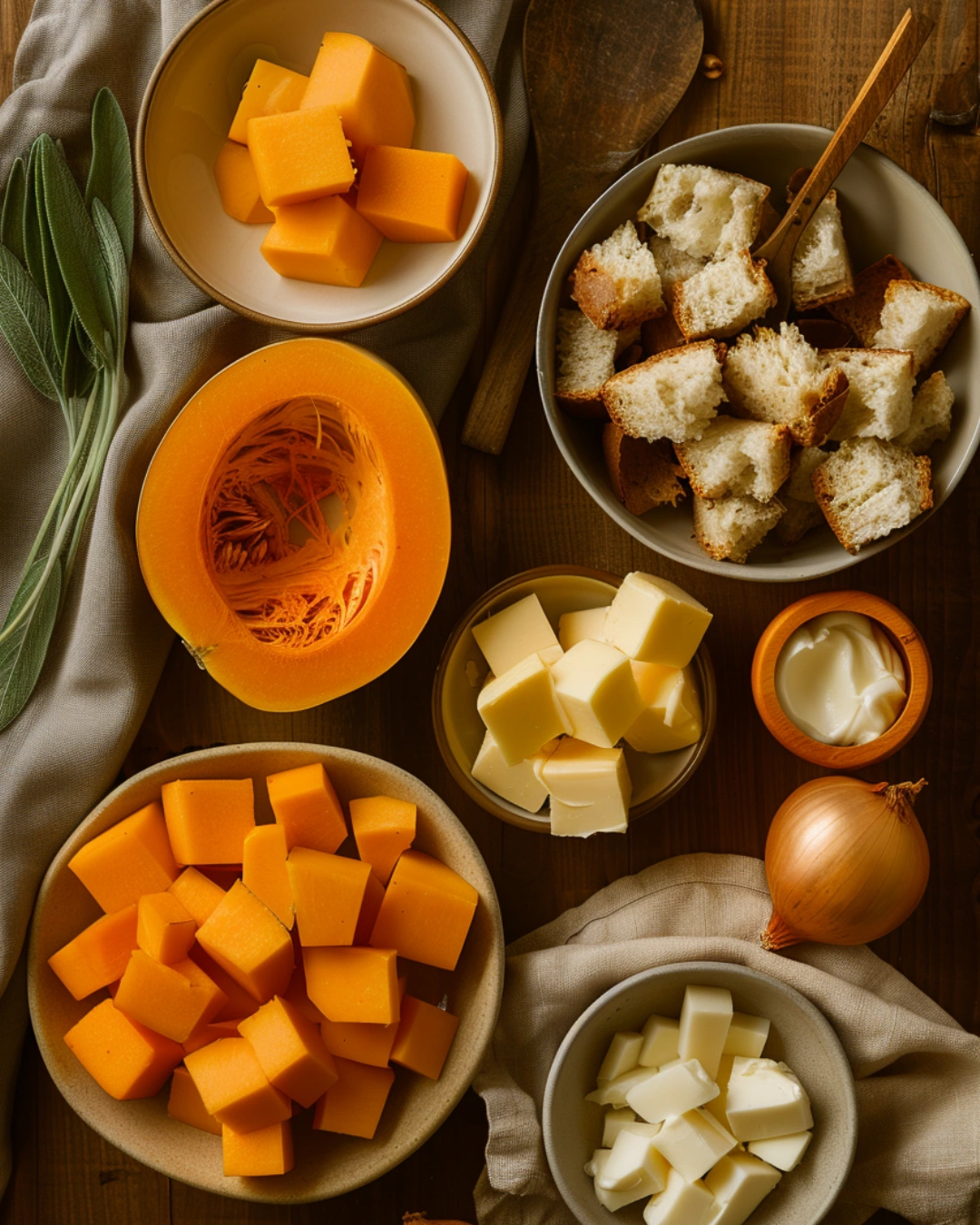
The heart of any great Butternut Squash & Sage Stuffing lies in its simplicity. This dish depends on fresh, high-quality ingredients that work together to build layers of flavor. Start with the bread—it’s the backbone of the recipe. Day-old French bread, sourdough, or a rustic country loaf are all great choices. Avoid soft sandwich bread; it tends to get mushy and lose structure. The slightly stale cubes will soak up broth and butter just right, keeping every bite perfectly textured.
Then comes the star of the show: butternut squash. Choose one that feels heavy for its size with a firm, matte skin. After peeling and cubing, roasting transforms it into caramelized nuggets that bring natural sweetness to the stuffing. Sage provides the perfect herbal counterpoint. Fresh sage is ideal—it has a soft, velvety texture and releases a deeply aromatic oil when chopped. Dried sage works in a pinch, but the flavor will be milder.
In addition to squash and sage, you’ll need onions, garlic, celery, butter, and broth. These supporting ingredients build the savory backbone. If you prefer a heartier version, browned sausage can add rich depth. For a lighter, vegetarian version, vegetable broth works beautifully, keeping the dish wholesome without losing flavor.
To make your prep smoother, I recommend checking out Herb Roasted Chicken Thighs for another recipe that uses sage and garlic in harmony. It’s a wonderful way to use up any leftover herbs.
Balancing Texture and Moisture
The secret to a perfect Butternut Squash & Sage Stuffing is texture control. It should be soft and flavorful inside, with just enough crunch on top. The balance starts with properly drying your bread. Spread cubed bread on a baking sheet and toast it in a 300°F oven for about 15 minutes, tossing once halfway through. You’re looking for firm, golden edges—not croutons.
Next, roast your squash separately before mixing it into the stuffing. Roasting at high heat (400°F) caramelizes the edges, deepening the sweetness. Meanwhile, sauté onions, garlic, and celery in butter until fragrant and slightly golden. Add chopped sage and thyme in the final minute to bloom their oils and release aroma.
Once your components are ready, toss them together with broth in a large bowl. Start with small amounts of liquid, adding more until the bread feels moist but not soggy. You want it to hold together when pressed but not drip. Bake covered with foil for the first 25 minutes to lock in moisture, then uncover for the last 15 minutes to let the top crisp up beautifully.
If you’re serving this as part of a larger feast, pair it with something like Maple Glazed Carrots to bring out its warm, autumn flavors. Together, they make an unforgettable side duo.
Ingredient Reference Table
| Ingredient | Amount | Purpose |
|---|---|---|
| Day-old bread, cubed | 6 cups | Provides structure and absorbs flavors |
| Butternut squash, cubed | 3 cups | Adds sweetness and texture |
| Fresh sage, chopped | 2 tablespoons | Provides earthy, aromatic flavor |
| Butter | ½ cup | Adds richness and moisture |
| Broth (chicken or vegetable) | 2–2½ cups | Keeps stuffing tender and flavorful |
Serving, Storage & Creative Variations of Butternut Squash & Sage Stuffing
How to Serve It Like a Pro
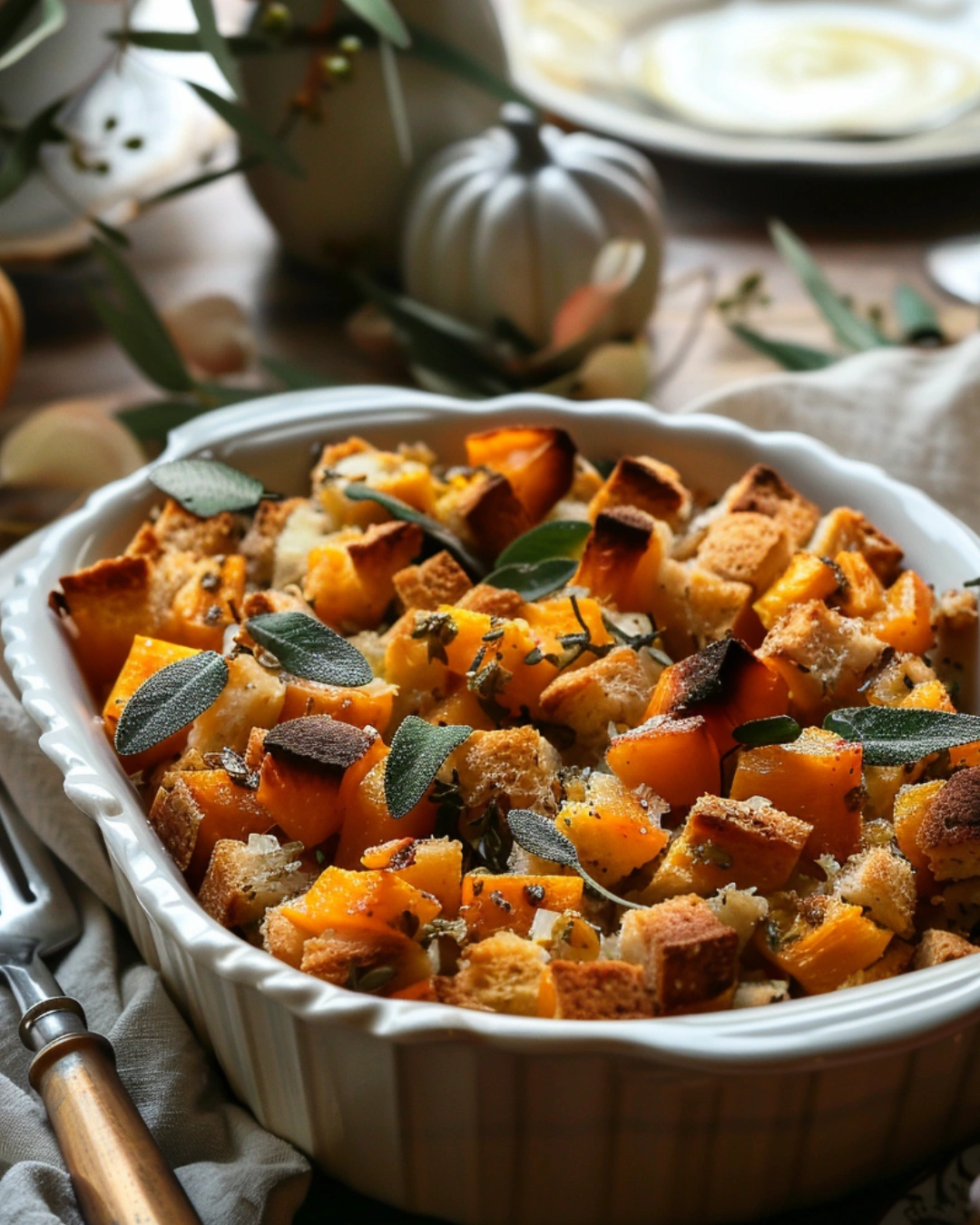
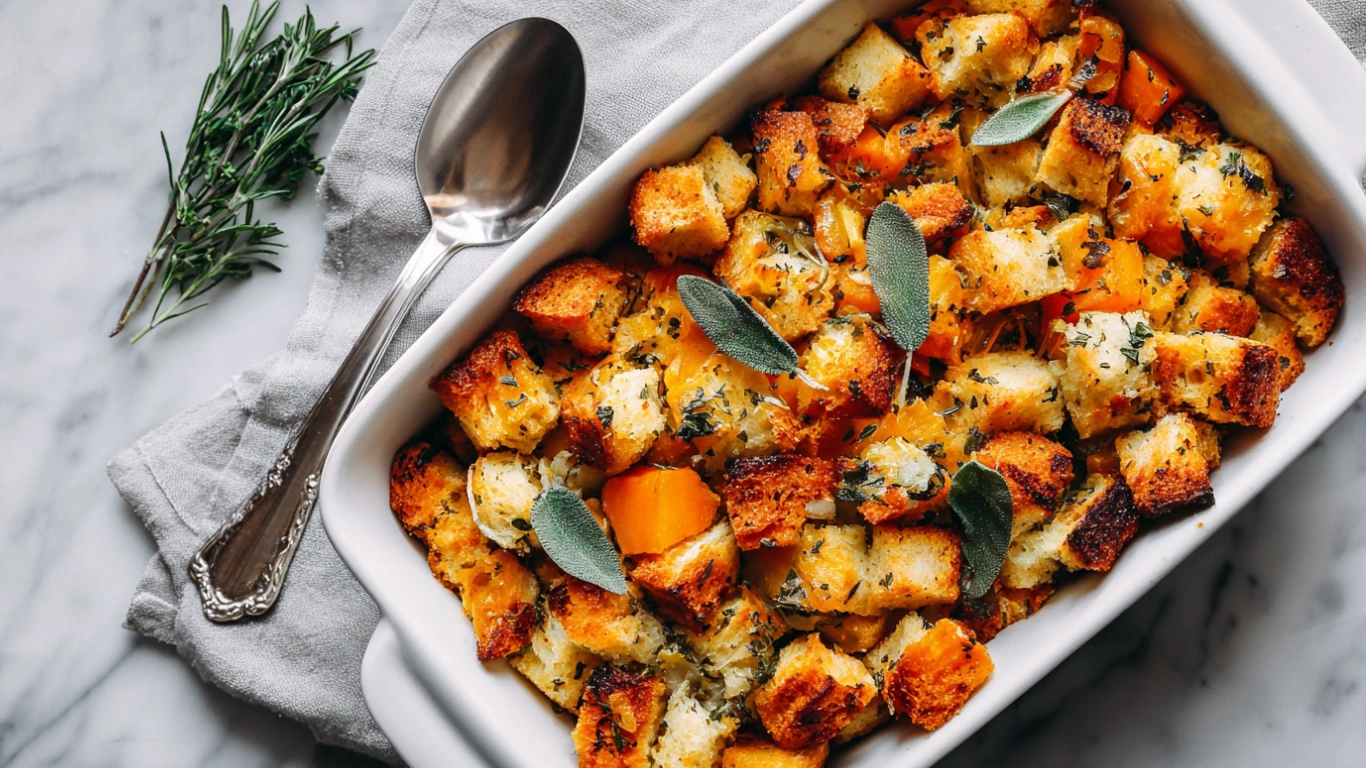
When your Butternut Squash & Sage Stuffing comes out of the oven, the hardest part is waiting for it to cool slightly. That golden crust and buttery aroma make patience nearly impossible, but a short rest helps it set so you can scoop clean, hearty portions. For presentation, use a shallow ceramic dish so guests can see the beautiful texture—crispy on top, tender in the middle, flecked with caramelized squash and sage leaves.
This stuffing pairs wonderfully with roasted meats, but it’s also satisfying enough to stand alone as a vegetarian main. If you’re planning a balanced holiday spread, try serving it beside Garlic Herb Turkey Breast or Creamy Green Bean Casserole. Both dishes highlight the earthy, aromatic qualities of sage and bring out the natural sweetness of the squash.
Drizzle a touch of browned butter before serving to amplify flavor, or sprinkle freshly grated Parmesan for an elegant finish. A few extra sage leaves crisped in olive oil make a beautiful and delicious garnish. If you’re making this ahead, simply reheat covered in a 350°F oven until warm, about 15 minutes—to maintain its perfect texture.
For more creative squash ideas, check Bon Appétit’s Butternut Squash Recipes to experiment with seasonal flavors.
For a complementary side that mirrors this dish’s sweetness, try Maple Pecan Sweet Potatoes or a silky Pumpkin Sage Bisque.
Storage & Creative Variations
One of the best things about Butternut Squash & Sage Stuffing is how well it holds up. You can refrigerate leftovers in an airtight container for up to four days or freeze them for up to three months. To reheat, bake covered at 350°F until warmed through, then uncover for the last few minutes to crisp the top.
If you like experimenting, use this recipe as a base. Swap out the bread for cornbread for a Southern twist, or add cranberries for a pop of tartness. For a heartier spin, fold in browned sausage, mushrooms, or even roasted chestnuts. If you prefer a vegetarian version, simply use vegetable broth instead of chicken broth—the flavors remain rich and satisfying.
This stuffing also makes incredible next-day leftovers. Slice it into thick pieces and pan-fry them in butter until crisp for a brunch side or quick snack. The caramelized edges make it taste almost better the second time around.
For more inventive ways to reuse leftovers, explore Savory Breakfast Quesadillas or Herb Butter Mashed Potatoes. Both offer clever ways to give yesterday’s flavors a new life.

Butternut Squash & Sage Stuffing
Ingredients
Equipment
Method
- Preheat oven to 350°F (175°C).
- Roast butternut squash cubes on a baking sheet for 20–25 minutes until tender and golden.
- In a skillet, melt butter over medium heat. Sauté onion, celery, and sage until softened, about 5–7 minutes.
- In a large bowl, toss together bread cubes, roasted squash, sautéed vegetables, salt, and pepper.
- Pour broth over mixture and gently stir until well combined.
- Transfer to a greased baking dish and cover with foil.
- Bake for 30 minutes covered, then uncover and bake an additional 10–15 minutes until top is golden.
Nutrition
Notes
From your stove to our hearts
share your delicious take!FAQs About Butternut Squash & Sage Stuffing
Can I use fresh bread instead of day-old?
Yes, but you’ll need to dry it out first. Cut it into cubes and bake at 300°F for about 10–15 minutes. This prevents your stuffing from turning soggy once the broth is added.
Can I add sausage to this stuffing?
Absolutely. Browned sausage adds richness and depth. Stir it in with the sautéed vegetables before mixing in the bread and squash for an even, hearty flavor.
How do I keep stuffing moist?
Make sure every piece of bread is moistened but not soaked. Add broth gradually and cover your dish with foil while baking to trap steam. Remove the foil near the end for a crispy top.
Can I make it vegetarian?
Yes! Simply replace the chicken broth with vegetable broth. The combination of roasted squash, butter, and sage keeps it flavorful even without meat.
Conclusion
There’s something timeless about a recipe that feels both traditional and fresh. Butternut Squash & Sage Stuffing captures that balance perfectly, sweet, savory, and comforting all at once. From Sunday dinners to holiday gatherings, it’s the kind of dish that brings people together and fills the table with warmth.
Each bite tells a story of seasonal ingredients and simple preparation done right. Whether you stick to the classic version or experiment with creative variations, this stuffing promises to become a tradition in your kitchen too. After all, it’s not just food, it’s the flavor of comfort, baked golden.
