
Soft Lavender Lemon Sourdough Loaf is what I bake when I want sourdough to feel a little softer, brighter, and more special than my usual everyday bread. Instead of a thick artisan crust, this loaf has a tender crumb thanks to milk, butter, honey, and egg. Meanwhile, fresh lemon zest keeps every slice lively, while culinary lavender adds a gentle floral note rather than an overpowering perfume. I especially love making this Soft Lavender Lemon Sourdough Loaf for slow breakfasts and weekend brunches because it tastes wonderful with butter, mascarpone, or cream cheese. Although enriched sourdough takes some patience, the actual process stays approachable. Once you understand the rise cues and keep the lavender restrained, you get a fragrant loaf that’s soft enough for snacking, sturdy enough for toast, and just sweet enough to feel like a treat.
Why Soft Lavender Lemon Sourdough Loaf Works
Flavored sourdough can become unbalanced quickly. Lavender can dominate the bread, lemon juice can interfere with the dough, and too much flour can turn a soft loaf dense.
This recipe avoids those problems by keeping each flavor controlled.
A soft sourdough crumb instead of a hard artisan crust
Traditional lean sourdough usually relies on flour, water, salt, and starter. That formula creates fantastic crusty bread, but it isn’t what I want here.
For this loaf, milk replaces much of the water. Butter adds richness, while egg helps create a softer interior. Honey contributes gentle sweetness and also supports the tender texture.
Because the dough contains these enriching ingredients, it behaves differently from a basic sourdough boule. Fermentation may move more slowly, and the finished crust stays softer.
If you’re looking for another way to use your starter, my sourdough discard bread gives you a more straightforward bread option. And when I want something extra buttery for the table, honey butter pull-apart rolls bring that same soft-bread comfort.
Getting lavender and lemon into balance
Lavender has a strong personality.
A little makes bread smell floral and fresh. Too much can push the flavor toward perfume.
That’s why I recommend starting with 1 teaspoon culinary lavender if you’ve never baked with it before.
Infusing the lavender in warm milk softens its intensity and spreads its aroma through the dough. You can strain the milk afterward for a completely smooth crumb, or leave a small amount of lavender in the bread for visible flecks.
Lemon works differently.
Most of the lemon flavor should come from zest rather than juice. The zest contains aromatic oils that give the loaf a bright citrus character without adding much liquid or acidity.
I usually zest two lemons because I like a noticeable lemon aroma.
For another citrus-forward breakfast, lemon overnight oats bring a completely different texture while keeping that fresh lemon flavor. If you’re baking for a dessert table instead, lemon blueberry Bundt cake pairs lemon with juicy berries beautifully.
How to Make Soft Lavender Lemon Sourdough Loaf
This recipe doesn’t require complicated sourdough techniques. However, it does ask you to pay attention to the dough instead of relying entirely on the clock.
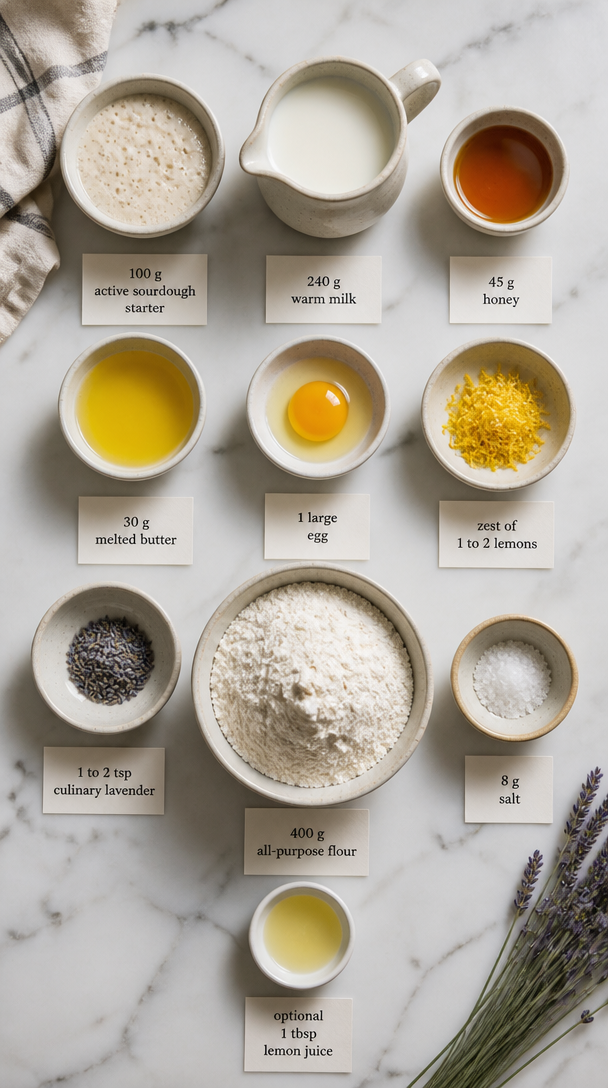
Ingredients you’ll need
For one 8.5 x 4.5-inch loaf, use:
- 100 g active sourdough starter
- 240 g whole milk
- 45 g honey
- 30 g unsalted butter, melted and cooled slightly
- 1 large egg
- Zest of 1 to 2 lemons
- 1 to 2 teaspoons culinary lavender
- 400 g all-purpose flour
- 8 g fine salt
- 1 tablespoon lemon juice, optional
Your starter should look active and bubbly before mixing the dough.
If your starter barely rises after feeding, give it another feeding cycle before using it. A lively starter gives enriched dough a much better chance of rising well.
| Ingredient | What It Does | Helpful Note |
|---|---|---|
| Active starter | Leavens the loaf and adds tang | Use it when bubbly and active |
| Milk | Creates a softer crumb | Warm gently, never make it hot |
| Lemon zest | Adds clean citrus aroma | Avoid the bitter white pith |
| Culinary lavender | Adds floral flavor | Start with 1 teaspoon |
| Honey | Adds gentle sweetness | Also complements lavender |
If soft homemade loaves are your thing, cranberry orange bread gives you another citrusy slice-and-snack option. For something warmer and sweeter, apple fritter bread works particularly well with morning coffee.
Step-by-step directions
1. Infuse the lavender milk. Warm the milk until it feels pleasantly warm rather than hot. Stir in the culinary lavender and let it steep for about 10 minutes.
You can strain the lavender out or leave a little behind.
2. Mix the wet ingredients. Add active sourdough starter, lavender milk, honey, melted butter, egg, and lemon zest to a large bowl. Whisk until combined.
3. Add flour and salt. Add the all-purpose flour and salt. Mix until no dry flour remains.
At this stage, the dough may look sticky and rough.
That’s fine.
4. Let the dough rest. Cover the bowl and let the dough sit for 20 to 30 minutes.
This rest allows the flour to absorb moisture and makes the dough easier to handle.
5. Develop the dough. Knead gently for several minutes, or perform a few rounds of stretch-and-fold motions in the bowl.
The dough should gradually become smoother and more elastic.
Avoid dumping in lots of extra flour just because it feels tacky.
6. Bulk ferment. Cover the bowl and leave the dough at room temperature until it looks noticeably puffy and has increased substantially in size.
In a warm kitchen, this may take about 4 to 6 hours. A cool kitchen can require longer.
Watch the dough rather than forcing it onto a fixed schedule.
7. Shape the loaf. Lightly flour your work surface. Gently press the dough into a rectangle, then roll it into a snug log.
Tuck the ends underneath.
8. Transfer to the pan. Butter an 8.5 x 4.5-inch loaf pan and line it with a parchment sling if desired.
Place the dough seam-side down.
9. Complete the second rise. Cover the pan and allow the loaf to rise until it looks airy and the center reaches roughly an inch above the rim.
Depending on room temperature and starter strength, this may take 2 to 4 hours or longer.
10. Bake. Heat the oven to 350°F.
Bake for roughly 35 to 45 minutes.
If the top develops color faster than you want, tent it loosely with foil during the final portion of baking.
11. Cool. Remove the loaf from the pan and let it cool on a rack for at least 45 minutes before slicing.
Cutting too early can compress the tender crumb.
Tips for Beautiful Lavender Lemon Sourdough Bread
This loaf doesn’t need advanced bread-baking skills, but a few details make the difference between fragrant and overwhelming, or fluffy and dense.
Keep the floral flavor gentle
Use lavender that the package specifically labels for culinary use.
Decorative lavender, craft lavender, and unknown garden lavender may not suit food preparation.
For your first loaf, start with 1 teaspoon.
You can increase the amount slightly next time if you want a stronger floral aroma.
I wouldn’t keep adding lavender just because the raw dough doesn’t smell intense. Its flavor becomes more noticeable after baking.
The same principle applies when you’re pairing flavors. Lemon should still remain obvious enough to keep the bread fresh and bright.
For another loaf-style recipe that works well at breakfast or brunch, carrot cake loaf delivers a warmer spiced flavor. Meanwhile, moist cottage cheese lemon poppy seed muffins are a great option when you want individual lemon treats instead of one loaf.
Don’t add too much flour
Enriched sourdough can feel tackier than expected.
However, repeatedly adding flour while kneading can create a dry loaf.
Give the dough time to rest before deciding it needs more flour.
As the gluten develops, the dough usually becomes easier to handle.
Lightly flour your hands or work surface during shaping rather than working large amounts of flour into the dough.
Watch the dough, not only the clock
Fermentation time can change dramatically depending on starter strength, milk temperature, room temperature, and how enriched the dough is.
Therefore, don’t panic if the dough doesn’t match an exact time estimate.
During bulk fermentation, look for expansion, a smoother surface, and a visibly airy appearance.
During the final proof, look for a rounded top and a loaf that feels noticeably lighter.
Avoid excessive lemon juice
Lemon juice sounds like the obvious way to create stronger lemon bread.
However, zest gives you far more concentrated lemon aroma without changing the dough as much.
If you want a stronger flavor, add more finely grated zest first.
I treat the optional tablespoon of lemon juice as just that: optional.
Check the center before removing the loaf
The honey, milk, butter, and egg encourage the crust to brown.
That means the top can look finished before the center actually finishes baking.
If the loaf browns early, cover it loosely with foil instead of removing it.
For extra confidence, an instant-read thermometer inserted into the center of an enriched loaf should typically show the crumb has cooked through before you take it from the oven.
Small Loaf Pans, Serving Ideas, and Storage
I particularly like baking this bread in an 8.5 x 4.5-inch loaf pan because the dough develops a taller, more attractive shape.
Why I use a smaller loaf pan
A standard 9 x 5-inch pan works, but the loaf will usually look wider and shorter.
That doesn’t change the flavor.
However, you may need to watch baking time because shape affects how heat reaches the center.
The smaller pan also creates slices that feel just right for breakfast.
I butter the pan and add a strip of parchment with extra paper hanging over the long sides. Once the loaf cools slightly, those parchment edges make lifting it easy.
How to serve Soft Lavender Lemon Sourdough Loaf
Fresh slices need very little.
A thin layer of salted butter may be all you want.
For brunch, I like mascarpone or cream cheese with berries.
Honey also pairs naturally with the lavender.
For a lightly toasted slice, keep the heat moderate because the enriched bread can brown quickly.
You could also turn slightly stale slices into French toast. The lemon and lavender give French toast a completely different character without needing extra flavoring.
How to store it
Let the loaf cool completely before storing it.
Then keep it tightly wrapped or inside an airtight container at room temperature for about 2 days.
Because this bread has a soft crumb, exposure to air dries it out faster than you might expect.
For longer storage, slice the loaf first and freeze the slices.
Place parchment between slices if you want to remove individual portions easily.
Then toast directly from frozen or let a slice thaw at room temperature.
Freezing individual slices works especially well because you don’t have to thaw the entire loaf.creamy lemonade when it’s hot out.
Common Questions
Can I use dried lavender from my garden?
Only if you’re sure it’s culinary lavender and hasn’t been sprayed with anything. If you’re unsure, buy labeled culinary lavender. It’s not worth guessing with something that can taste so strong.
My loaf is browning fast but the middle feels underbaked. What do I do?
Tent the top with foil and keep baking. Enriched dough can brown quickly because of the milk, honey, and egg.
Can I make this with bread flour instead of all purpose?
Yes, but the loaf can come out a little chewier. If you want to keep it soft, stick with all purpose, or do half bread flour and half all purpose.
How do I store it so it stays soft?
Once fully cooled, wrap it tightly or store in an airtight container at room temp for 2 days. After that, slice and freeze. Toast slices straight from frozen.
Can I make it more lemony?
Add extra zest, not extra juice. You can also do a tiny honey lemon brush on the warm loaf for a stronger lemon finish.

A Soft, Bright Loaf Worth Slowing Down For
Soft Lavender Lemon Sourdough Loaf has become one of my favorite ways to make sourdough feel a little different.
The starter still provides that familiar gentle tang, but milk, egg, butter, and honey turn the crumb soft and tender. Lemon zest brings brightness, while lavender stays quietly in the background when you keep the amount restrained.
The result works equally well with morning coffee, at brunch, or toasted for an afternoon snack.
Most importantly, don’t let the fermentation times make you nervous.
Sourdough reacts to your starter and your kitchen. Look for a puffy bulk rise and a beautifully domed final proof rather than forcing the bread to match an exact clock.
If you want to explore other approaches to floral sourdough, Lavender Vanilla Sourdough Bread from Sourdough Brandon offers another sourdough variation. For a non-sourdough comparison, Lavender Lemon Bread from On Sutton Place takes the same floral-citrus pairing into quick-bread territory.
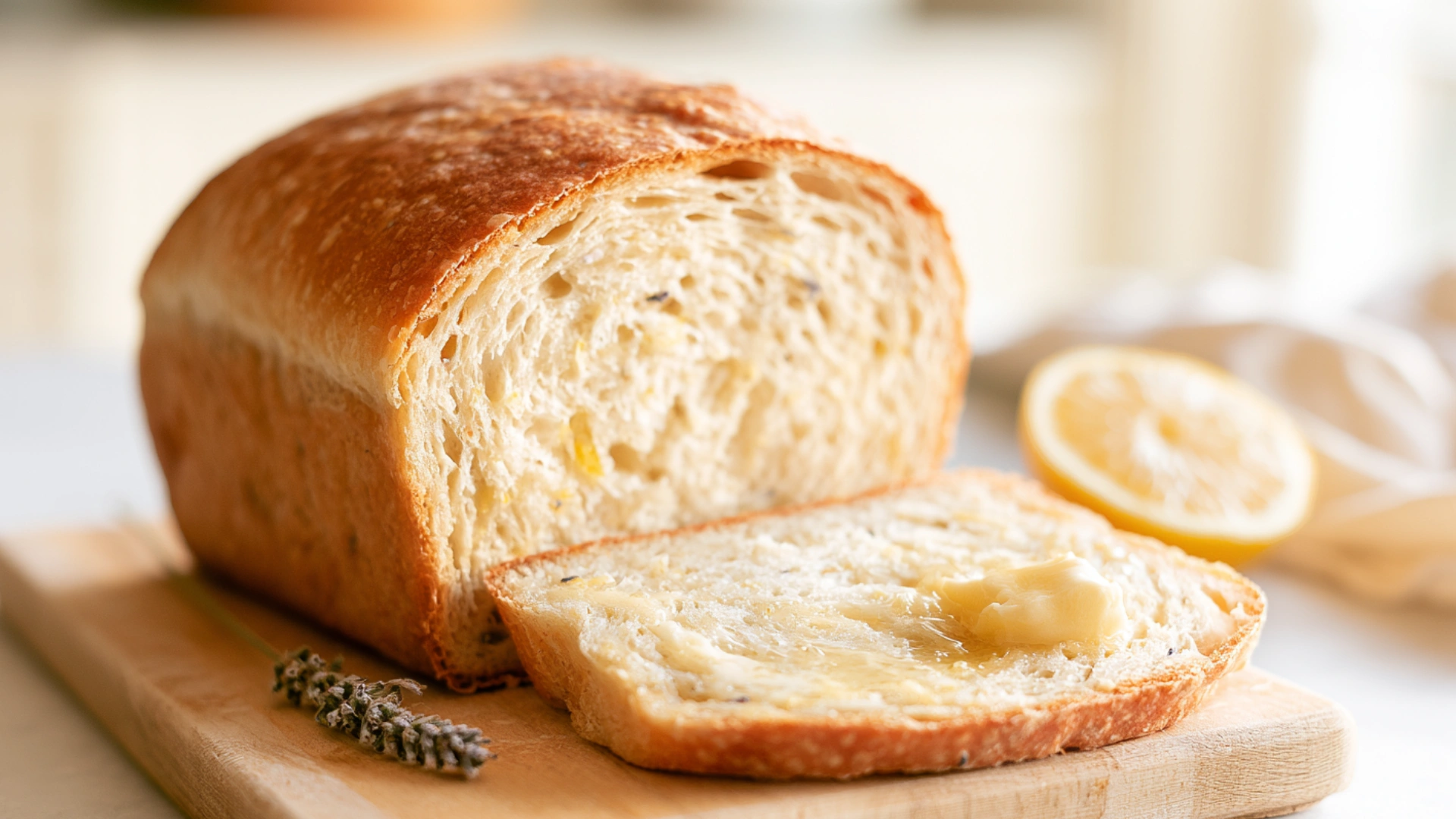
Then slice your loaf, add a little butter, and enjoy the part where your kitchen smells like lemon, honey, and warm bread.

Soft Lavender Lemon Sourdough Loaf
Ingredients
Method
- Infuse the lavender by warming the milk until it’s just warm to the touch. Stir in the lavender and let it sit for 10 minutes. Strain if a smoother crumb is desired.
- In a large bowl, whisk together the starter, warm lavender milk, honey, melted butter, egg, and lemon zest.
- Add flour and salt to the mixture and mix until a shaggy dough forms. It may be sticky at first.
- Cover the bowl and let the dough rest for 20 to 30 minutes.
- After resting, perform gentle kneading in the bowl or on a lightly floured surface until the dough is smoother and stretchy.
- Cover and let the dough rise at room temperature until puffy (approximately 4 to 6 hours).
- Lightly flour the counter, press the dough into a rough rectangle, and roll it into a log. Tuck the ends under for a neat appearance.
- Place the shaped dough into a greased small loaf pan and cover. Let it rise until it domes about 1 inch above the rim (2 to 4 hours).
- Preheat the oven to 350°F (175°C) and bake the loaf for 35 to 45 minutes. Tent with foil if it browns too quickly.
- Allow the loaf to cool for at least 45 minutes before slicing.