
Beef and bok choy chow mein is one of those dinners that always brings me back to why I love cooking at home. The first time I made it, I remember how quickly everything came together, the noodles bubbling away while the beef hit the pan with that familiar sizzle. Beef and bok choy chow mein feels comforting, but it also feels fresh, which makes it perfect for busy nights when you still want real flavor on the table.
The combination of tender beef, crisp bok choy, and savory noodles creates a meal that feels complete without being heavy. I keep coming back to beef and bok choy chow mein because it relies on simple ingredients and clear technique instead of complicated steps.
It’s the kind of dish that builds confidence in the kitchen. Once you understand the flow, the cooking feels natural. This recipe shows how a hot pan, good timing, and everyday ingredients can turn a quick stir-fry into a dinner worth slowing down for.
- Beef and Bok Choy Chow Mein at Home
- Building Flavor with the Right Ingredients
- Ingredients That Carry the Dish
- Cooking Technique That Keeps Everything Tender
- Bringing Everything Together Smoothly
- Serving, Variations, and Everyday Flexibility
- FAQs About Beef and Bok Choy Chow Mein: Simple 30-Minute Dinner Win
- Conclusion: Beef and Bok Choy Chow Mein: Simple 30-Minute Dinner Win
Beef and Bok Choy Chow Mein at Home
A Weeknight Dish That Always Works
Beef and bok choy chow mein is one of those meals that fits real life perfectly. I started making it during busy weeks when takeout felt tempting but cooking still sounded better. The process feels fast and focused. The noodles boil while the beef marinates, and by the time the skillet heats up, everything moves quickly. That rhythm makes this dish reliable. You cook with confidence because every step has a clear purpose.
What makes beef and bok choy chow mein stand out is balance. The beef brings richness, the bok choy adds freshness, and the noodles tie everything together. Each bite feels complete instead of heavy. Because the cooking time stays short, the vegetables keep their color and texture. That detail matters. It keeps the dish from feeling tired or flat. At home, I like meals that still feel lively when they hit the plate, and this one always delivers.
This dish also adapts well to different kitchens. A standard skillet works just fine. You don’t need special tools or hard-to-find ingredients. That simplicity keeps beef and bok choy chow mein in regular rotation. It cooks fast, tastes bold, and cleans up easily, which matters on busy nights.
On nights when I want a fast noodle dinner that still feels homemade, I lean toward dishes like this and other comfort meals such as my better than takeout fried rice that deliver big flavor without slowing dinner down.
Why Beef and Bok Choy Chow Mein Tastes So Good
Flavor starts with preparation. Thinly sliced beef cooks quickly and stays tender when coated with soy sauce, oyster sauce, and cornstarch. That short marinade builds a savory base without slowing you down. Once the beef hits hot oil, it browns fast and locks in flavor. That step sets the tone for the whole dish.
Bok choy plays a key role here. Its stems stay crisp while the leaves soften just enough. That contrast keeps the noodles interesting. Bell pepper and carrot add light sweetness, which balances the salty notes from the sauce. Garlic and ginger bring warmth and aroma, filling the kitchen with that familiar stir-fry scent that signals dinner is almost ready.
Chow mein noodles finish the job. They soak up sauce without turning mushy, especially when added at the end. Tossing everything together over high heat helps the flavors connect. Every ingredient earns its place, which is why beef and bok choy chow mein feels satisfying without being complicated.
Because the dish relies on technique rather than excess sauce, it never feels greasy. Instead, it tastes clean and focused. That quality makes it easy to enjoy often, whether you cook for yourself or share it with others.
Beef and bok choy chow mein also fits the same weeknight rhythm as quick skillet meals like black pepper chicken, where high heat and simple prep make all the difference.
Building Flavor with the Right Ingredients
Ingredients That Carry the Dish
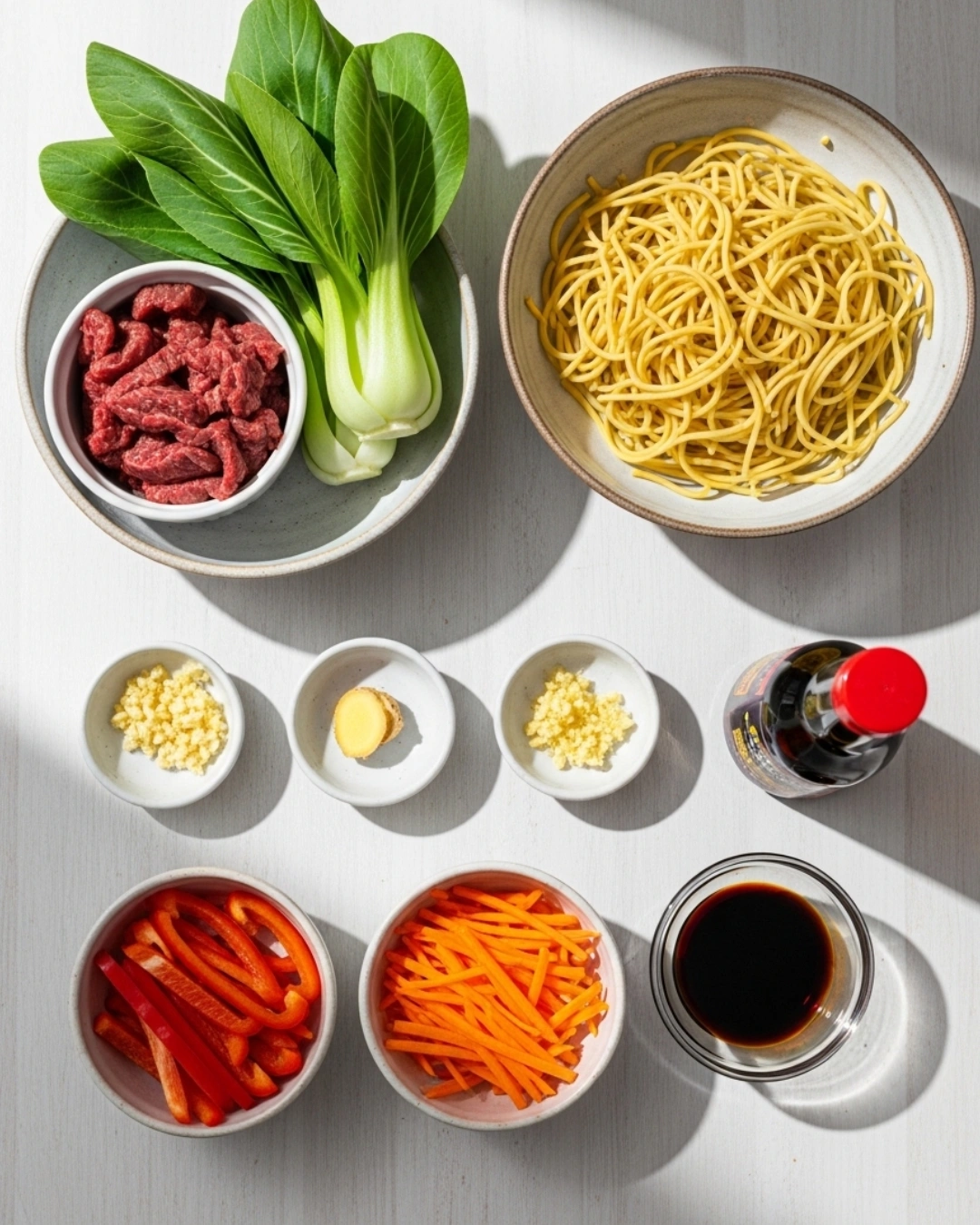
Beef and bok choy chow mein succeeds because the ingredient list stays tight and purposeful. Each item adds something specific, which keeps the dish balanced from the first bite to the last. Instead of relying on heavy sauces, this recipe lets the ingredients do the work.
Here’s what goes into the pan and why it matters:
- Chow mein noodles for structure and chew that holds up during stir-frying
- Beef sirloin, thinly sliced for quick cooking and a tender finish
- Soy sauce to bring salt and deep savory flavor
- Oyster sauce to add body and mild sweetness
- Cornstarch to help the sauce cling to the beef
- Vegetable oil for high-heat cooking
- Garlic and fresh ginger for warmth and aroma
- Bok choy for crisp stems and soft leaves
- Bell pepper and carrot for color and light sweetness
- Green onions for a fresh finish
This combination keeps beef and bok choy chow mein grounded and familiar. The vegetables brighten the dish, while the beef adds richness without overpowering everything else. Because the list stays short, prep stays manageable, even on busy nights.
Each ingredient also cooks fast. That matters because stir-frying depends on speed. When everything moves quickly, flavors stay clean and textures stay sharp.
Bok choy brings freshness and crunch, much like the vegetables used in my cabbage glass noodles stir fry, which relies on fast cooking to keep textures bright.
How These Ingredients Come Together
The order you cook everything matters just as much as what you use. Beef and bok choy chow mein starts with marinated beef. The soy sauce, oyster sauce, and cornstarch coat each slice, which helps it brown evenly. Once the beef hits hot oil, it cooks fast and picks up color without drying out. Removing it early keeps it tender.
Next, garlic and ginger hit the pan. They cook briefly and release aroma right away. Bok choy, bell pepper, and carrot follow, cooking just long enough to soften while keeping bite. That balance keeps the vegetables lively instead of limp.
Bok choy plays a bigger role than just texture, since it’s packed with nutrients and light crunch, and according to WebMD’s overview of the health benefits of bok choy, it adds vitamins and minerals that keep beef and bok choy chow mein feeling balanced instead of heavy.
The noodles go in last. This step protects their texture. Tossing them with the vegetables and beef allows the sauce to spread evenly without drowning the dish. A few minutes of constant stirring pulls everything together.
This method keeps beef and bok choy chow mein consistent. The beef stays juicy, the vegetables stay bright, and the noodles stay chewy. Nothing feels rushed, but nothing drags either. That steady flow makes the dish reliable and enjoyable, whether you cook it once or add it to your regular dinner rotation.
The balance of beef and vegetables here feels similar to simple skillet dinners like ground beef and cabbage, where ingredients stay clear and purposeful.
Cooking Technique That Keeps Everything Tender
Heat Control and Pan Movement
Beef and bok choy chow mein depends on confident heat control. A hot pan keeps ingredients from steaming and helps flavors develop quickly. When you heat the skillet before adding oil, the beef sears instead of releasing liquid. That quick sear gives the meat color and keeps it juicy. Stir often, but don’t rush. Let the beef make contact with the pan before moving it.
Once the beef comes out, the pan stays hot. That heat matters because garlic and ginger need instant contact to release aroma. Thirty seconds is enough. Any longer, and the flavor turns sharp. When the vegetables go in, steady stirring helps them cook evenly. Bok choy stems soften first, while the leaves wilt gently. Bell pepper and carrot add crunch and keep the texture interesting.
This movement keeps the dish lively. Beef and bok choy chow mein benefits from constant attention. You stay at the stove, keep ingredients moving, and watch how they respond to heat. That awareness turns a simple recipe into a reliable one.
Keeping the pan uncluttered also helps. If the skillet feels crowded, cook in batches. Space allows ingredients to brown instead of steam. That small choice improves texture and keeps flavors clear.
Bringing Everything Together Smoothly
The final stage matters just as much as the start. When you return the beef to the pan, you reconnect it with the vegetables instead of recooking it. That step protects tenderness. Adding noodles next allows them to absorb sauce already in the pan. Tossing everything together spreads flavor evenly without drowning the dish.
Short cooking time at this stage keeps noodles chewy. Two or three minutes is enough. Stir gently but consistently. You want noodles coated, not broken. A splash of soy sauce at the end fine-tunes seasoning and adds shine. Salt and pepper adjust balance without covering natural flavors.
Green onions finish the dish. Their mild bite lifts the heavier notes from beef and sauce. Sprinkling them at the end keeps their flavor fresh. Once everything comes together, remove the pan from heat right away. Overcooking dulls texture and color.
This technique keeps beef and bok choy chow mein clean and focused. Every ingredient holds its shape and role. The beef stays tender, the vegetables stay crisp, and the noodles stay structured. That balance makes the dish feel intentional rather than rushed.
Cooking this way builds confidence. Each step flows into the next without guesswork. After a few rounds, the process feels natural. That comfort is why this dish works so well for repeat dinners. It rewards attention, respects timing, and delivers consistent results every time.
Serving, Variations, and Everyday Flexibility
How to Serve It for the Best Experience
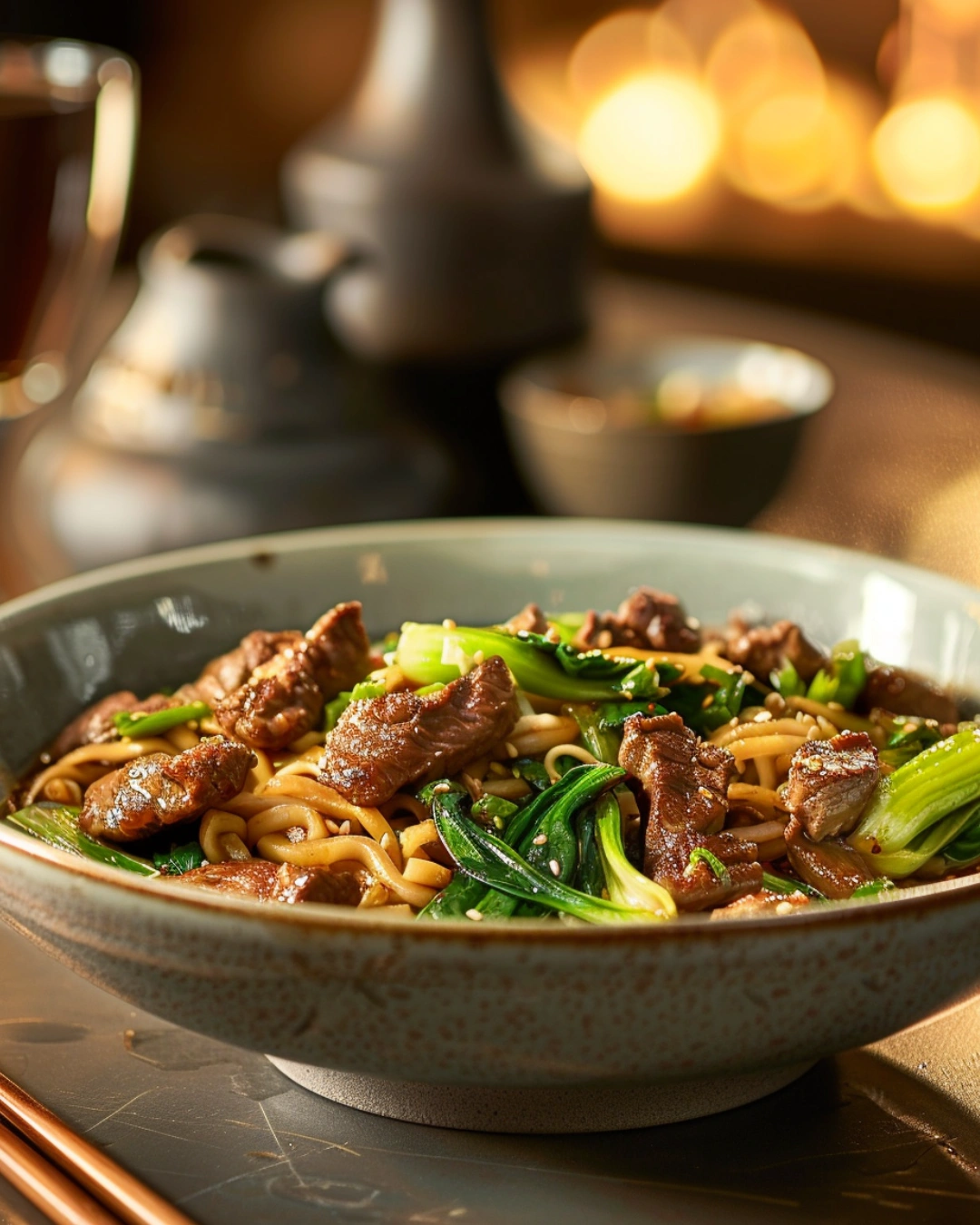
Beef and bok choy chow mein tastes best right off the stove. The noodles stay springy, the vegetables keep their bite, and the beef remains tender. I like serving it in wide bowls rather than plates because it holds heat better and makes tossing easier while eating. A light sprinkle of chopped green onions on top adds freshness without changing the core flavor.
This dish works well as a complete meal, but it also fits nicely into a shared table. When I serve it family-style, I pair it with simple sides that don’t compete. Steamed dumplings, a basic cucumber salad, or even plain white rice keep the focus on the chow mein. Because the flavors are savory but not heavy, the dish never overwhelms the rest of the meal.
Portioning also matters. Beef and bok choy chow mein feels filling without feeling dense, so one bowl usually satisfies. Leftovers reheat well in a skillet over medium heat with a small splash of water or soy sauce. That quick reheat brings the noodles back to life better than a microwave and keeps the texture intact.
Serving it fresh and hot highlights what makes this dish work. The balance stays clear, and every ingredient keeps its role.
When serving beef and bok choy chow mein, presentation still matters, and I like keeping it simple and natural, similar to the clean, unfussy approach to food styling often highlighted in everyday kitchen inspiration like this Kitchn feature on creative table setups.
Easy Variations That Still Respect the Dish
One reason beef and bok choy chow mein stays popular is its flexibility. You can change small details without losing the spirit of the dish. Flank steak swaps in easily for sirloin and delivers a slightly richer bite. For a lighter option, thinly sliced chicken cooks just as quickly and carries the sauce well.
Vegetables adapt too. Snow peas or sliced mushrooms fit naturally alongside bok choy. They cook at a similar pace and keep the texture varied. If bok choy isn’t available, napa cabbage works as a close substitute, softening quickly while still adding volume.
For extra depth, a small drizzle of sesame oil at the end adds warmth without overpowering the sauce. Red pepper flakes bring gentle heat for those who like a little kick. These additions stay optional. The base recipe already feels complete, which makes changes feel intentional rather than necessary.
This flexibility makes beef and bok choy chow mein dependable. It fits different tastes, different seasons, and different schedules. You can cook it as written or adjust it slightly to match what’s in your fridge. Either way, the result stays grounded and satisfying.
That adaptability is what turns a good recipe into a regular habit. When a dish welcomes variation and still delivers consistent results, it earns a place in everyday cooking. Beef and bok choy chow mein does exactly that.

Beef and Bok Choy Chow Mein
Ingredients
Equipment
Method
- Boil chow mein noodles according to package directions, drain, and set aside.
- Mix beef with soy sauce, oyster sauce, and cornstarch, then marinate for 15 minutes.
- Heat vegetable oil in a skillet over high heat and stir-fry beef for 2 to 3 minutes until browned, then remove from the pan.
- Add a little more oil if needed, then stir-fry garlic and ginger for about 30 seconds.
- Add bok choy, bell pepper, and carrot and stir-fry for 3 to 4 minutes until tender-crisp.
- Return beef to the skillet, add noodles, and toss everything together for 2 to 3 minutes.
- Season with salt, pepper, and extra soy sauce if needed, then top with green onions and serve.
Nutrition
Notes
Add chili flakes or a small drizzle of sesame oil for extra depth.
From your stove to our hearts
share your delicious take!FAQs About Beef and Bok Choy Chow Mein: Simple 30-Minute Dinner Win
What is beef chow choy?
Beef chow choy refers to a stir-fried noodle dish made with sliced beef, bok choy, and a savory soy-based sauce. It focuses on quick cooking over high heat, which keeps the beef tender and the vegetables crisp. In many kitchens, beef chow choy and beef and bok choy chow mein describe the same comforting noodle dish with fresh greens and bold flavor.
What goes with beef chow mein?
Beef and bok choy chow mein pairs best with light sides that don’t overpower it. Simple options like steamed dumplings, cucumber salad, or a mild soup balance the savory noodles. For a fuller spread, spring rolls or plain rice work well and keep the meal grounded.
How to cook la choy beef chow mein?
Cooking a La Choy-style beef chow mein at home follows the same core method used in this recipe. You cook the noodles first, stir-fry marinated beef quickly, remove it from the pan, then cook vegetables and aromatics. Returning the beef and noodles at the end keeps everything tender and evenly coated.
How to cook la choy beef chow mein? W
Chow mein typically includes noodles, vegetables, a protein such as beef or chicken, and a savory sauce built around soy sauce. Garlic and ginger often add aroma, while vegetables like bok choy, carrots, and peppers add texture and balance.
Conclusion: Beef and Bok Choy Chow Mein: Simple 30-Minute Dinner Win
Beef and bok choy chow mein fits perfectly into everyday cooking. It comes together fast, uses familiar ingredients, and delivers a bowl that feels satisfying without feeling heavy. The beef stays tender, the vegetables stay crisp, and the noodles carry just enough sauce to tie everything together.
This dish works because it respects timing and simplicity. You don’t need complicated steps or long prep. You just need a hot pan, steady movement, and ingredients that know their role. Whether you cook it for a quick weeknight dinner or serve it as part of a shared meal, beef and bok choy chow mein stays reliable and comforting.
Once you make it a few times, the process feels natural. That ease is what turns this recipe into a regular favorite. It’s the kind of dish that proves good food doesn’t need to feel complicated to feel complete.