
The first time I made this Vegetable Lasagna with Butternut Squash & Cranberry Glaze, I wasn’t following a trend—I was chasing comfort. The kind that comes from roasting vegetables until golden, hearing the sizzle of olive oil, and watching a glossy cranberry glaze bubble on the stove. This dish brings together the earthy sweetness of butternut squash, the saltiness of feta, and the crunch of toasted walnuts into one colorful bake.
The cranberry glaze gives it that irresistible sweet-tart balance that makes every bite feel festive. Whether you’re serving it for a cozy family dinner or a fall gathering, this lasagna proves that vegetables can be just as rich and satisfying as the classic. Layer by layer, it’s proof that comfort food doesn’t have to be heavy—it just has to be honest, warm, and full of flavor.
- The Story Behind This Vegetable Lasagna with Butternut Squash & Cranberry Glaze
- Flavor Pairing & Perfect Assembly of Vegetable Lasagna with Butternut Squash & Cranberry Glaze
- Common Mistakes & The Italian Secret of Vegetable Lasagna with Butternut Squash & Cranberry Glaze
- Serving, Storage & The Finishing Touch
- Frequently Asked Questions About Vegetable Lasagna with Butternut Squash & Cranberry Glaze
- Conclusion: Vegetable Lasagna with Butternut Squash & Cranberry Glaze
The Story Behind This Vegetable Lasagna with Butternut Squash & Cranberry Glaze
The Flavor Journey of Butternut Squash
It started one chilly Sunday in November. My grocery basket was full of autumn colors—deep orange butternut squash, ruby cranberries, and golden sweet potatoes. I wanted something cozy but not heavy, something vegetarian that didn’t feel like a compromise. That’s when I thought, why not layer these flavors like lasagna?
Butternut squash has this silky, caramel-like sweetness when roasted that works wonders with both savory and tangy flavors. It pairs beautifully with ingredients like feta, honey, walnuts, and even balsamic vinegar. That balance of sweet and tart is what makes this Vegetable Lasagna with Butternut Squash & Cranberry Glaze feel vibrant and layered, not just in texture but in taste.
To give it a holiday touch, I used a simple cranberry glaze made from pure juice, honey, and balsamic vinegar. It creates a glossy finish and brings out the roasted notes of the vegetables. The glaze adds that “secret ingredient” moment—it’s the unexpected twist that ties everything together.
Building the Layers of Comfort
Traditional lasagna relies on pasta and béchamel, but this one celebrates vegetables as the star. Sweet potatoes, carrots, and squash are thinly sliced to create layers that are soft but structured. Toasted walnuts bring crunch and richness, while crumbled feta gives it a creamy contrast without making it heavy.
The key to perfect vegetable lasagna is balance—texture, moisture, and flavor. Roasting the veggies first helps them hold shape and prevents sogginess, one of the most common veggie lasagna mistakes. Always season each layer lightly; the glaze will handle the final punch of flavor.
If you’ve ever wondered whether you can put butternut squash in lasagna, the answer is a confident yes. Not only does it add color and sweetness, but it also makes every bite feel like fall. Once you drizzle that cranberry glaze on top, it’s no longer just lasagna—it’s a dish that tells a story.
Butternut squash has this silky, caramel-like sweetness when roasted that works wonders with both savory and tangy flavors. You can also taste that magic in our Butternut Squash Sage Stuffing—another cozy fall favorite that celebrates the same earthy sweetness.
Flavor Pairing & Perfect Assembly of Vegetable Lasagna with Butternut Squash & Cranberry Glaze
What Flavors Pair Well with Butternut Squash
Butternut squash has a natural sweetness that makes it incredibly versatile. When roasted, its sugars caramelize, creating a buttery depth that plays well with both savory and bright flavors. To balance that sweetness, think contrast: salty, tangy, nutty, or herbal notes.
In this Vegetable Lasagna with Butternut Squash & Cranberry Glaze, the feta cheese adds a creamy sharpness that cuts through the squash’s mellow tone. Walnuts bring a toasted, earthy flavor and a satisfying crunch that prevents the dish from feeling too soft. Then there’s the cranberry glaze—a blend of pure cranberry juice, honey, and balsamic vinegar—which adds that gentle tart edge that keeps every bite interesting.
If you enjoy understanding how ingredients interact, The Flavor Bible by Karen Page and Andrew Dornenburg is an incredible reference that explains why contrasts like sweet squash, tangy feta, and earthy walnuts work so beautifully together.
Here’s a quick look at the flavor profiles that elevate butternut squash from good to memorable:
| Flavor Type | Perfect Pairing Ingredient |
|---|---|
| Salty & Savory | Feta cheese, parmesan, caramelized onions |
| Nutty & Earthy | Walnuts, pecans, roasted garlic |
| Sweet & Tangy | Cranberry glaze, honey, balsamic reduction |
| Herbal & Fresh | Thyme, sage, parsley |
By combining those elements, you turn simple ingredients into a layered experience—one that’s bright, savory, and balanced from start to finish.
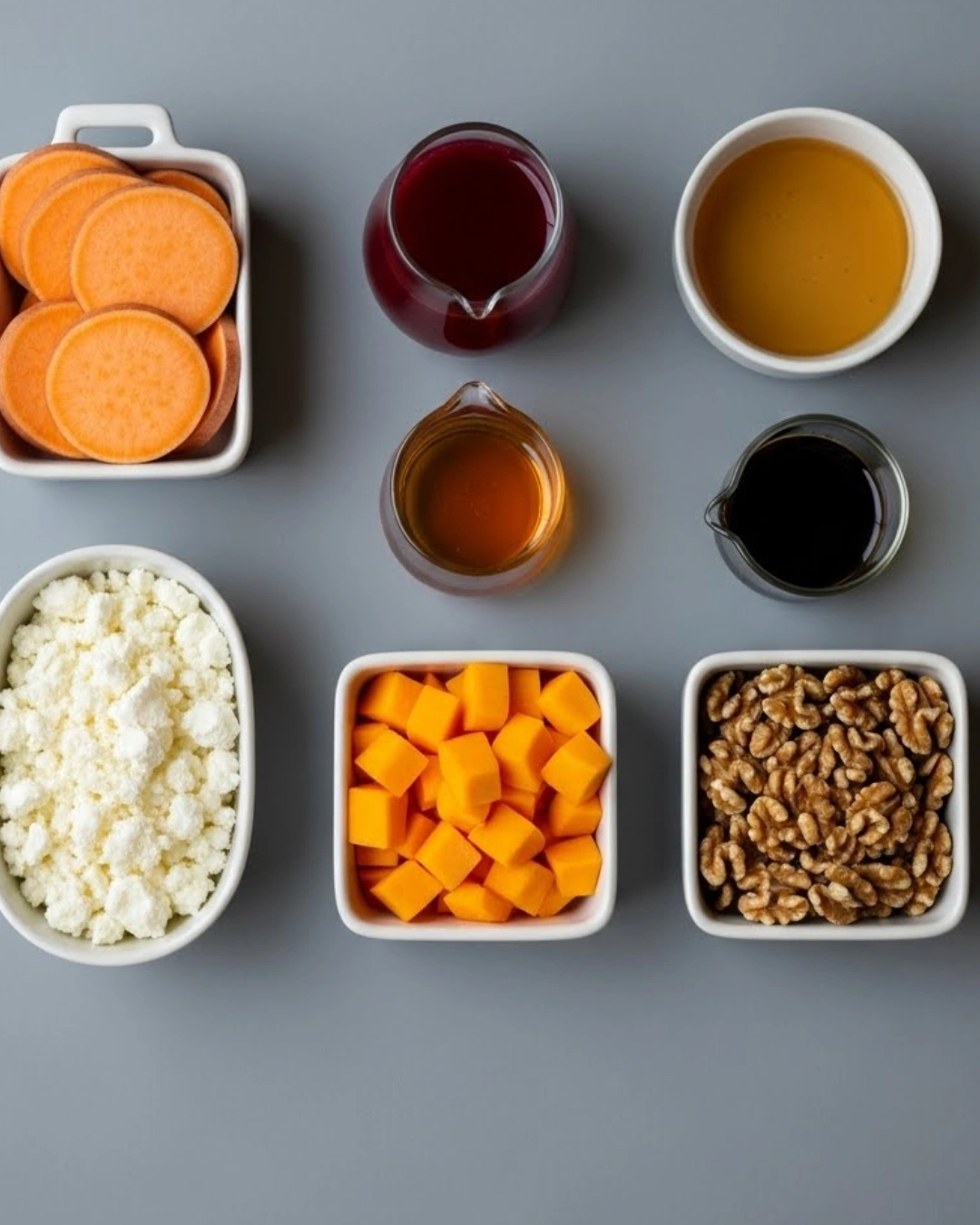
This colorful lasagna comes together with simple, fresh ingredients that bring out the best fall flavors. Here’s what you’ll need:
- 2 medium sweet potatoes, thinly sliced
- 2 cups butternut squash, diced
- 2 medium carrots, thinly sliced
- 2 tablespoons olive oil
- Salt and black pepper, to taste
- 1 cup crumbled feta cheese
- ½ cup chopped toasted walnuts
- ½ cup 100% pure cranberry juice
- 2 tablespoons honey
- 1 tablespoon balsamic vinegar
Optional Garnishes
- Fresh thyme or parsley for a herbal finish
- Extra cranberry glaze for drizzling before serving
According to the Harvard School of Public Health, butternut squash is rich in beta carotene and vitamin C, which enhance its natural sweetness when roasted.
How to Assemble the Perfect Veggie Lasagna
Let’s talk assembly, because even the most flavorful ingredients can fall flat if they aren’t layered properly. The secret to this lasagna’s success is texture management and balance.
Start by roasting the vegetables until just tender—never fully soft. Sweet potatoes, carrots, and butternut squash need to hold their shape as they bake again later. Each vegetable layer should get a sprinkle of salt, pepper, and feta before being stacked with chopped walnuts for that subtle crunch.
When layering, think of it like building a story: sweet potatoes create the foundation, squash adds richness, and carrots bring brightness. Every layer contributes to the structure and taste. Once assembled, drizzle two-thirds of the cranberry glaze before baking. This helps the glaze seep through the vegetables, creating caramelized edges that look and taste amazing.
During the final bake, remove the foil and drizzle the rest of the glaze for a glossy finish. The top layer should be bubbling and slightly golden, with hints of cranberry sweetness peeking through.
The cranberry glaze—a blend of pure cranberry juice, honey, and balsamic vinegar—adds that gentle tart edge that keeps every bite interesting. For another way to use cranberries in savory cooking, try our Cranberry Sauce recipe, which pairs beautifully with roasted vegetables.
Common Mistakes & The Italian Secret of Vegetable Lasagna with Butternut Squash & Cranberry Glaze
Avoid These Common Veggie Lasagna Mistakes
Even the most colorful vegetable lasagna can fall flat if a few small steps are overlooked. While this Vegetable Lasagna with Butternut Squash & Cranberry Glaze keeps things simple, there are a few classic mistakes that can make your layers mushy or your flavors dull. Luckily, they’re all easy to avoid once you know what to look for.
Mistake #1: Skipping the roasting step
Raw vegetables release moisture as they cook. If you skip pre-roasting, you’ll end up with a watery lasagna that won’t hold its layers. Roasting not only reduces water content but also caramelizes the vegetables, giving you deeper, more savory flavor.
Mistake #2: Using too much cheese
It’s tempting to load up on cheese, but balance matters. Too much feta can overpower the natural sweetness of the squash. Sprinkle lightly and evenly; you want pockets of creaminess, not a blanket of saltiness.
Mistake #3: Not resting before serving
This might be the hardest one. Once your lasagna comes out of the oven bubbling and golden, you’ll want to dive right in—but don’t. Resting for 10 minutes allows the glaze and melted cheese to settle, so your slices hold together beautifully.
Mistake #4: Forgetting seasoning between layers
Every layer should have a whisper of seasoning—salt, pepper, and even a few crushed walnuts here and there. It ensures that each bite tastes intentional, not bland in the middle.
Mistake #5: Overcomplicating the glaze
The cranberry glaze is already balanced: tart cranberry juice, a touch of honey, and a hint of balsamic vinegar. Over-reducing it or adding butter can make it sticky and overpowering. Keep it simple, let it shine.
Italians often add a touch of acidity—like lemon zest, wine, or a balsamic glaze—to balance richness. If you love creative twists on Italian dishes, our Ghostly Lasagna is a fun, spooky version that keeps all the classic layers you love.
The Secret Ingredient in Italian Lasagna
It’s not the cheese. It’s not the sauce. The true secret behind authentic Italian-style lasagna—whether vegetarian or meaty—is layer contrast. In Italy, lasagna is never about overstuffing; it’s about giving each layer its moment to shine. Every bite should taste slightly different but connect to the one before it.
For this Vegetable Lasagna with Butternut Squash & Cranberry Glaze, that contrast comes from texture and acidity. The glaze works the same way a traditional tomato sauce would: it cuts through richness and ties together the flavors. Italians often add a touch of acidity—like lemon zest, a splash of wine, or in our case, a balsamic glaze—to balance the fat from cheese and olive oil.
Another Italian secret? Rest and rebake. Many cooks let their lasagna cool completely, then reheat it gently before serving. This deepens the flavors and allows everything to firm up perfectly. You can try the same trick with this version; it tastes even better the next day.
Serving, Storage & The Finishing Touch
Serving Ideas for Vegetable Lasagna with Butternut Squash & Cranberry Glaze
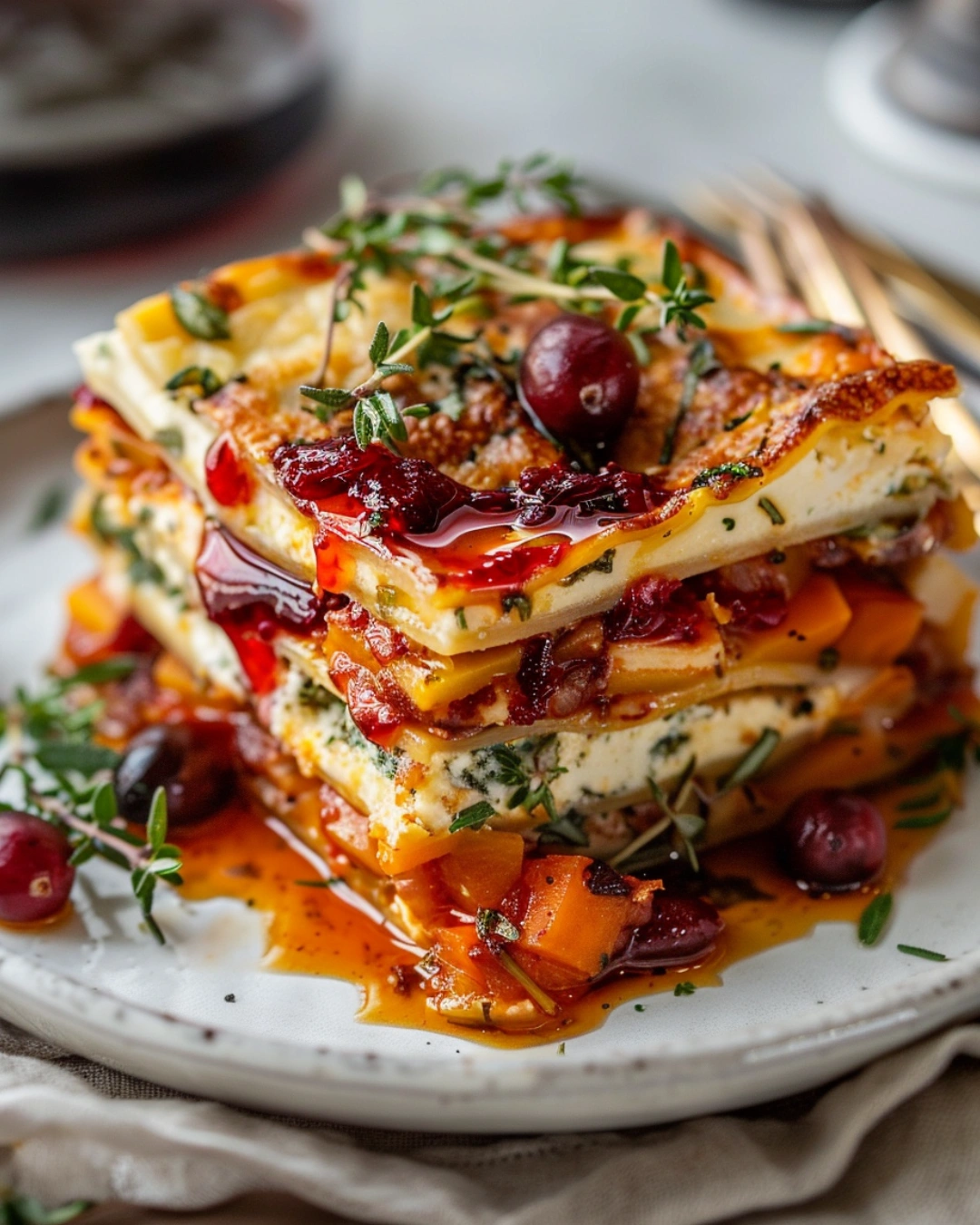
When your lasagna comes out of the oven, the glaze glistens over the golden layers like a subtle caramel film. That’s your cue, it’s ready. Let it rest at least ten minutes before slicing, just like you would with a roast. This helps the layers settle and keeps every slice neat and flavorful.
For a cozy dinner, pair it with garlic bread or our Homemade Garlic Bread—the buttery crust complements the cranberry glaze perfectly.
If you’re hosting, drizzle a touch of extra cranberry glaze over each slice just before serving—it gives the dish a restaurant-quality finish and a pop of color that catches the light beautifully.
Storage & Make-Ahead Tips
One of the best things about this lasagna is how well it keeps.
- To store: Let it cool fully, then refrigerate in an airtight container for up to 4 days.
- To freeze: Slice into portions, wrap individually, and freeze for up to 3 months.
- To reheat: Warm slices in the oven at 350°F for 15 minutes or until heated through. The glaze will re-caramelize and taste even richer.
This Vegetable Lasagna with Butternut Squash & Cranberry Glaze actually tastes better the next day, once the flavors meld. The cranberry glaze soaks into the layers slightly, making each bite deeper and more complex.
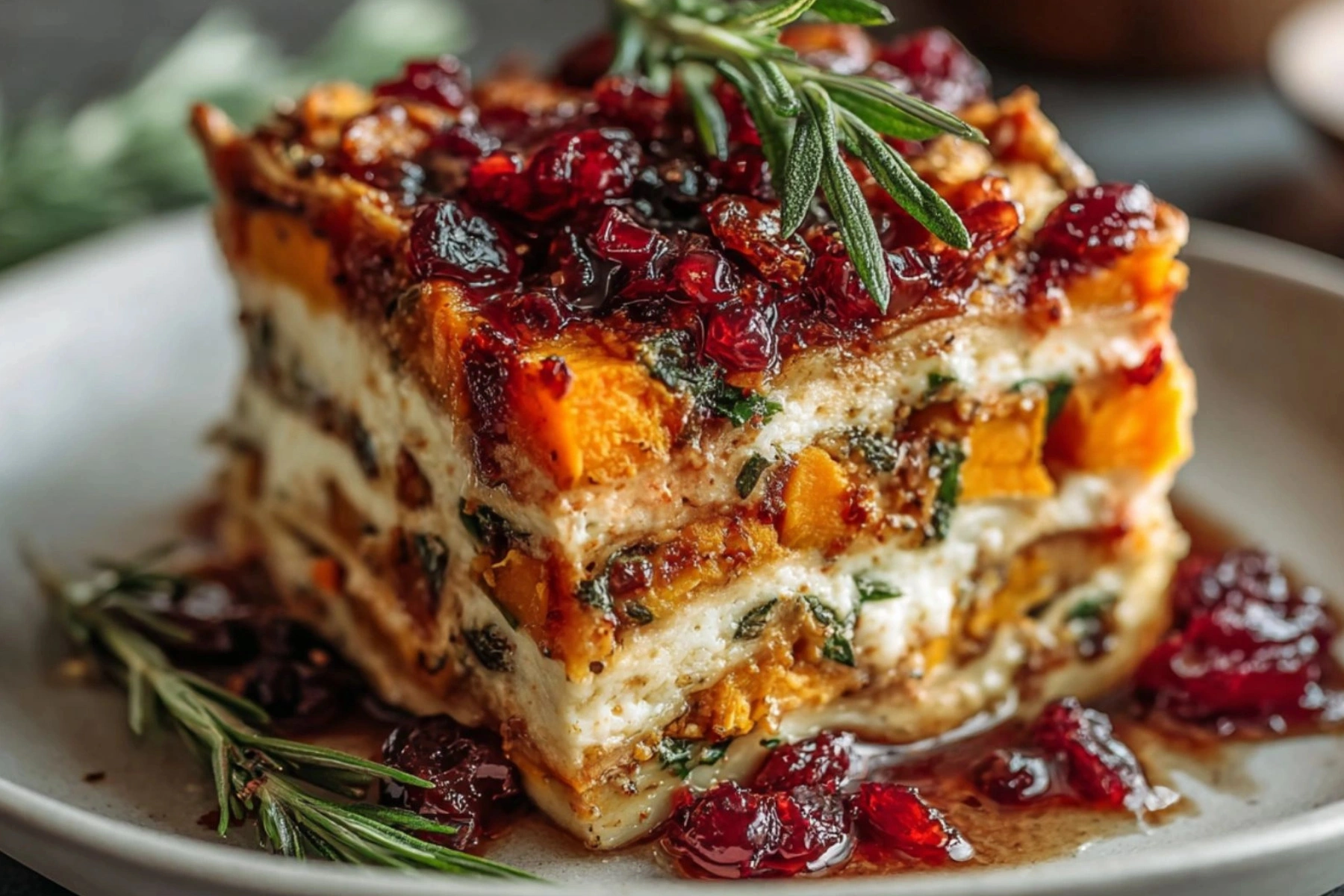

Vegetable Lasagna with Butternut Squash & Cranberry Glaze
Ingredients
Equipment
Method
- Preheat the oven to 375°F (190°C) and grease a baking dish.
- Toss sweet potatoes, butternut squash, and carrots with olive oil, salt, and pepper. Roast for 15–20 minutes until tender.
- Layer sweet potatoes, feta, and walnuts in the baking dish. Add squash and carrots, repeating layers until the dish is filled.
- In a saucepan, simmer cranberry juice, honey, and balsamic vinegar for 5–7 minutes until reduced to a glaze.
- Drizzle two-thirds of the glaze over the lasagna, cover with foil, and bake for 30 minutes.
- Remove foil, drizzle remaining glaze on top, and bake uncovered for 10–15 minutes until bubbling and lightly golden.
- Let the lasagna rest for 10 minutes before slicing and serving.
Nutrition
Notes
From your stove to our hearts
share your delicious take!Frequently Asked Questions About Vegetable Lasagna with Butternut Squash & Cranberry Glaze
1. What flavors pair well with butternut squash?
Butternut squash pairs beautifully with salty and tangy ingredients like feta, parmesan, or goat cheese. It also loves herbs like thyme, sage, and rosemary, and contrasts nicely with tart notes such as cranberry or balsamic vinegar
2. Can you put butternut squash in lasagna?
Absolutely! It’s a delicious substitute for traditional noodles or an additional layer. Roasted squash adds natural sweetness and texture, especially when balanced with cheese or nuts.
3. What are common mistakes in veggie lasagna?
The biggest mistake is skipping pre-roasting the vegetables, which causes excess water and sogginess. Overloading with cheese or sauce can also make the layers collapse. Always season lightly and let the lasagna rest before slicing.
4. What is the secret ingredient in Italian lasagna?
It’s not one ingredient but balance—specifically acidity. Italian lasagna always includes something to cut through the richness, whether it’s tomato sauce, wine, or balsamic glaze. That small touch makes the flavors shine.
Conclusion: Vegetable Lasagna with Butternut Squash & Cranberry Glaze
This Vegetable Lasagna with Butternut Squash & Cranberry Glaze is more than a meal—it’s a celebration of color, texture, and contrast. Every layer tells a story: roasted squash brings depth, sweet potatoes add natural creaminess, feta gives sharpness, and the cranberry glaze ties it all together with bright tang. It’s the kind of dish that feels comforting but refined, perfect for a quiet night in or a special weekend dinner.
The best part? It’s even better the next day, when the flavors have had time to blend and deepen. Serve Vegetable Lasagna with Butternut Squash & Cranberry Glaze with a crisp green salad or warm bread, and you’ve got the kind of balance Italian cooks would be proud of—simple ingredients, perfectly harmonized. It’s proof that vegetarian comfort food can be bold, satisfying, and every bit as indulgent as its traditional cousin.ay.