
Chickpea Veggie Soup is the kind of meal I turn to when I need something grounding and wholesome. On busy evenings, I don’t want complicated steps or heavy ingredients. I want a pot simmering gently on the stove, filling the kitchen with the scent of garlic, thyme, and soft vegetables. That’s exactly what this Chickpea Veggie Soup delivers.
I first made this soup on a cold afternoon when my fridge held simple vegetables and a couple cans of chickpeas. I didn’t expect much. But after the first spoonful, I realized something special happens when humble ingredients come together thoughtfully. The chickpeas add heartiness, the potatoes create body, and the fresh parsley brightens every bite.
If you’ve ever wondered whether chickpeas belong in vegetable soup, the answer is yes, absolutely. They transform a light broth into a satisfying, protein-packed bowl that feels complete.
The Story Behind Chickpea Veggie Soup
A Simple Pot That Brings Comfort
Chickpea Veggie Soup has become one of those steady recipes I return to when I need something grounding. I remember making it on a quiet evening when the house felt still and I wanted dinner to feel uncomplicated. I opened the pantry and saw two cans of chickpeas waiting patiently on the shelf. In the refrigerator, I had carrots, celery, potatoes, and a yellow onion. Nothing fancy. Nothing planned. Yet somehow, I knew it would come together beautifully.
As I chopped the onion and let it soften in olive oil, the kitchen slowly filled with warmth. The carrots and celery followed, adding color and freshness. When I stirred in the garlic and thyme, the aroma shifted from simple to deeply inviting. That moment always feels special to me. It reminds me that flavor builds step by step.
Chickpea Veggie Soup doesn’t rush you. It simmers gently. It asks you to slow down just enough to notice how the vegetables soften and how the broth develops depth. By the time I add the chickpeas, the base already tastes comforting. The chickpeas simply make it heartier, transforming a light vegetable broth into a satisfying meal.
Why Chickpeas Make This Soup Special
Chickpeas give Chickpea Veggie Soup its substance. They hold their shape while absorbing flavor, which creates a balance between tender vegetables and hearty bites. Unlike softer beans, chickpeas remain pleasantly firm even after simmering. That texture makes every spoonful feel complete. If you enjoy wholesome pantry-based dishes, my Lentil Salad uses similar ingredients in a fresh and vibrant way.
I also love how naturally nourishing they are. Healthline explains that chickpeas provide protein and fiber that help promote fullness and steady energy. Because of that, Chickpea Veggie Soup feels filling yet light at the same time. It supports busy days without leaving you weighed down.
The combination of potatoes and chickpeas adds body to the broth. Meanwhile, fresh parsley at the end brightens everything. Each ingredient has a purpose. Onion builds sweetness. Carrots add earthiness. Celery brings subtle depth. Garlic and thyme round out the flavor.
In the end, Chickpea Veggie Soup proves that simple ingredients, when treated thoughtfully, create something deeply satisfying. It feels honest, wholesome, and quietly comforting, exactly the kind of meal that belongs in a balanced kitchen.
How to Make Chickpea Veggie Soup Step by Step
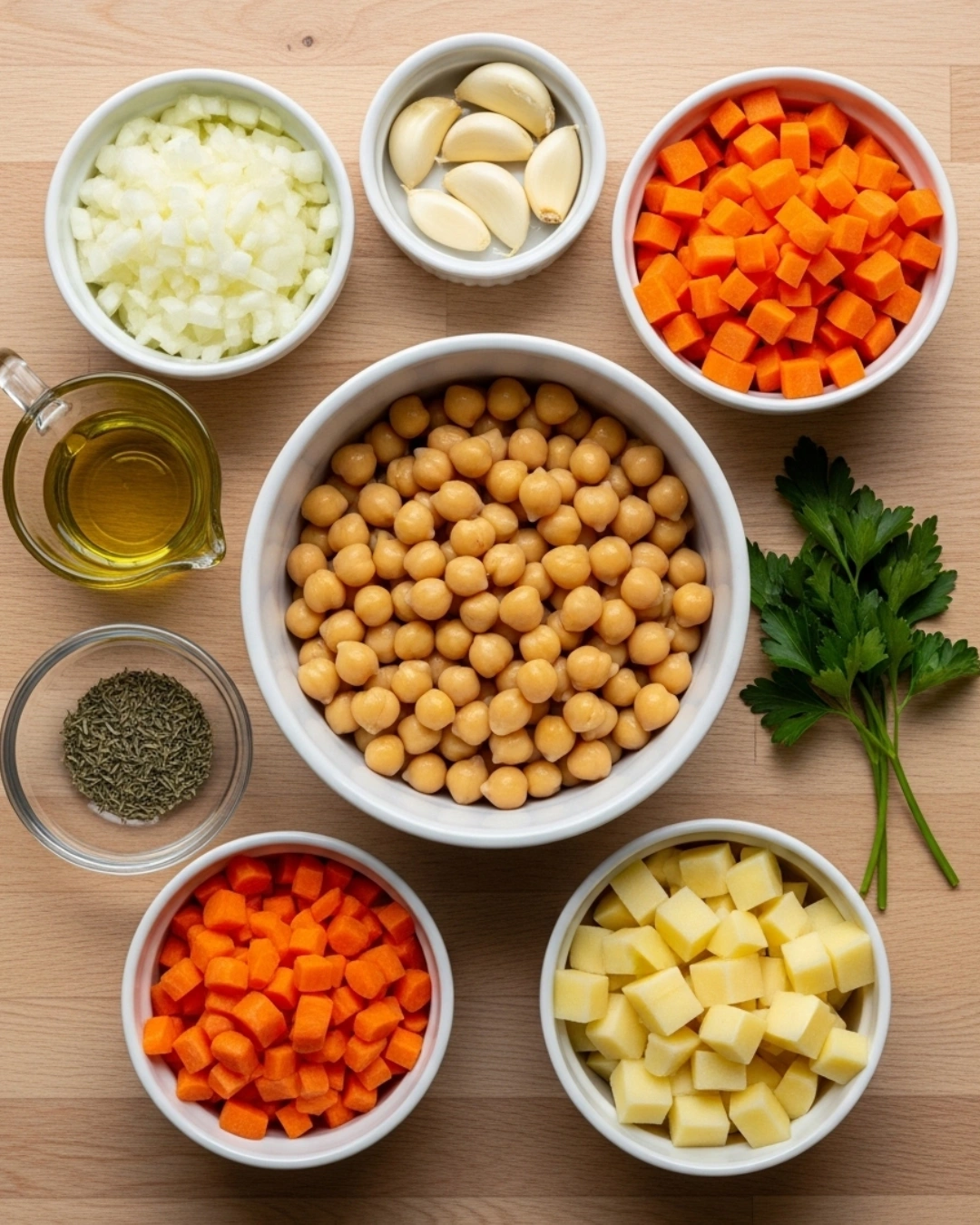
Ingredients for Chickpea Veggie Soup
- 1 yellow onion, chopped
- 4 carrots, diced
- 3 celery stalks, diced
- 1 ½ cups diced potatoes
- 4 cloves garlic, minced
- 1 teaspoon dried thyme
- 4 cups water or vegetable broth
- 1–2 tablespoons No Chicken Base (if using water)
- 2 (15 oz.) cans chickpeas, drained and rinsed
- ⅓ cup chopped fresh parsley
- 1 tablespoon olive oil (or water for oil-free option)
These simple staples also work beautifully in my Ground Beef and Cabbge recipe if you’re looking for another easy dinner idea.
Step-by-Step Instructions for Perfect Flavor
Begin by heating olive oil in a large pot over medium heat. Add the chopped yellow onion and sauté until soft and translucent. Stir frequently so the onion cooks evenly without browning too quickly.
Next, add the diced carrots and celery. Cook for about two minutes, allowing them to begin softening while still holding their structure. Then stir in the diced potatoes, minced garlic, and dried thyme. Cook for one minute, stirring constantly to release the fragrance of the garlic and herbs.
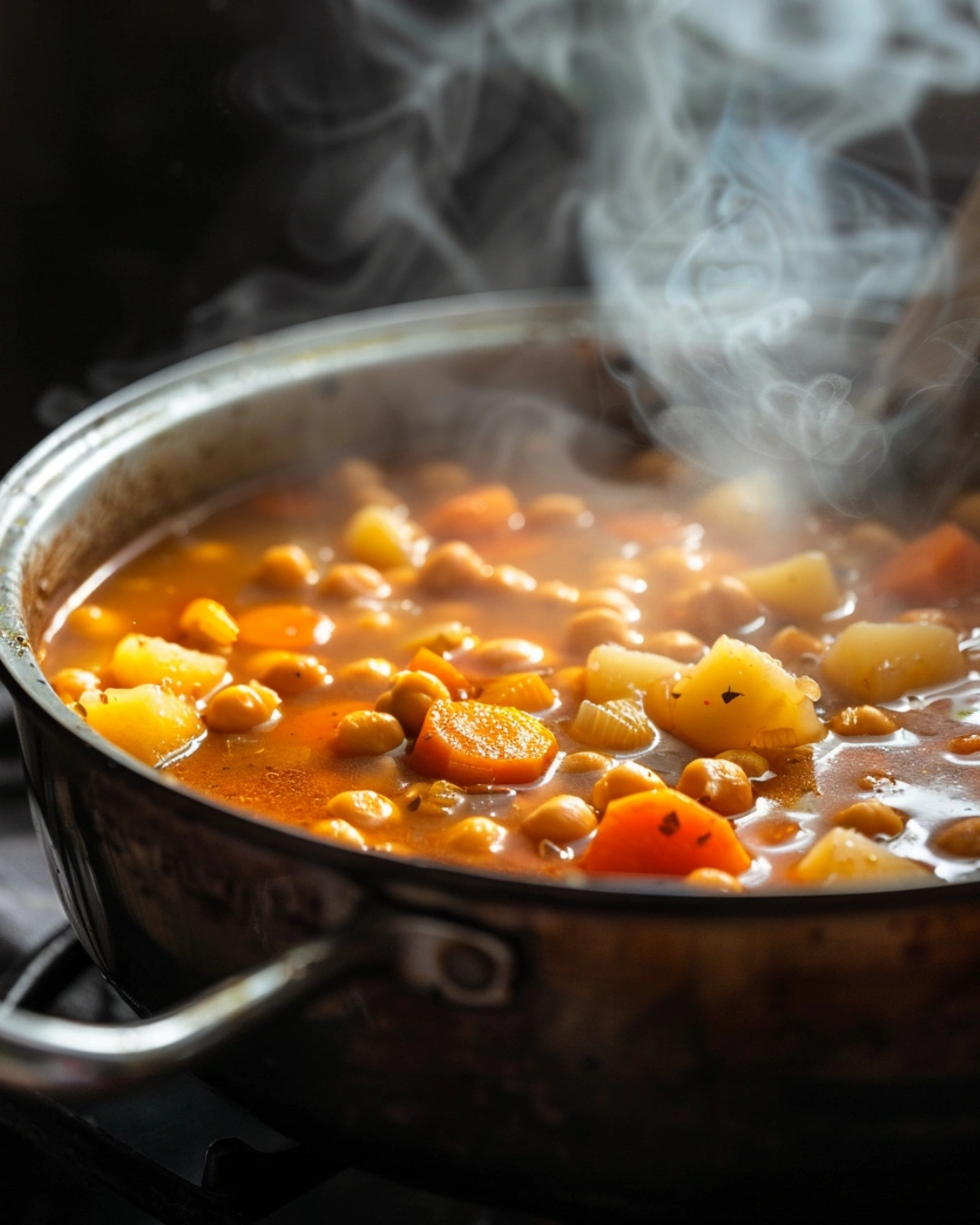
Pour in the water or broth. If you are using water, stir in the No Chicken Base to deepen the flavor. Bring the pot to a gentle boil, then reduce heat and let the Chickpea Veggie Soup simmer for about 20 minutes. The potatoes should become fork-tender, and the broth should develop a rich vegetable flavor.
After the vegetables soften, stir in the drained chickpeas. Let them warm through for several minutes. Finally, add the chopped parsley and adjust seasoning to taste.
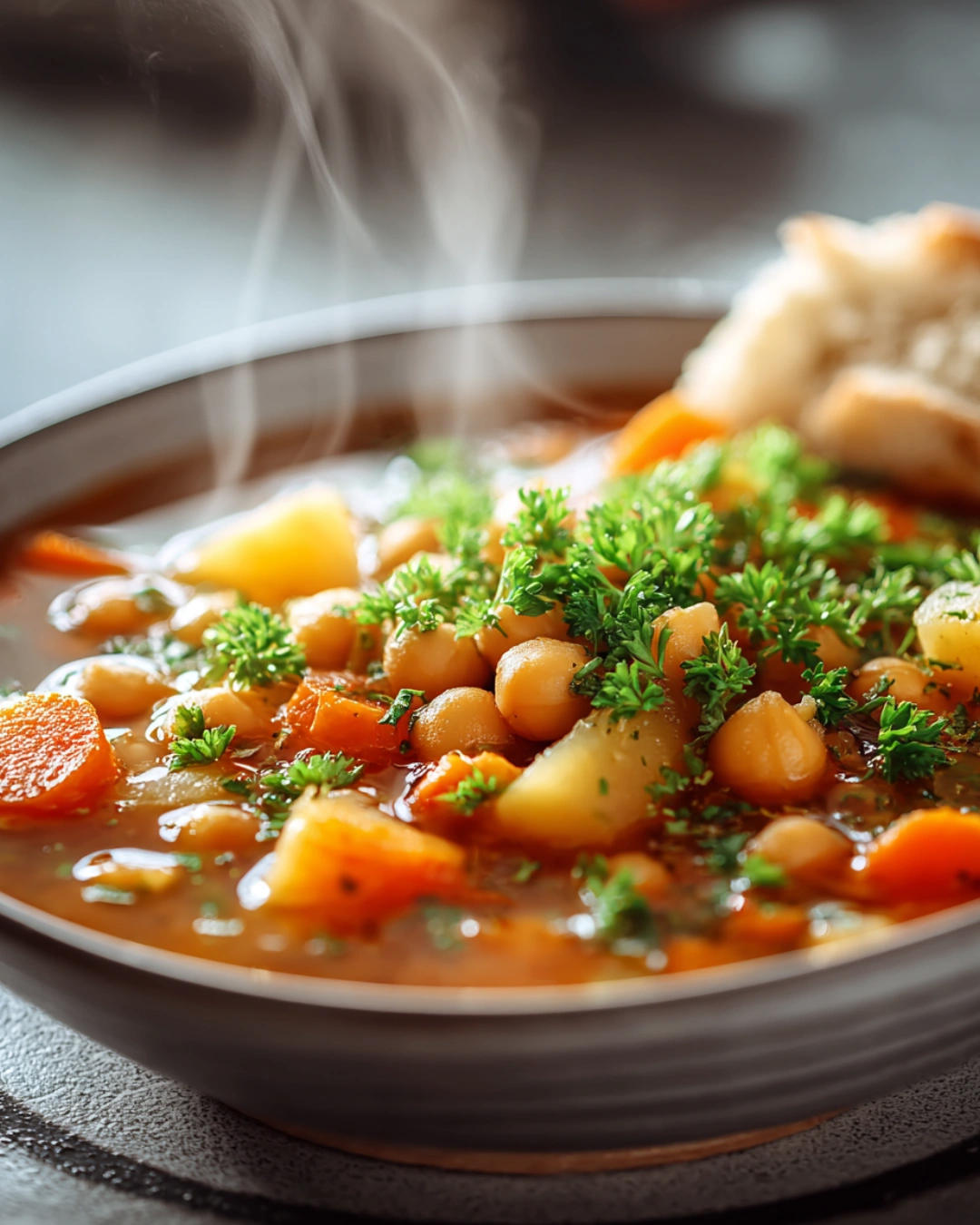
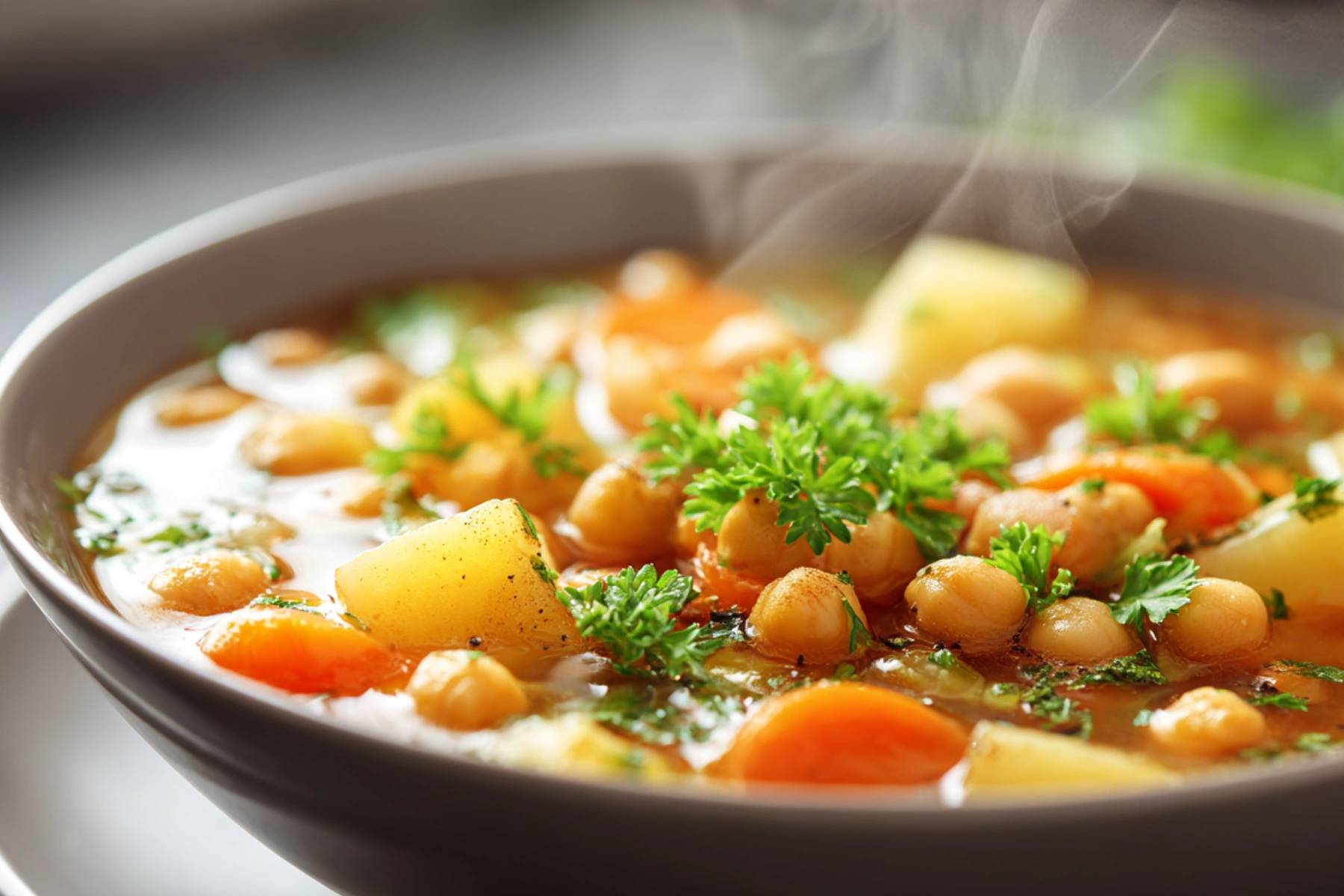
Serve the Chickpea Veggie Soup hot, with crusty bread if desired, and enjoy a simple, satisfying bowl that feels both nourishing and comforting.
Customizing and Making Chickpea Veggie Soup Your Own
Blending Options for Creamy Texture
Chickpea Veggie Soup already has a naturally hearty texture, but you can easily adjust it depending on your preference. If you enjoy a slightly thicker broth, try blending one to two cups of the soup and stirring it back into the pot. This method creates a creamy consistency without adding dairy or flour. The potatoes and chickpeas blend smoothly and give the broth body while keeping the overall flavor balanced.
For a completely smooth version, blend the entire pot after cooking. This creates a velvety Chickpea Veggie Soup that feels rich yet remains plant-based and light. However, I personally love keeping some texture. The combination of tender vegetables and whole chickpeas makes every spoonful feel satisfying and complete.
If you use an immersion blender, blend carefully and leave some chunks for contrast. That small variation in texture makes a noticeable difference.
What to Add and What to Avoid
Chickpea Veggie Soup welcomes thoughtful additions. You can stir in cooked pasta, rice, quinoa, barley, or even small tortellini if you want a heartier bowl. If you enjoy grain-based combinations, my quinoa chickpea salad highlights similar textures in a lighter format.
Fresh greens like spinach or kale also work well. Add them at the end of cooking so they stay vibrant and tender. A squeeze of lemon brightens the entire pot and adds freshness without overpowering the herbs.
However, avoid overcrowding the soup with too many strong flavors. Overly sweet vegetables in large amounts can shift the balance. Heavy cream or excessive seasoning can mask the clean vegetable base that makes Chickpea Veggie Soup so comforting.
This recipe shines because it stays simple. Onion, carrots, celery, potatoes, garlic, thyme, and chickpeas already create depth and warmth. When you build thoughtfully and season carefully, Chickpea Veggie Soup becomes both flexible and dependable, the kind of recipe you can return to again and again.
Storage, Nutrition, and Everyday Serving Ideas
Storage and Meal Prep Made Simple
Chickpea Veggie Soup fits beautifully into weekly meal prep. Once it cools completely, store it in an airtight container in the refrigerator for up to four days. The flavors deepen overnight, which often makes the next day’s bowl even more satisfying.
If you plan to freeze it, let the soup cool fully before transferring it into freezer-safe containers. Leave a little space at the top to allow for expansion. Chickpea Veggie Soup freezes well for up to three months. When ready to enjoy, thaw it overnight in the refrigerator and reheat gently on the stovetop. Add a splash of water or broth if the texture thickens too much.
For busy weeks, I like portioning the soup into individual containers. That way, lunch feels effortless and nourishing without extra effort.
Nutrition and Serving Inspiration
Chickpea Veggie Soup offers balanced nourishment in every bowl. Each serving provides about 211 calories, 10 grams of protein, and 8 grams of fiber. The combination of chickpeas and vegetables delivers steady energy without heaviness. The olive oil adds healthy fats, while the potatoes provide satisfying carbohydrates.
When serving, keep it simple. Pair the soup with crusty bread, a light side salad, or even a slice of homemade focaccia. For extra brightness, add a squeeze of lemon or a sprinkle of freshly cracked black pepper before serving.
Chickpeas are especially valuable because they supply plant-based protein and fiber that help support fullness and balanced meals. According to Harvard’s Nutrition Source on legume, beans and chickpeas contribute important nutrients as part of a healthy eating pattern. That makes this Chickpea Veggie Soup not only comforting, but also deeply nourishing.

Chickpea Veggie Soup
Ingredients
Equipment
Method
- Heat olive oil in a large pot over medium heat. Add chopped onion and sauté until soft and translucent.
- Add diced carrots and celery. Cook for 2 minutes until slightly softened.
- Stir in diced potatoes, minced garlic, and dried thyme. Cook for 1 minute to release aroma.
- Pour in water or broth. If using water, stir in No Chicken Base. Bring to a gentle boil.
- Reduce heat and simmer for 20 minutes until potatoes are fork-tender.
- Stir in drained chickpeas and warm through for several minutes.
- Add chopped parsley, adjust seasoning to taste, and serve hot.
Nutrition
Notes
Optional add-ins: pasta, rice, quinoa, barley, or tortellini.
Storage: Store refrigerated up to 4 days or freeze up to 3 months.
From your stove to our hearts
share your delicious take!FAQs About Chickpea Veggie Soup
Are chickpeas good in vegetable soup?
Yes, chickpeas work beautifully in vegetable soup. They add plant-based protein, fiber, and a satisfying texture that makes the soup feel more complete. Unlike softer beans, chickpeas hold their shape while simmering, so they provide gentle bite in every spoonful. In Chickpea Veggie Soup, they absorb the flavors of garlic, thyme, and broth while still maintaining structure. That balance makes the soup hearty without feeling heavy.
What not to put in vegetable soup?
While vegetable soup allows flexibility, some ingredients can overpower the balance. Large amounts of very sweet vegetables, such as too much corn or sweet potato, can shift the flavor too far in one direction. Heavy cream or excessive seasoning can also mask the clean vegetable base. In Chickpea Veggie Soup, simple ingredients create the best result. Fresh herbs, balanced aromatics, and proper seasoning keep the flavors clear and comforting.
Can I blend chickpeas for soup?
Yes, blending chickpeas works well if you prefer a creamier texture. You can blend one to two cups of Chickpea Veggie Soup and stir it back into the pot to thicken the broth naturally. This method keeps the soup dairy-free while adding smoothness. You can also fully blend the entire soup for a velvety consistency if desired.
Can you put canned chickpeas in soup?
Absolutely. Canned chickpeas make Chickpea Veggie Soup quick and convenient. Simply drain and rinse them before adding to the pot. Since they are already cooked, they only need a few minutes to warm through. This keeps their texture firm while allowing them to absorb the soup’s flavor.
Conclusion
Chickpea Veggie Soup reminds me that nourishing food does not need to be complicated to feel meaningful. With simple vegetables, hearty chickpeas, and a gently simmered broth, you create a meal that supports both busy days and slow evenings. The chickpeas add protein and texture, while the potatoes and carrots bring comfort and balance. Every ingredient plays a role, and together they form a bowl that feels wholesome without feeling heavy.
Whether you serve this Chickpea Veggie Soup for lunch, dinner, or weekly meal prep, it adapts easily to your routine. You can blend it for creaminess, add grains for extra heartiness, or keep it exactly as written for a clean, vegetable-forward flavor. In the end, this soup offers warmth, steadiness, and simple satisfaction, the kind of recipe that quietly earns a permanent place in your kitchen.