

Some dishes don’t whisper; they sing. Pasta Puttanesca is one of them, full of attitude, flavor, and that unmistakable Italian soul. It’s quick to make, bold to taste, and built entirely from pantry staples. When the anchovies melt into olive oil and garlic, and the tomatoes begin to simmer with capers and olives, the kitchen fills with a fragrance that feels both rustic and romantic.
This Pasta Puttanesca is proof that you don’t need a dozen ingredients or hours in the kitchen to make something deeply satisfying. It’s weeknight cooking at its most expressive, fast, fiery, and full of life.
The Story Behind Pasta Puttanesca
A Dish Born from Simplicity and Spirit
The first time I made Pasta Puttanesca, I was in my tiny kitchen on a rainy evening with only a few ingredients left in the pantry pasta, olives, capers, canned tomatoes, and anchovies. It felt like nothing special at first, but as the sauce started to simmer, I realized what made this dish so unforgettable.
It’s not fancy ingredients; it’s confidence. This is a recipe that knows exactly what it is, bold, briny, and unapologetically flavorful. Every bite tastes of southern Italy, of coastal air and late-night cooking sessions in kitchens that smell like garlic and laughter.
Pasta Puttanesca is often called “the pasta of the people” because it’s built from the essentials, no frills, no fuss, just what you already have. It’s fast, it’s fiery, and it’s real food that tastes like a story. That’s what drew me to it in the first place: its honesty.
Curious about where Pasta Puttanesca comes from? The Pasta Project’s history of Puttanesca sauce dives into its colorful Neapolitan roots and traditional preparation.
The Meaning and Mood of Puttanesca
The name “Puttanesca” translates roughly to “in the style of the ladies of the night,” and while that might raise an eyebrow, it also captures the spirit of the dish. Quick, lively, and impossible to ignore, much like the women it’s named after.
Some say it was a meal thrown together between visitors; others think the scent was so rich and inviting it would draw people in from the street. Either way, Pasta Puttanesca doesn’t shy away from flavor, it celebrates it.
What I love most about this dish is how it transforms humble ingredients into something layered and full of life. Anchovies dissolve into the olive oil, becoming the backbone of the sauce. The olives and capers bring a salty spark, and the crushed tomatoes smooth everything out with a hint of sweetness. The result is a sauce that’s intense but perfectly balanced — comfort food with attitude.
If you enjoy recipes that capture that same spirit, bold but beautifully simple, try my Garlic Parmesan Chicken or Creamy Tomato Basil Tortellini. Both have that same “you can’t stop eating this” kind of energy that makes Pasta Puttanesca a classic worth coming back to.
Ingredients & Step-by-Step Instructions
Gather Your Ingredients
The beauty of Pasta Puttanesca is that it turns the simplest pantry staples into something that tastes like a restaurant meal. Each ingredient plays its part, bold, salty, and vibrant, creating that unmistakable southern Italian character in every forkful.
You’ll need:
- 2 tablespoons extra virgin olive oil
- ½ cup finely chopped onion
- 3 cloves garlic, finely chopped
- 3 to 4 anchovy fillets, chopped
- 2 tablespoons tomato paste
- ½ teaspoon red pepper flakes
- 1 (28-ounce) can crushed tomatoes
- 2 teaspoons dried oregano
- 2 tablespoons small capers
- ¾ cup pitted olives (black or green), roughly chopped
- 1 pound spaghetti, linguine, or fettuccine
- Salt, to taste
- Extra virgin olive oil, for drizzling
- ¼ cup chopped fresh parsley
If you’ve never cooked with anchovies before, don’t worry, they don’t make the dish “fishy.” They melt into the oil, adding a deep, savory flavor that gives Pasta Puttanesca its signature punch.
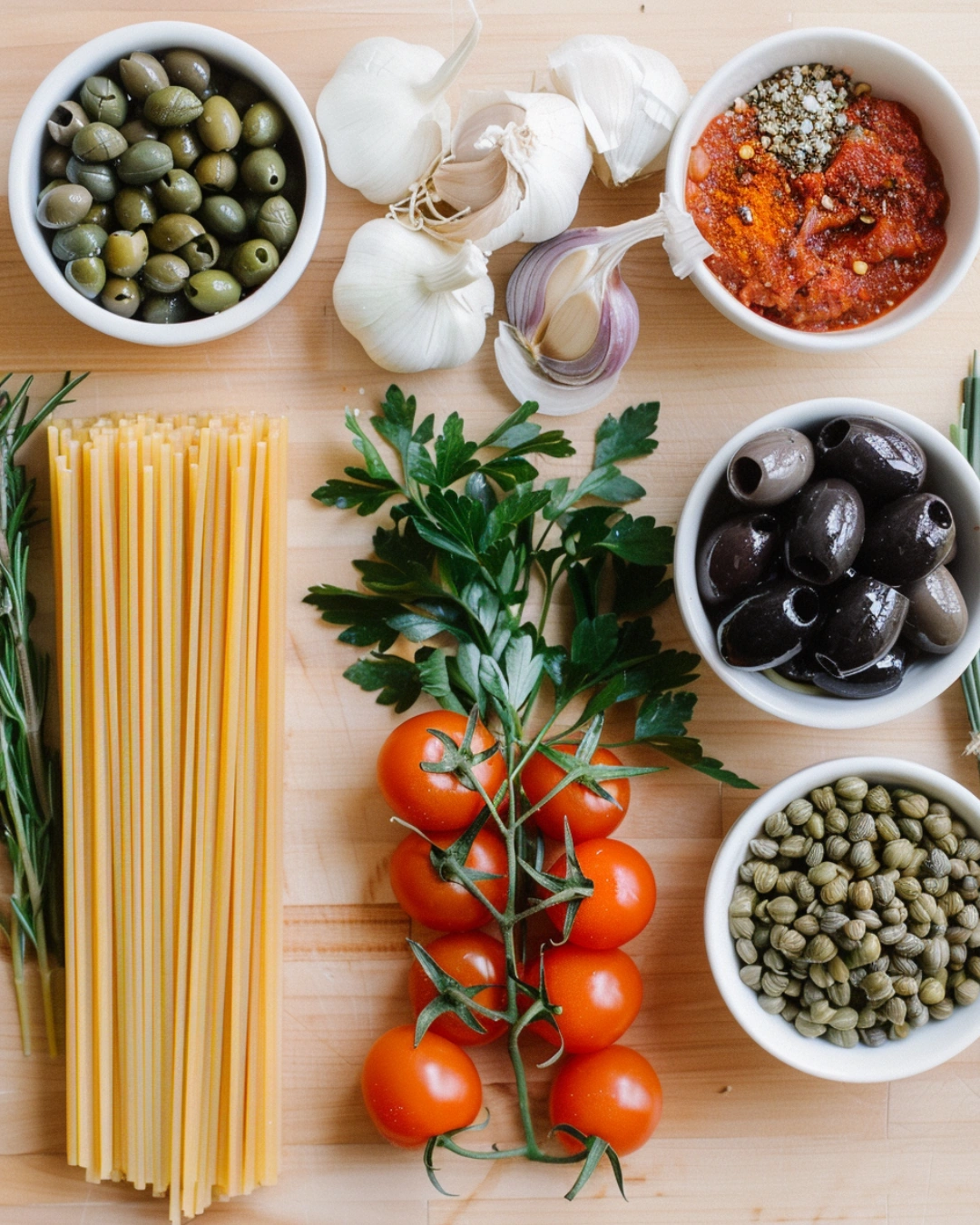
Step-by-Step: How to Make Pasta Puttanesca
1. Boil the pasta water.
Bring a large pot of salted water to a boil. Add about a tablespoon of salt for every two quarts of water. While it heats, start your sauce.
2. Build the base.
Heat olive oil in a deep skillet over medium heat. Add the onions and cook until they turn soft and translucent — about 4 to 5 minutes. Stir in the chopped anchovies (with a little oil from their tin) and garlic. Let them cook together until fragrant.
3. Create the sauce.
Add the tomato paste and cook it for 2 minutes to deepen its flavor. Then stir in crushed tomatoes, oregano, red pepper flakes, capers, and olives. Let it all simmer gently for 10 to 15 minutes.
4. Cook the pasta.
Add your spaghetti or linguine to the boiling water and cook until al dente. Reserve half a cup of pasta water before draining.
5. Finish and serve.
Stir chopped parsley into the sauce and thin it with a splash of pasta water if needed. Toss the pasta in the sauce and drizzle lightly with olive oil before serving.
For tips on achieving perfect al dente texture, check out The Spruce Eats’ guide to cooking pasta perfectly.
Secrets, Variations & Serving Ideas
The Secret to Deep, Layered Flavor
Every great Pasta Puttanesca has one thing in common, depth.
That rich, salty, and slightly spicy sauce doesn’t come from fancy ingredients but from how each one is treated in the pan. The secret lies in patience and gentle heat.
Start by cooking the onions and anchovies slowly.
You want the anchovies to melt completely into the olive oil, creating a savory, umami base that gives the sauce its signature depth. It’s the kind of flavor that tastes slow-cooked, even though it comes together in under half an hour.
The tomato paste plays a quiet but powerful role.
Let it cook for a minute or two before adding the crushed tomatoes, this small step transforms the sauce from sharp and acidic to rich and smooth. When the olives and capers join in, they bring a briny, salty spark that ties everything together beautifully.
This mix of sweet onions, salty anchovies, tangy tomatoes, and a touch of red pepper flakes creates a sauce that’s layered and complex, the kind that makes you keep twirling your fork for “just one more bite.”
Variations and Ways to Serve It
One of the best things about Pasta Puttanesca is how easy it is to make your own. Once you’ve mastered the base, you can play with it, adjusting the flavors based on what’s in your kitchen or what you’re craving.
- Add tuna or shrimp: For a heartier version, toss in canned tuna or sautéed shrimp just before serving. It gives the sauce a light seafood touch that pairs beautifully with the briny flavors.
- Make it vegan: Skip the anchovies and use a splash of soy sauce or a spoonful of miso paste to mimic that umami depth.
- Add some crunch: A sprinkle of toasted breadcrumbs or crushed walnuts on top adds lovely texture against the silky sauce.
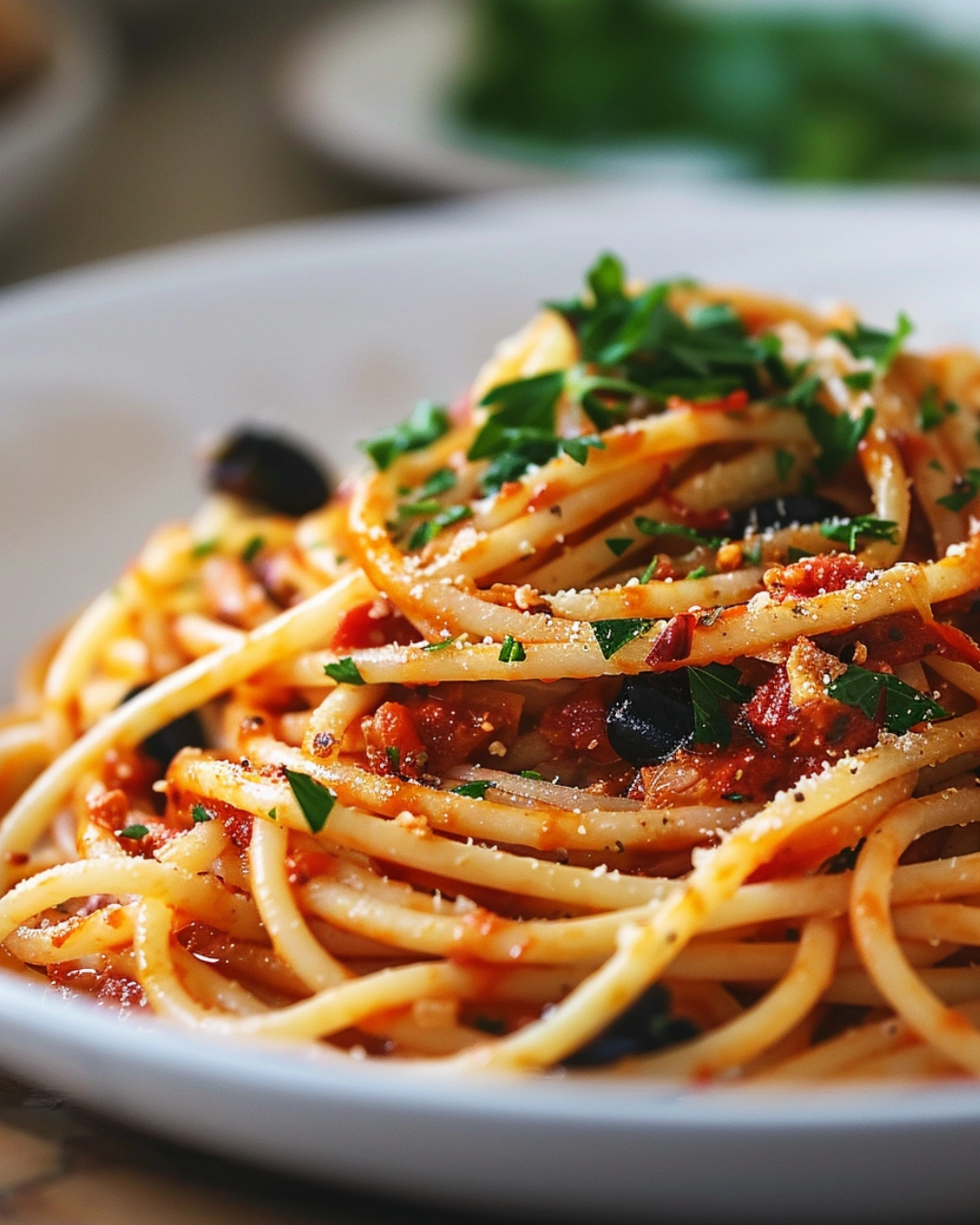
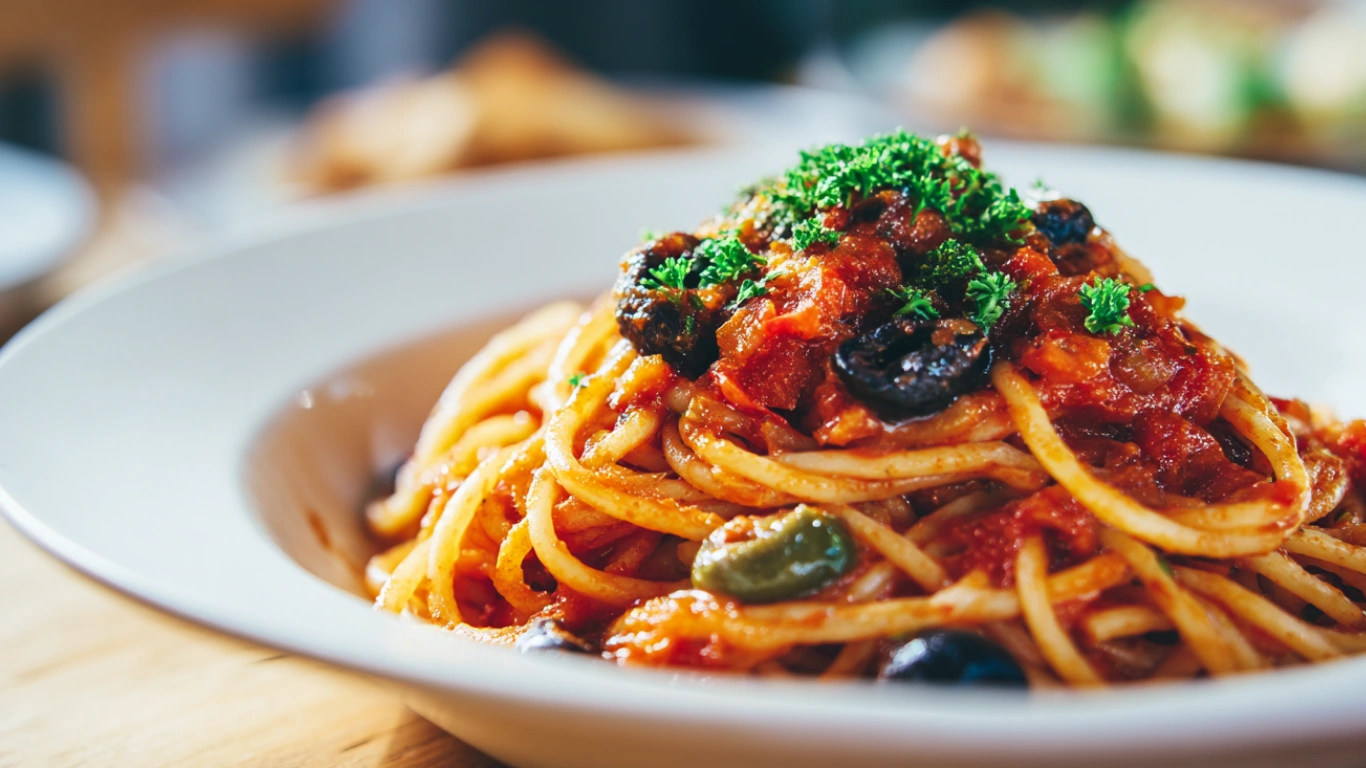
When serving Pasta Puttanesca, don’t overthink presentation. Use a shallow bowl, drizzle a little olive oil over the top, and finish with a scatter of fresh parsley. This dish doesn’t need dressing up, its bold, honest flavors speak for themselves.
Storage & Reheating
How to Store Pasta Puttanesca
One of the best things about Pasta Puttanesca is that it actually gets better the next day. As the sauce rests, the flavors deepen, the olives soften, the tomatoes grow sweeter, and the anchovies blend seamlessly into the background, giving the whole dish a rich, well-rounded taste.
To store, let the pasta cool completely before transferring it into an airtight container. It will keep in the refrigerator for up to three days.
If you’re planning ahead, store the sauce and pasta separately. The sauce will stay fresh for up to five days and can be reheated easily, while freshly cooked pasta will always give you the best texture and flavor.
For larger batches, freezing the sauce is your best option. Once it’s cooled, spoon the sauce into freezer-safe containers or bags and freeze it for up to two months. When you’re ready to use it, thaw it overnight in the fridge. The sauce will taste just as vibrant as when it was first made.
How to Reheat Pasta Puttanesca
Reheating Pasta Puttanesca is simple, and when done right, it tastes every bit as delicious as when it was freshly cooked.
For the stovetop:
Add the leftover pasta to a skillet with a splash of water or a drizzle of olive oil. Warm it gently over medium heat, stirring often until heated through. This keeps the sauce smooth and prevents it from drying out.
For just the sauce:
Place the sauce in a small saucepan. If it feels too thick, add a few tablespoons of water and stir as it warms. Keep the heat low and let it reheat slowly, allowing the flavors to blend evenly again.
Avoid the microwave whenever possible, it can dry out the pasta and dull the sauce’s brightness. The stovetop method takes only a few extra minutes but keeps the taste fresh, balanced, and true to its original texture.
Once reheated, finish your Pasta Puttanesca just like you did the first time, a drizzle of extra virgin olive oil, a sprinkle of fresh parsley, and a pinch of red pepper flakes if you like extra warmth.
Even after a night in the fridge, Pasta Puttanesca proves that simple, honest food can still deliver bold, briny flavor, the kind that brings comfort and satisfaction back to your table with every bite.

Pasta Puttanesca
Ingredients
Equipment
Method
- Bring a large pot of salted water to a boil.
- In a large skillet, heat olive oil and cook onions until soft.
- Add anchovies and garlic; cook until fragrant.
- Stir in tomato paste, crushed tomatoes, oregano, red pepper flakes, olives, and capers.
- Simmer sauce for 10–15 minutes.
- Cook pasta until al dente; reserve ½ cup water.
- Add parsley to sauce; toss pasta with sauce, adding pasta water as needed.
- Serve with a drizzle of olive oil and parsley.
Nutrition
Notes
Make vegan by swapping anchovies for soy sauce or miso paste.
Store in fridge up to 3 days; reheat gently on stove.
Freeze sauce up to 2 months; thaw and reheat before serving.
From your stove to our hearts
share your delicious take!FAQs About Pasta Puttanesca
What is Pasta Puttanesca made of?
Pasta Puttanesca is made with simple pantry ingredients, olive oil, garlic, onions, anchovies, crushed tomatoes, olives, capers, and a hint of red pepper flakes. The sauce is bold, briny, and full of personality, tossed with spaghetti or linguine for a quick, flavorful meal.
What does Pasta Puttanesca mean in Italian?
In Italian, “Puttanesca” roughly means “in the style of the ladies of the night.” The name reflects how quickly the dish comes together, fast, fragrant, and impossible to ignore. It’s a vibrant recipe meant to grab attention with its bold aroma and flavor.
What is the secret ingredient of Puttanesca?
The secret ingredient is anchovies. When cooked gently in olive oil, they melt into the sauce and create an incredible depth of flavor, savory, rich, and slightly salty — without tasting fishy. They’re what make Pasta Puttanesca taste so authentically Italian.
What does Puttanesca taste like?
Pasta Puttanesca tastes savory, tangy, and slightly spicy. The combination of tomatoes, olives, capers, and anchovies creates a layered flavor that’s bold but balanced. Every bite has a perfect mix of sweet, salty, and spicy, pure comfort with an edge.
Final Thoughts
Pasta Puttanesca is one of those dishes that teaches you what great cooking is all about, balance, simplicity, and confidence. Every ingredient has a purpose, and together they create something far greater than the sum of their parts.
What I love most is how unfussy it is. You don’t need fresh tomatoes or special cheese. You don’t even need to plan ahead. You just open your pantry, gather what you have, and create something deeply flavorful and comforting. That’s the heart of Mellow Dishes, real food that feels effortless but tastes like care.
Serve this Pasta Puttanesca with a drizzle of olive oil and a handful of chopped parsley, and you’ve got a dish that’s bold, balanced, and deeply satisfying. Whether you’re cooking for one or sharing it with someone special, it’s a reminder that the best meals aren’t complicated, they’re honest, generous, and made with heart.
