


Cornbread is one of those timeless sides that bridges comfort and technique, simple yet easily misunderstood. This cornbread recipe produces a soft, tender crumb with balanced sweetness and a subtle golden crust. It pairs perfectly with honey butter, chili, or barbecue.
The secret lies not in complexity but in balance: the right mix of cornmeal and flour, enough moisture to stay soft, and careful control of baking time. In this article, we’ll explore the science of moisture, the essential four ingredients, and the common mistakes to avoid, helping you bake consistently fluffy, flavorful cornbread every time.
The Science Behind a Perfect Cornbread
The Secret to Moist, Tender Texture
A great cornbread recipe depends on three key factors: moisture, fat balance, and minimal mixing. Cornmeal provides texture and flavor but can dry out quickly. Combining it with flour softens the crumb, while butter and oil add richness and tenderness. The butter gives flavor and golden color, while oil keeps it moist longer, an essential professional trick for lasting freshness.
Whole milk or buttermilk creates a delicate acidity that reacts with baking powder, giving rise and lightness. The mix of one egg and one yolk enhances structure without making it dense. The yolk’s extra fat helps bind the crumb, preventing crumbling after slicing. Letting the batter rest 5 to 10 minutes before baking hydrates the cornmeal, ensuring smooth, even texture throughout.
According to the Culinary Institute of America, batters containing coarse grains like cornmeal benefit from short resting periods, allowing starches to absorb liquid and yield a softer crumb, exactly what this method achieves.
Letting the batter rest 5–10 minutes before baking hydrates the cornmeal, ensuring smooth, even texture throughout.
According to the Culinary Institute of America, batters containing coarse grains like cornmeal benefit from short resting periods that allow starches to absorb liquid and yield a softer crumb, exactly what this method achieves.
Balancing Sweet and Savory Flavors
Traditional Southern cornbread is savory, while Northern styles lean sweet. This cornbread recipe merges both by using half a cup of sugar and two tablespoons of honey for balanced sweetness. The honey adds moisture and natural floral notes that complement the buttery finish. For a more savory version, reduce sugar to a quarter cup and skip the honey. For dessert-style cornbread, increase sugar slightly and brush melted butter on top after baking.
You can find a similar balance of sugar and fat in my Maple Loaf Cake, which also uses natural sweeteners to enhance richness without overpowering the crumb.
Core Ingredients and Professional Ratios For Cornbread Recipe
The Four Essential Ingredients
Every professional cornbread recipe begins with four primary building blocks: cornmeal, flour, fat, and liquid. These core ingredients determine flavor, structure, and texture, while everything else is fine-tuning.
Cornmeal defines identity. It gives flavor, color, and grainy texture unique to cornbread. Opt for yellow cornmeal for warmth and subtle sweetness, or use white for a lighter flavor. The grind also matters: fine cornmeal yields tenderness, while medium grind adds rustic crumb and golden color.
Flour balances that graininess. It lightens the texture by trapping moisture and stabilizing structure. All-purpose flour is ideal, blending smoothly with cornmeal and helping the bread rise without becoming heavy.
Fat, a precise blend of melted butter and oil, brings richness and lasting softness. Butter provides buttery depth and browning, while oil keeps the crumb moist even after cooling. This combination is a professional technique to prevent dryness.
Liquid, usually milk or buttermilk, hydrates the dry mix and activates leavening. Buttermilk, with its slight acidity, reacts with baking powder to create lift and adds subtle tang. Whole milk, though milder, ensures smooth consistency and balanced moisture.
Together, these four create the perfect base. Sugar and honey, while technically flavor enhancers, promote golden color and round out sweetness.
To see another example of ratio control between fats and liquids, visit Mini Lemon Cheesecakes, where balance is key to cream stability.
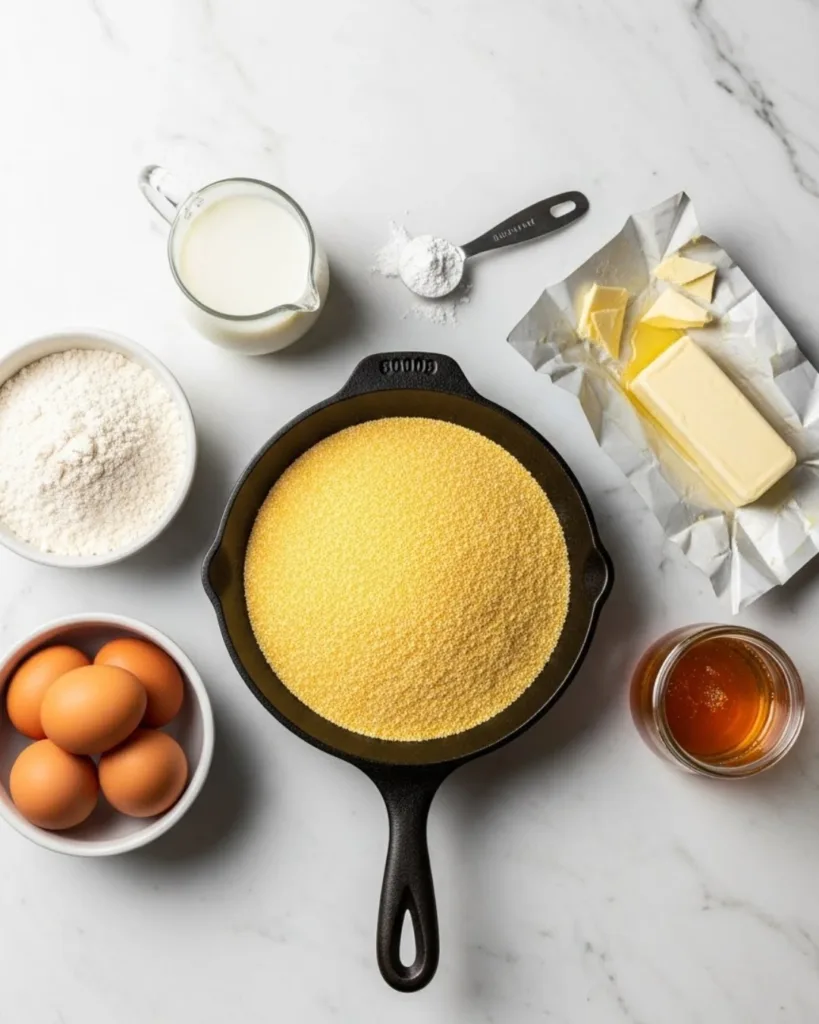
Ingredient Ratios for Moisture and Rise
Ingredient Ratios for Moisture and Rise
¾ cup (120 g) yellow cornmeal provides flavor, texture, and color.
1 cup (130 g) all-purpose flour balances structure and tenderness.
½ cup (100 g) sugar adds gentle sweetness and golden crust.
2 tablespoons honey enhance moisture and natural flavor.
¼ cup (60 ml) oil keeps crumb soft and prevents dryness.
4 tablespoons (60 g) melted butter enrich flavor and color.
1 cup (240 ml) milk or buttermilk binds dry and wet elements for smooth texture.
2 teaspoons baking powder ensure lift and lightness.
1 large egg plus 1 yolk stabilize and add richness.
½ teaspoon salt sharpens sweetness and balances flavor.
These precise proportions aren’t arbitrary. The ratio of flour to cornmeal ensures a tender crumb without graininess. The dual fats, butter for richness and oil for softness, guarantee moisture that lasts. Buttermilk adds acidity for lift and light crumb. The professional secret is to never overmix. Stir until just combined. Overmixing activates gluten, leading to a dense or dry result. Professionals often test a small portion of batter to confirm ideal texture before baking.
The King Arthur Baking Company notes that overmixing any flour-based batter encourages gluten development, the main reason why otherwise perfect cornbread turns heavy.
By respecting ratios and mixing discipline, this cornbread recipe achieves bakery-level consistency: moist, fluffy, and perfectly golden every single time.
Liquid, usually milk or buttermilk, hydrates the dry mix and activates leavening. Buttermilk, with its slight acidity, reacts with baking powder to create lift and adds subtle tang. Whole milk ensures balanced moisture.
The King Arthur Baking Company notes that the balance between fat and liquid ratios in quick breads like cornbread directly impacts tenderness and crumb consistency.
Mixing, Baking, and Avoiding Mistakes For Cornbread Recipe
The Mixing Method That Guarantees a Tender Crumb
A flawless cornbread recipe depends not only on good ingredients but also on technique. Mixing may seem simple, yet it’s the most critical phase of the process. The goal is to create a smooth, cohesive batter without overworking the gluten. Gluten development, the protein network in flour, gives bread structure, but in cornbread, too much of it leads to a tough, dry crumb.
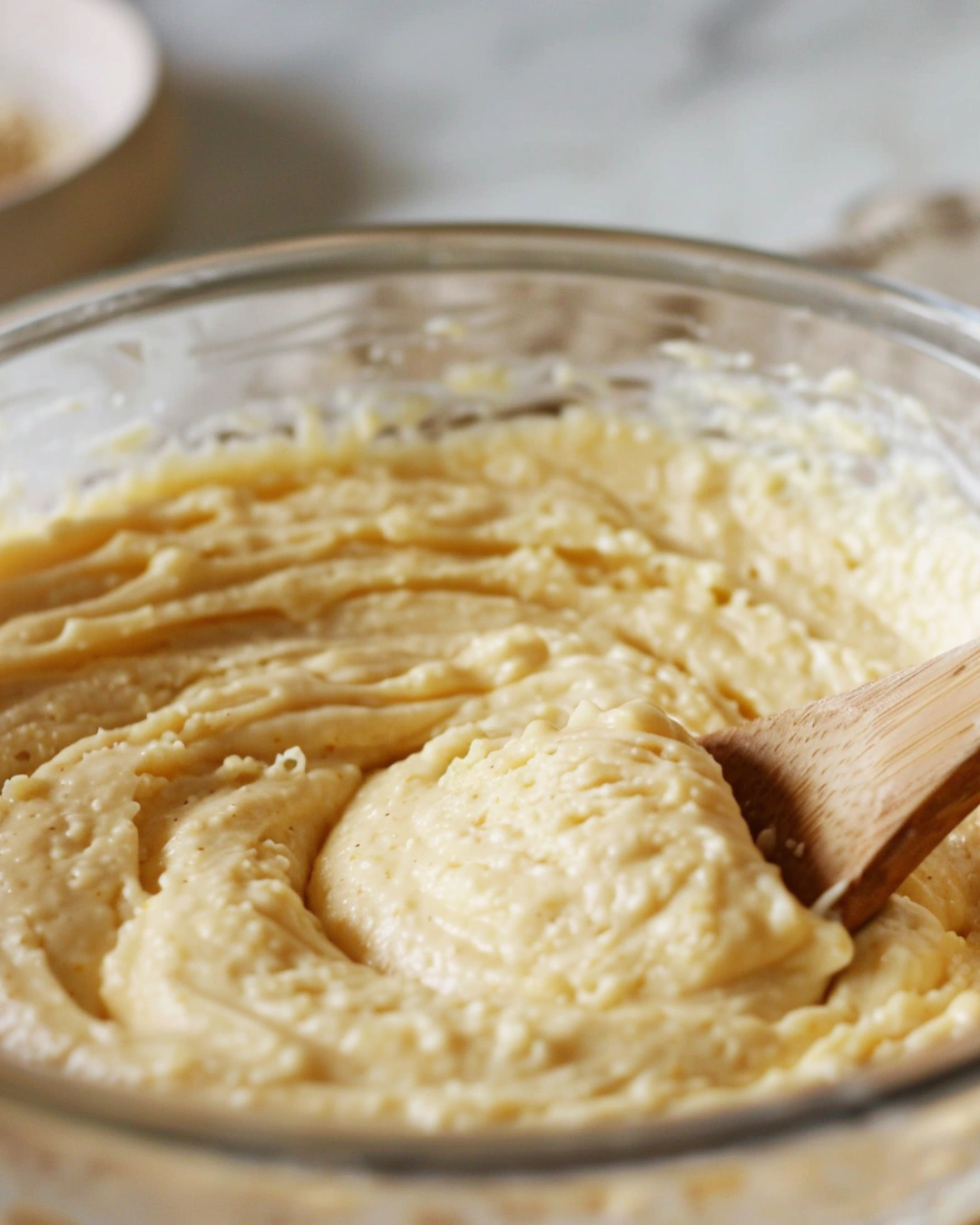
Begin by whisking the dry ingredients — cornmeal, flour, sugar, baking powder, and salt — in a large bowl. This evenly disperses leavening and prevents uneven rise. In a separate bowl, combine the wet ingredients: melted butter, oil, milk or buttermilk, honey, egg, and egg yolk. The butter adds rich flavor, while the oil ensures lasting moisture. When combined, pour the wet mixture into the dry ingredients. Stir gently with a spatula or wooden spoon until just incorporated. The batter should be slightly lumpy, not overmixed or perfectly smooth.
Resting the batter for 5 to 10 minutes before baking allows the cornmeal to hydrate fully, softening its texture and blending flavors. Professionals never skip this step; it’s the secret to cornbread that’s tender without crumbling. The batter should look thick but pourable, ready to settle naturally into the pan.
You can see a similar mixing philosophy in my Banana Bread Recipe, where minimal stirring preserves a soft, moist texture.
Baking and Temperature Control for Consistent Results
Proper baking technique transforms the cornbread recipe from good to exceptional. Preheat the oven to 350°F or 175°C. Grease or line an 8×8 inch pan with parchment and a light mist of non-stick spray. Pour in the batter and smooth the top lightly. Avoid tapping the pan, which can release the air bubbles needed for lift.
Bake for 25 to 30 minutes, checking doneness at the 24-minute mark. A toothpick inserted in the center should come out mostly clean, with a few moist crumbs attached. Overbaking is the most common mistake; it dries the crumb and dulls flavor. Once baked, let the cornbread rest for 10 minutes before cutting. The cooling period allows structure to set and moisture to redistribute evenly.
For extra richness, brush two to three tablespoons of melted butter over the surface while still warm. This seals in moisture and enhances aroma. The result is a golden, evenly baked cornbread that stays soft long after cooling.
As noted by the Serious Eats Baking Guide, residual heat continues to cook baked goods after removal from the oven, and a few degrees can determine whether cornbread stays moist or becomes dry.
By following these steps, gentle mixing, proper hydration, and controlled baking, you ensure that every batch of cornbread emerges moist, balanced, and professional in texture.
Finishing Touches and Variations For Cornbread Recipe
Southern vs. Regular Cornbread: Understanding the Difference
The debate between Southern and regular cornbread is as old as the recipe itself. While both share the same foundation of cornmeal, flour, fat, and liquid, their texture, sweetness, and preparation techniques differ dramatically. This cornbread recipe leans slightly toward the Northern or regular version, offering balanced sweetness and a soft, cake-like crumb, ideal for pairing with honey butter or chili.
Southern cornbread traditionally omits sugar and relies on coarse, stone-ground cornmeal for texture. It’s baked in a hot cast-iron skillet preheated or butter, giving it a deep, crisp crust and savory aroma. The flavor is subtle, the texture more crumbly, designed to complement rich, salty mains like collard greens or barbecue.
Regular or Northern cornbread, in contrast, includes sugar and sometimes honey for a tender, sweet finish. It’s baked in a greased pan rather than a skillet, producing a lighter crust and smoother crumb. The addition of flour softens the structure, while the mix of butter and oil keeps it moist longer than traditional Southern styles.
This balance makes it versatile, a cornbread that pairs equally well with hearty stews or Sunday brunch spreads. It’s also a more forgiving version for new bakers since the sweetness and fat content protect against overbaking.
You can see a similar regional contrast discussed in my Maple Brown Butter Scones, where fat composition and technique define both texture and flavor.
Honey Butter and Professional Finishing Techniques
No cornbread recipe feels complete without honey butter. It’s the simplest yet most elegant finishing touch, soft, lightly sweetened butter that amplifies the flavor of freshly baked cornbread. To make it, combine half a cup of softened butter with a quarter cup of honey. Stir until creamy and smooth, or whip with a hand mixer for a fluffier consistency.
The key is temperature: the butter should be soft but not melted, ensuring it blends without separation. Scoop portions using a cookie scoop or spoon, then chill briefly to set. When served over warm cornbread, it melts slowly, glazing the crumb in a glossy, golden layer.
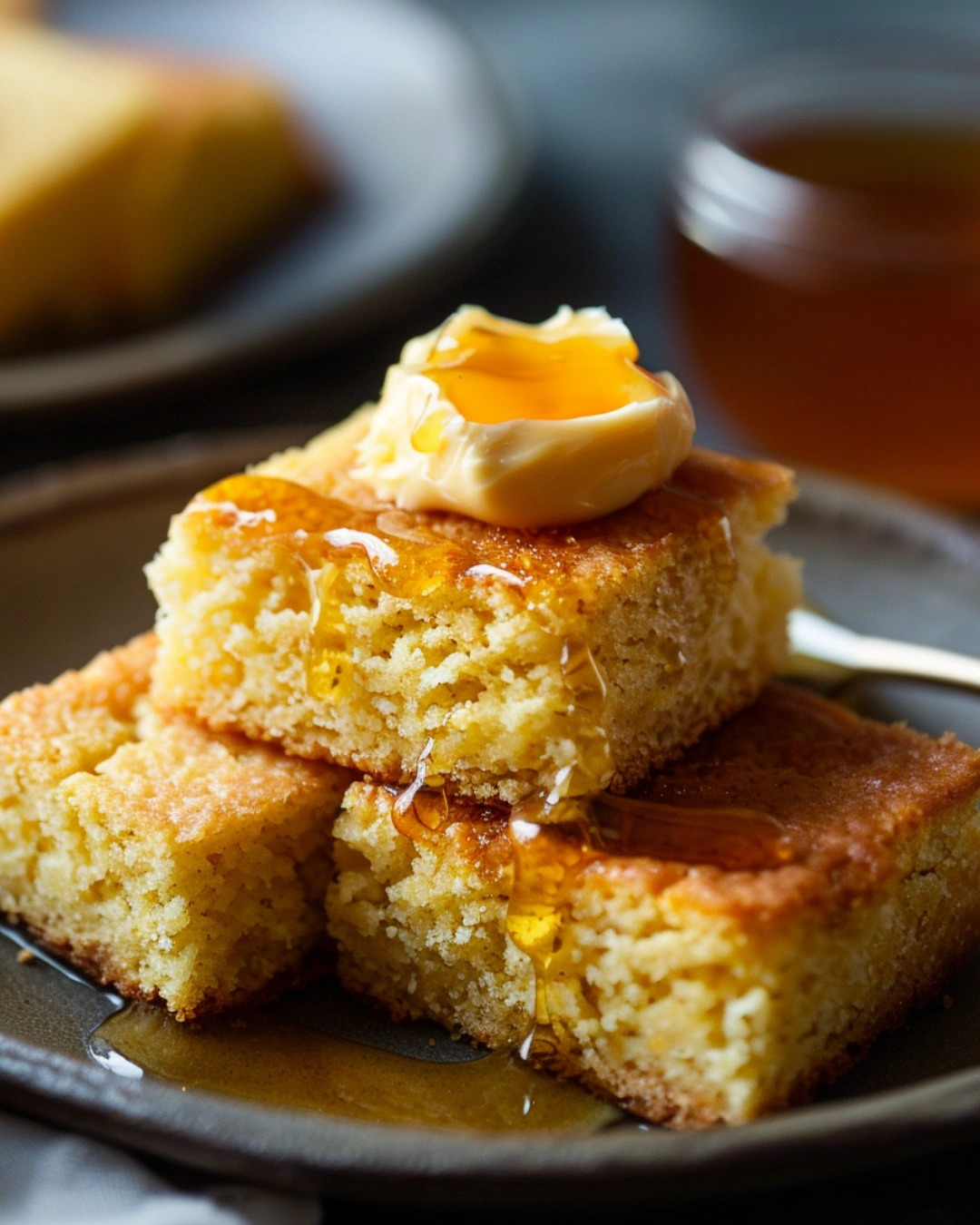
For professional presentation, brush the top of freshly baked cornbread with two to three tablespoons of melted butter immediately after removing it from the oven. This not only enhances shine but also seals in moisture, giving each slice a rich, buttery finish.
Want to add personality? Infuse the butter with chili flakes for a subtle kick, or whisk in cinnamon for a sweet brunch variation. Honey butter freezes well too, stored in an airtight container for up to two weeks.
The Southern Living Kitchen Guide notes that honey butter elevates simple baked goods by balancing sweetness and fat, transforming classic sides into restaurant-quality accompaniments.
A similar finishing technique appears in my Lemon Blueberry Bundt Cake, where glazing enhances moisture retention and appearance.
By understanding style variations and applying these professional finishing touches, your cornbread becomes more than a side; it’s a signature bake that captures texture, balance, and timeless Southern comfort.
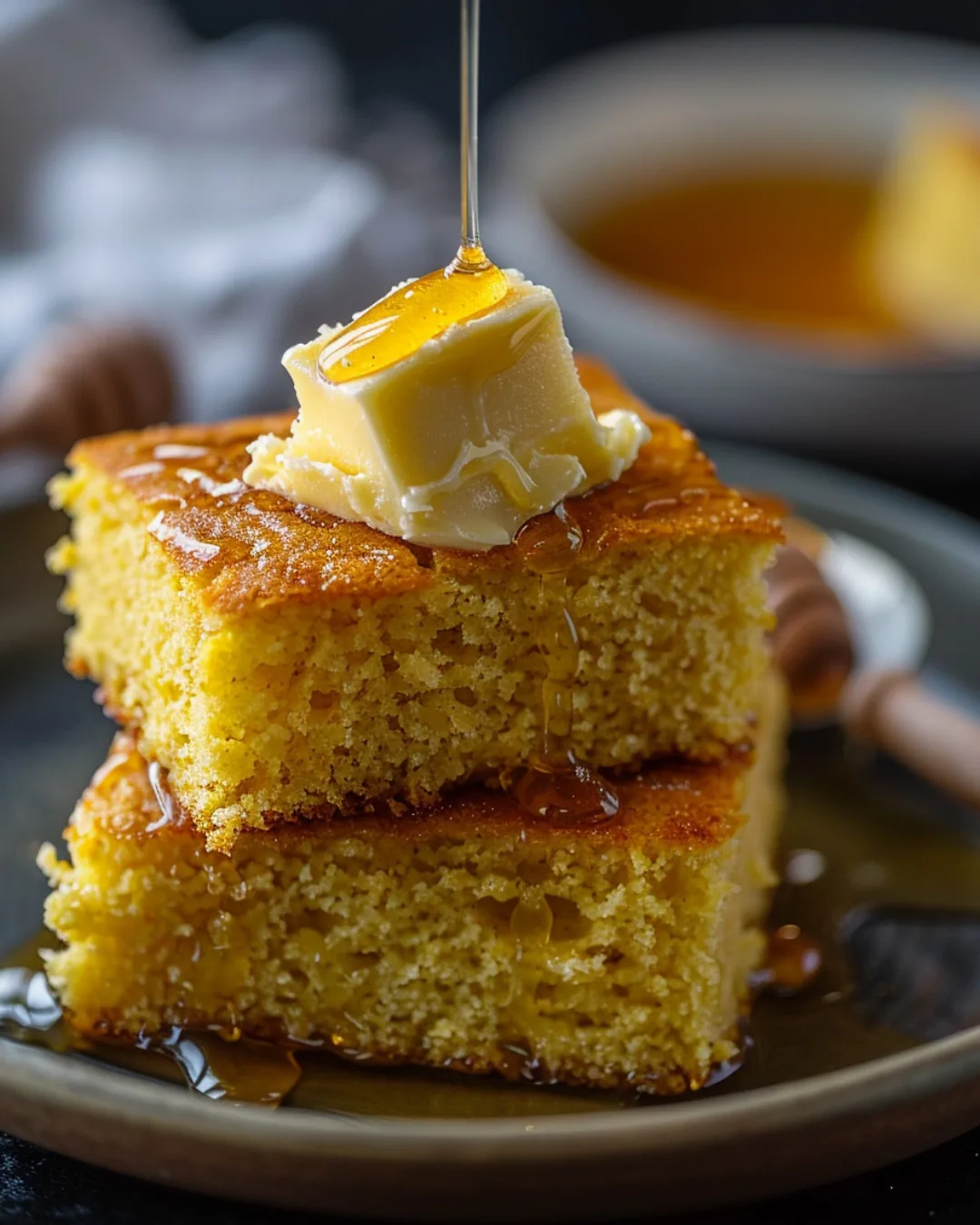
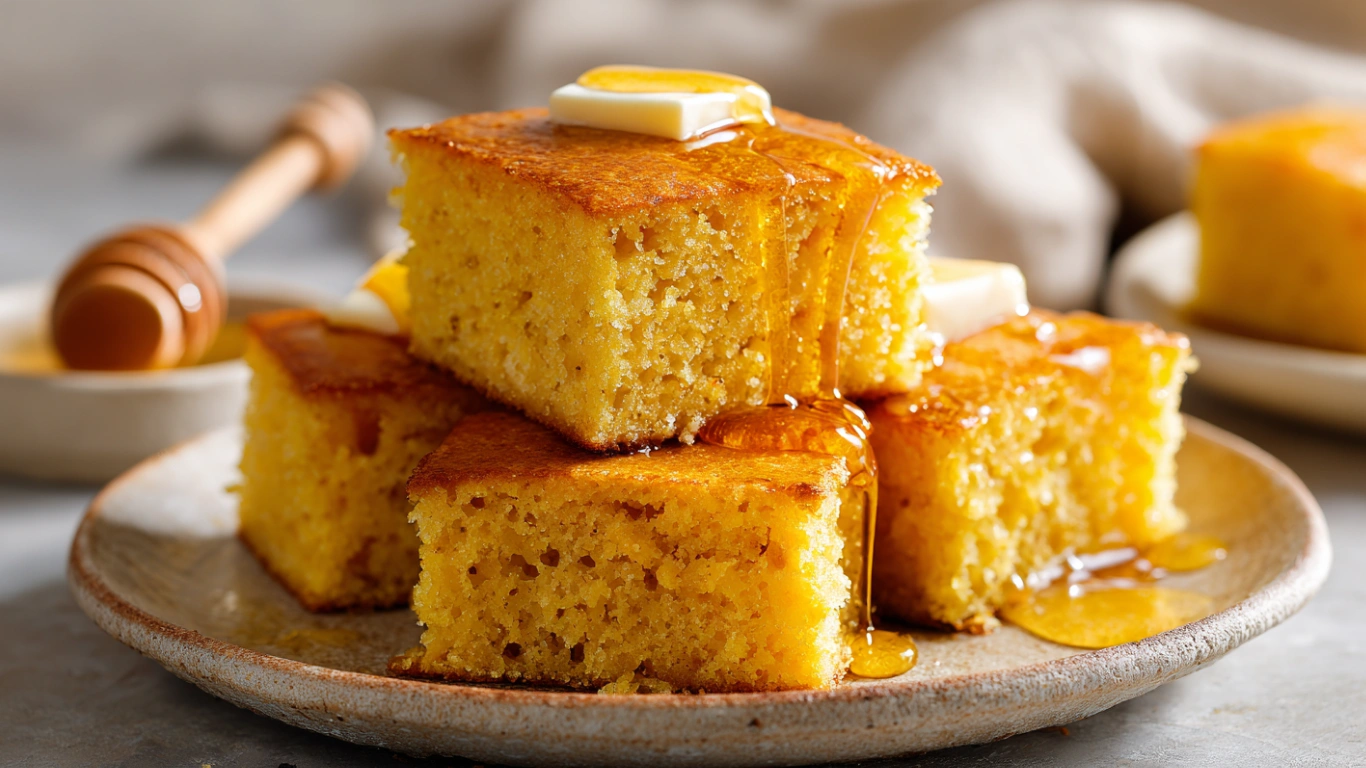

Cornbread with Honey Butter
Ingredients
Equipment
Method
- Preheat oven to 350°F (175°C). Grease or line an 8×8-inch baking pan.
- Whisk cornmeal, flour, sugar, baking powder, and salt in a large bowl.
- In another bowl, combine melted butter, oil, milk, honey, egg, and yolk.
- Pour wet ingredients into dry and mix gently until combined. Do not overmix.
- Let batter rest 5–10 minutes to soften cornmeal.
- Pour into pan and bake 25–30 minutes or until golden brown.
- Cool for 10 minutes before slicing.
- For honey butter, combine softened butter and honey until creamy.
- Serve warm cornbread with a dollop of honey butter.
Nutrition
Notes
Use buttermilk for extra tang and tenderness.
Brush warm cornbread with melted butter for glossy finish.
Honey butter keeps up to 2 weeks refrigerated.
From your stove to our hearts
share your delicious take!FAQs About Cornbread Recipe
What are the 4 ingredients in Cornbread Recipe?
Every professional cornbread recipe starts with four core elements: cornmeal, flour, fat, and liquid. Cornmeal delivers flavor and texture, flour stabilizes structure, fat ensures moisture, and milk or buttermilk adds hydration and rise. Everything else — sugar, honey, eggs — refines balance and flavor.
What are common cornbread mistakes?
Overbaking, overmixing, and incorrect ratios. Mixing too vigorously develops gluten, creating a dense texture. Overbaking dries the crumb. To fix this, bake only until golden and slightly soft in the center, and always measure ingredients accurately.
What is the difference between Southern Cornbread Recipe and regular cornbread?
Southern cornbread is savory and uses coarse cornmeal and bacon fat or drippings for flavor. Regular (Northern) cornbread is sweeter, moister, and often baked with both butter and oil for a cake-like crumb. This cornbread recipe merges the best of both — soft texture with a hint of honey sweetness.
What is the secret to making good cornbread?
The key to exceptional cornbread lies in balance — enough fat for tenderness, controlled mixing for softness, and precise baking time. Combine butter and oil to achieve both flavor and moisture, rest the batter for 10 minutes to hydrate the cornmeal, and remove from the oven just before the center sets. Residual heat completes the bake, locking in that moist, crumbly texture.
Conclusion
The cornbread recipe remains one of the simplest yet most refined examples of baking balance. Every step, from ingredient ratios to mixing and baking, contributes to its perfect crumb. Cornmeal defines texture, flour gives lightness, and fats ensure the tender richness that lasts even after cooling. Whether you prefer it Southern-style and savory or Northern and sweet, the process stays the same: respect ratios, avoid overmixing, and bake with precision.
This professional approach guarantees consistently moist, flavorful cornbread that pairs effortlessly with honey butter, barbecue, or morning coffee. Once you master these principles, this humble side becomes a versatile centerpiece of any table, timeless, comforting, and unmistakably homemade.
As highlighted by Southern Living, true cornbread craftsmanship lies in balance: texture soft yet firm, flavor rich but not heavy, qualities this recipe achieves perfectly.

Great recipe. TOO MANY ADS very hard to read/follow
Thank you so much for the feedback, and I’m really glad you enjoyed the recipe.
I’m sorry about the ADS, I’m actively adjusting them to improve readability, especially on mobile. Your comment really helps, so thank you for taking the time to share it!