

The classic Toll House cookies recipe is more than a nostalgic treat, it’s a masterclass in baking chemistry. Created in the 1930s by Ruth Wakefield at the Toll House Inn, this formula revolutionized cookies by introducing the first-ever chocolate chip blend. Professional bakers still consider it the benchmark for texture balance: crisp edges, chewy centers, and buttery aroma.
Despite its simplicity, the key lies in ratios, ingredient temperature, and precise mixing. In this article, we’ll examine the science and craft behind Toll House cookies, showing how small adjustments in butter, sugar, and flour can produce consistently perfect results.
Understanding the Foundations of Toll House Cookies
The Role of Ratios and Chemistry in Texture
The classic Toll House cookies recipe is a perfect example of chemistry at work in baking. What appears to be a simple list of ingredients actually hides a carefully balanced formula that defines texture, flavor, and structure. Professional bakers view it as a model of equilibrium: the interaction between fat, sugar, and flour determines how a cookie spreads, sets, and tastes.
Butter forms the foundation of this recipe. With one cup (227 grams) of softened butter, the dough gains both tenderness and depth. The combination of two sugars, granulated and brown, is more than tradition; it’s deliberate chemistry. Granulated sugar promotes crispness and surface caramelization, while brown sugar, rich in molasses, retains moisture, ensuring a chewy interior. This duality gives Toll House cookies their signature contrast: a crisp rim encasing a soft, buttery center.
The ratio of flour (2¼ cups / 279 grams) to butter is equally crucial. Too little flour and the cookies spread too thin; too much and they become dense. Baking soda, the leavening agent, reacts with brown sugar’s acidity to create lift and balanced spread. Salt sharpens the sweetness, and eggs add both moisture and protein, binding the dough while encouraging a delicate chew.
To professionals, the beauty of the Toll House cookies recipe lies in its precision. Every gram influences outcome. Even a 5% variation in butter temperature or sugar measurement can alter structure and flavor. This is why weighing ingredients, rather than relying on cups, produces consistent results.
The Culinary Institute of America emphasizes that sugar-to-fat ratios determine how a dough responds to heat, which explains why this recipe remains a foundational training tool in pastry programs.
The Importance of Fat Temperature in Dough Development
Butter temperature is one of the most underestimated variables in baking. For the Toll House cookies recipe, the butter should be softened, pliable but not greasy, ideally around 18°C (65°F). When creamed with sugars, it traps microscopic air pockets that later expand in the oven, creating lift. If butter is too warm, those air pockets collapse, and cookies bake flat. Too cold, and sugar crystals don’t dissolve evenly, leading to uneven texture.
Chilling the dough before baking stabilizes structure and concentrates flavor. A minimum of 30 minutes allows fats to firm and flour to hydrate. Professionals often chill overnight for even more control, producing cookies with deeper flavor and a perfect, thick chew.
You can see similar fat-stabilizing principles in my Cream Pie, where controlled butter temperature directly affects smoothness and consistency.
Ingredient Precision and Professional Adjustments
Classic Ingredient Composition and Roles
Here’s the verified professional formulation:
- 2 ¼ cups (279 g) all-purpose flour
- 1 teaspoon baking soda
- 1 teaspoon salt
- 1 cup (227 g) unsalted butter, softened
- ¾ cup (150 g) granulated sugar
- ¾ cup (150 g) packed brown sugar
- 1 teaspoon vanilla extract
- 2 large eggs
- 2 cups (340 g) semi-sweet chocolate chips
- 1 cup chopped nuts (optional)
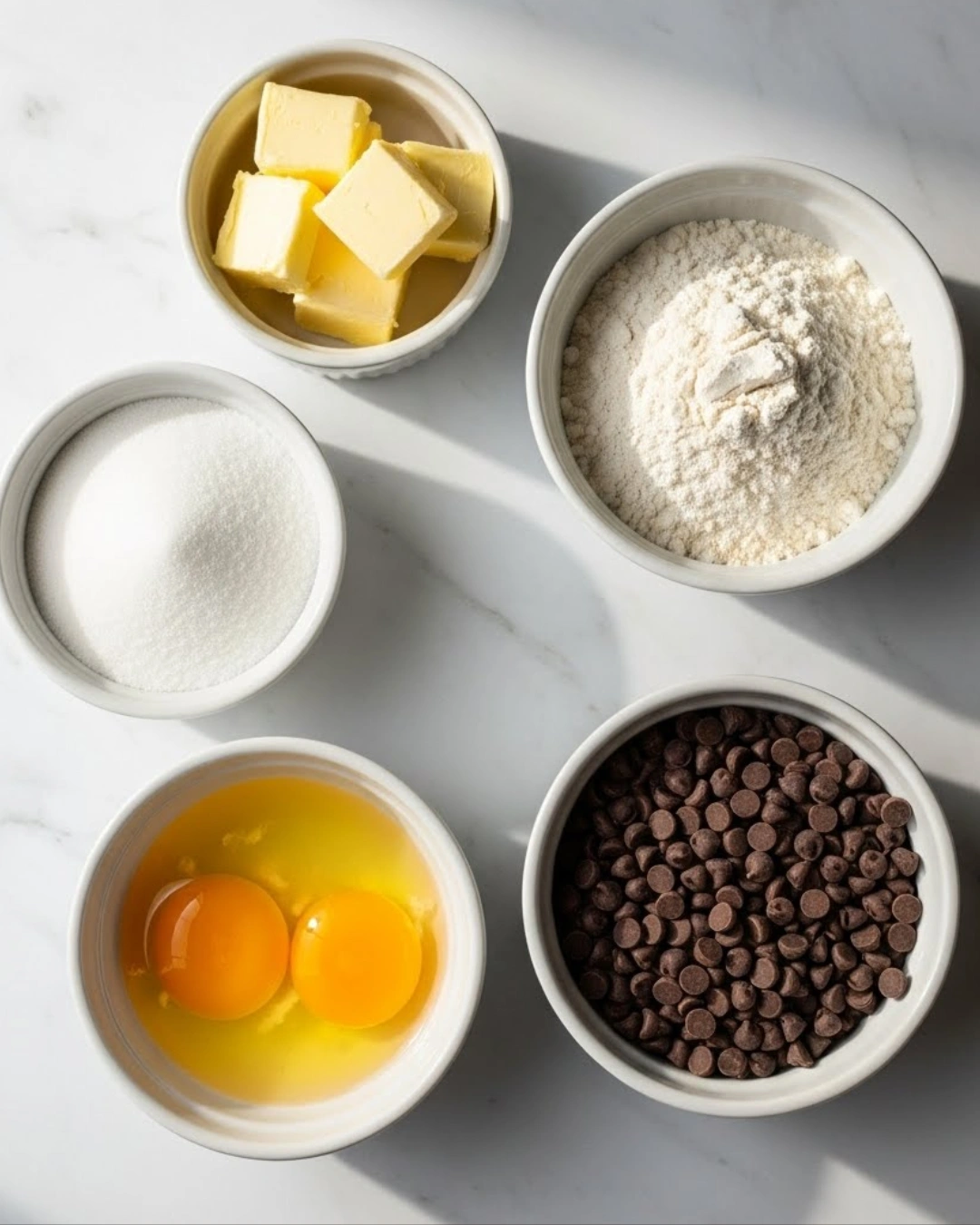
In this Toll House cookies recipe, each element affects outcome. Flour provides structure and prevents collapse. Baking soda creates lift while neutralizing acid from brown sugar. Eggs bind ingredients and retain moisture. Vanilla extract balances sweetness and intensifies aroma. Chocolate chips, preferably 50–60% cocoa, deliver contrast and texture. Salt is non-negotiable, it heightens chocolate notes and cuts sweetness.
You’ll find the same precision in Mini Lemon Cheesecakes, where the ratio of dairy to sugar controls smoothness and lift.
Professional Modifications and Flavor Enhancements
The original Toll House cookies recipe offers a strong base for customization. To create deeper caramel notes, brown the butter before creaming, this adds complexity and nuttiness through the Maillard reaction. For thicker cookies, chill the dough for a full 24 hours. This rest period allows starches to hydrate, resulting in a richer color and denser chew.
For a crispier cookie, increase the baking time slightly or substitute half the butter with shortening. Professionals also experiment with sugar ratios: using ⅔ brown sugar and ⅓ white sugar amplifies chewiness, while reversing the ratio enhances crispness.
When baking in commercial environments, humidity plays a role too. On humid days, adding a tablespoon of flour can offset moisture absorption, preserving structure.
As the King Arthur Baking Company explains, ambient humidity and flour protein content directly affect cookie spread — a principle every professional pastry chef accounts for in scaling and seasonal production.
Similarly, my Chocolate Mousse recipe uses ratio manipulation to balance aeration and richness, proof that precision defines excellence across all desserts.
Mixing, Baking, and Achieving Consistency
The Creaming and Mixing Process
Creaming butter and sugar is the heart of the Toll House cookies recipe. Beat the butter with both sugars for three minutes, or until pale and aerated. This step incorporates air, giving the cookies a delicate lift. Add eggs one at a time to maintain emulsion stability, followed by vanilla.
After adding dry ingredients, mix only until no flour streaks remain. Overmixing develops gluten, toughening the cookies. When folding in chocolate chips and nuts, use a spatula to avoid deflating the aerated dough. Professionals always test-bake one cookie to check spread and color before committing a full tray.
This same light-handed technique applies to Lemon Blueberry Bundt Cake, where gentle mixing ensures tender crumb and lift.
Precise Baking and Cooling for Optimal Texture
Drop dough by rounded tablespoons onto parchment-lined trays. Bake at 375°F (190°C) for 9–11 minutes, just until edges turn golden and centers remain pale. Remove the tray from the oven and let cookies rest two minutes before transferring to racks. This residual heat completes the bake without over-drying.
For thicker cookies, reduce oven temperature to 350°F (175°C) and extend baking by two minutes. For bar cookies, spread dough in a 9×13-inch pan and bake for 25–30 minutes.
Cooling completely is vital — structure sets only after temperature equalizes. Professionals often rotate pans halfway through baking for even browning.
As detailed by the Serious Eats Cookie Lab, cookie texture depends on sugar caramelization and controlled residual baking, principles the Toll House method embodies.
Storage, Troubleshooting, and Professional Results
Storage Techniques for Maximum Freshness
Once cooled, store cookies in airtight containers with a parchment sheet between layers. Add a small slice of bread to preserve softness, it transfers moisture without altering flavor. Avoid refrigeration; cold temperatures stiffen fats and mute sweetness.
For long-term storage, freeze dough balls, not baked cookies. Bake them straight from frozen at 350°F for 12 minutes — no thawing needed. This method preserves flavor compounds and texture integrity.
A similar moisture-preserving principle appears in Blue Chia Pudding, where proper sealing retains texture and freshness.
Troubleshooting and Flavor Optimization
Flat cookies often mean butter was too warm or flour under-measured. Dry or cakey texture indicates overbaking or overmixing. Uneven spread suggests poor temperature control. For advanced bakers, finishing cookies with flaky sea salt enhances flavor contrast and presentation.
Swap chocolate chips for chopped dark chocolate to create pockets of melted richness. Professionals sometimes mix chips of varying cacao percentages for dynamic depth.
The New York Times Cooking Guide notes that finishing cookies with salt amplifies sweetness and complexity, an essential modern twist to the Toll House cookies recipe.
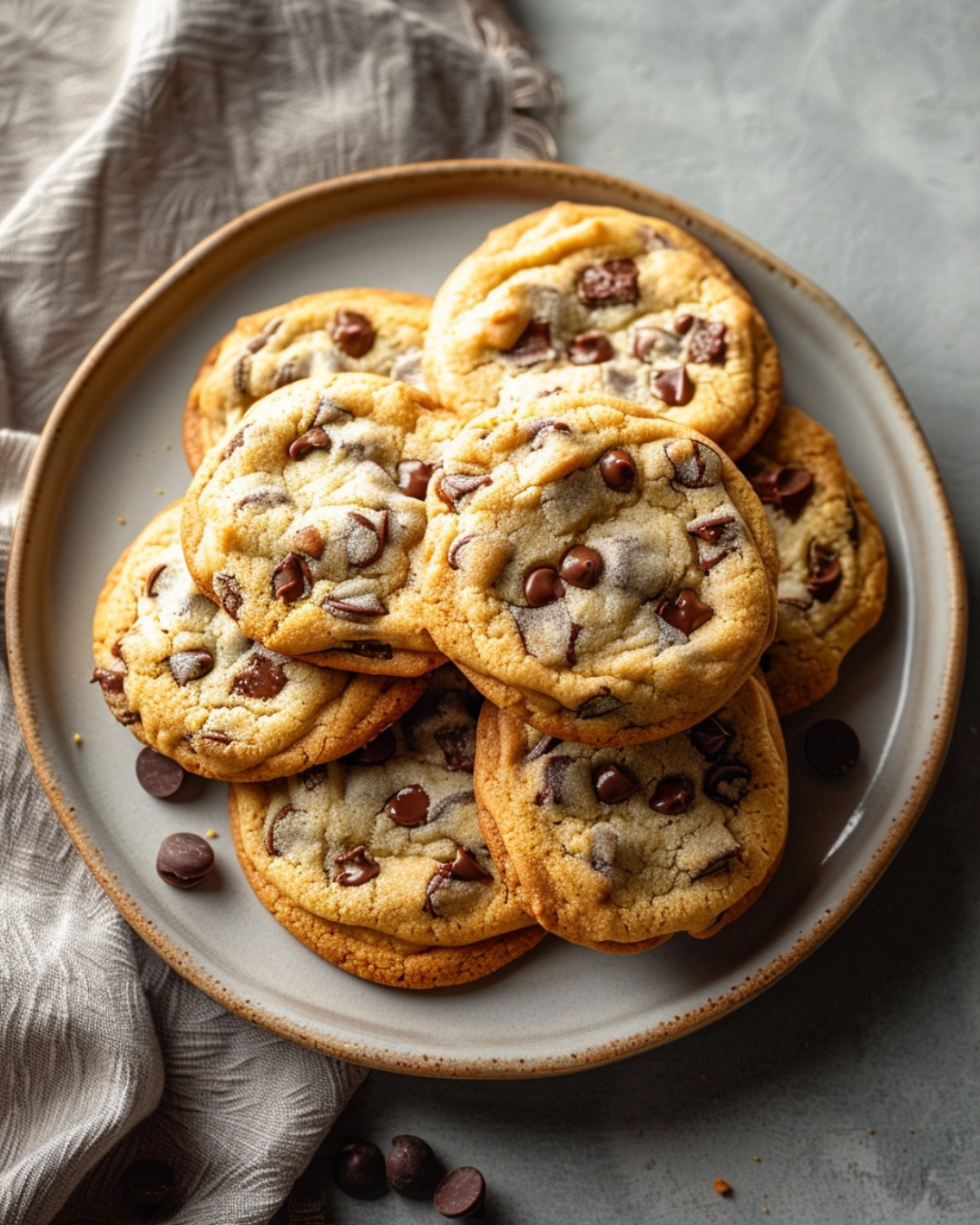
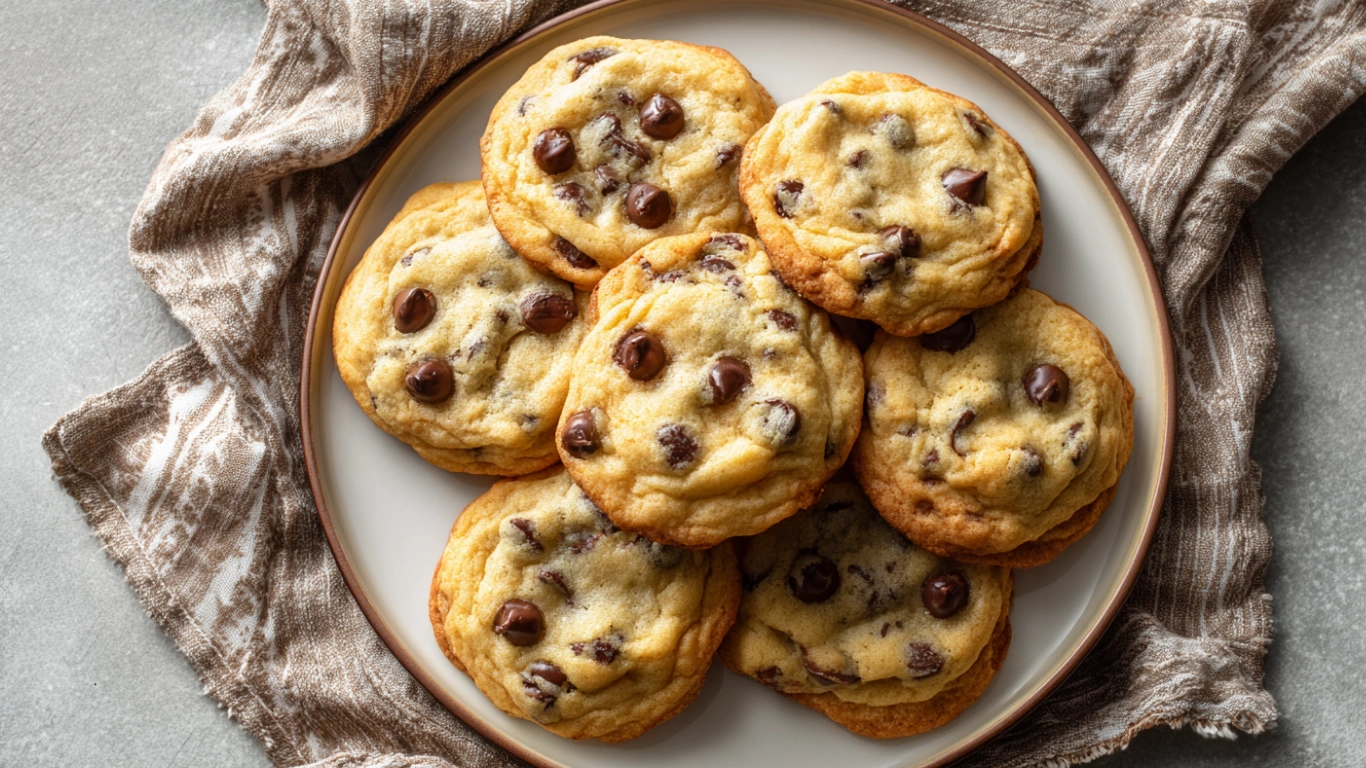

Toll House Cookies
Ingredients
Equipment
Method
- Preheat oven to 375°F (190°C). Line trays with parchment.
- Cream butter, granulated sugar, and brown sugar until light and fluffy.
- Add vanilla and eggs, one at a time. Mix until smooth.
- Gradually beat in flour, baking soda, and salt.
- Stir in chocolate chips and nuts, if using.
- Drop rounded tablespoons of dough onto prepared trays.
- Bake 9–11 minutes, until edges are golden but centers soft.
- Cool on trays 2 minutes, then transfer to racks.
- Store airtight for 3 days or freeze up to 2 months.
Nutrition
Notes
For thicker cookies, chill dough for 1 hour before baking.
Replace nuts with extra chocolate chips if preferred.
Weigh ingredients for professional consistency.
From your stove to our hearts
share your delicious take!FAQs About Toll House Cookies
What is the secret to chewy Toll House cookies?
The secret lies in sugar ratio and baking time. Use slightly more brown sugar than white to retain moisture, and remove cookies from the oven just before they’re fully set, residual heat finishes the bake while keeping the centers soft.
What is the Toll House cookie recipe?
The original formula includes 2¼ cups of flour, 1 teaspoon of baking soda, 1 cup of butter, ¾ cup each of white and brown sugar, 2 eggs, 1 teaspoon vanilla, and 2 cups of chocolate chips. Bake at 375°F for 9–11 minutes for golden, chewy cookies.
What is the secret ingredient for great cookies?
Temperature control. Butter must be softened — never melted — and the dough should chill before baking. These two factors define texture and prevent spreading.
Do you use salted or unsalted butter for Nestlé Toll House cookies?
Use unsalted butter. It allows full control of salt levels and avoids flavor inconsistencies between brands. Salted butter can make cookies taste uneven or overly rich.
Conclusion
The Toll House cookies recipe remains a gold standard because it’s both scientific and adaptable. Its balance of sugar, fat, and flour has endured nearly a century of culinary innovation. Every professional baker knows that its simplicity hides layers of precision: the right butter temperature, the right ratio of sugars, and the patience to chill dough before baking.
Whether baked for a café case or a classroom demonstration, Toll House cookies embody timeless pastry technique — accessible yet precise. Perfecting them isn’t about luck; it’s about understanding chemistry, timing, and texture. Once mastered, this recipe guarantees consistency, professional appearance, and the unmistakable aroma that defines true home baking.
