

Chocoflan, often called “The Impossible Cake,” is a striking dessert where a rich chocolate cake and a creamy vanilla flan magically trade places during baking. The result is an elegant two-layer treat, glossy caramel on top, custard in the middle, and moist chocolate cake at the base.
The illusion is captivating, but the process is pure food science: density, temperature, and patience. In this article, I’ll break down the structure, technique, and professional secrets that make chocoflan both visually stunning and texturally flawless, a dessert that never fails to impress on restaurant menus or home dining tables alike.
Understanding the Science and Story of Chocoflan
Why Chocoflan is Called the Impossible Cake
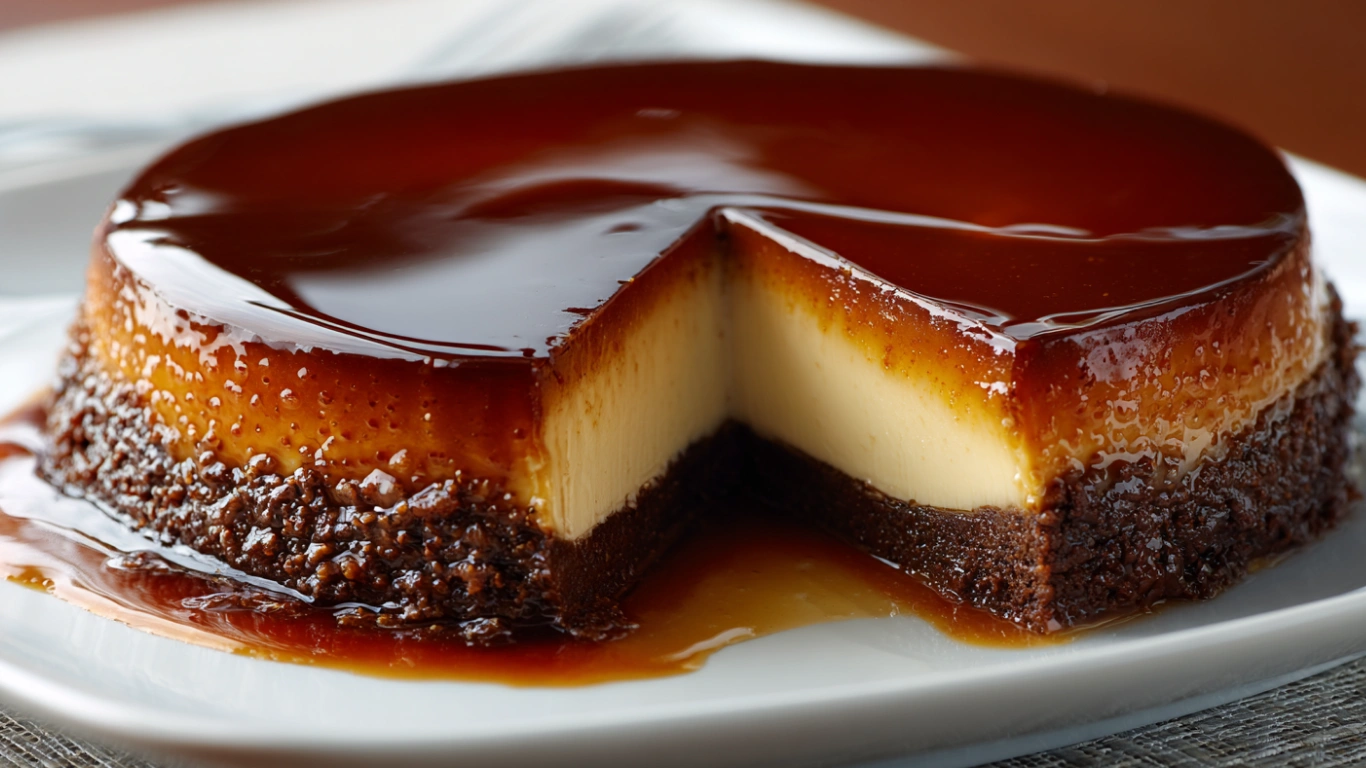
At first glance, chocoflan seems like a culinary illusion, two batters poured together that mysteriously switch places during baking. The top layer transforms into a rich chocolate sponge while the bottom becomes silky flan. This “impossible” inversion is pure chemistry. The flan mixture, made with condensed and evaporated milk, cream cheese, and eggs, has a higher density than the chocolate batter. When baked slowly in a water bath, the denser flan naturally sinks, pushing the lighter chocolate layer upward. Once baked and inverted, the two settle into perfect layers: creamy flan crowned by glossy caramel over a tender cocoa base.
Professional bakers prize chocoflan for this predictable inversion, proof of balance between density and heat. The secret is precision: controlling the water bath temperature (around 170°C) and using room-temperature ingredients to prevent uneven setting. Even a few degrees off can cause cracks or incomplete separation. This technique exemplifies the discipline behind pastry craft, using physics and patience to create beauty.
As the Culinary Institute of America explains, moisture management and thermal control are crucial to multi-layered desserts like flan and custard cakes, where science determines texture as much as flavor.
The Role of Caramel and Controlled Heat
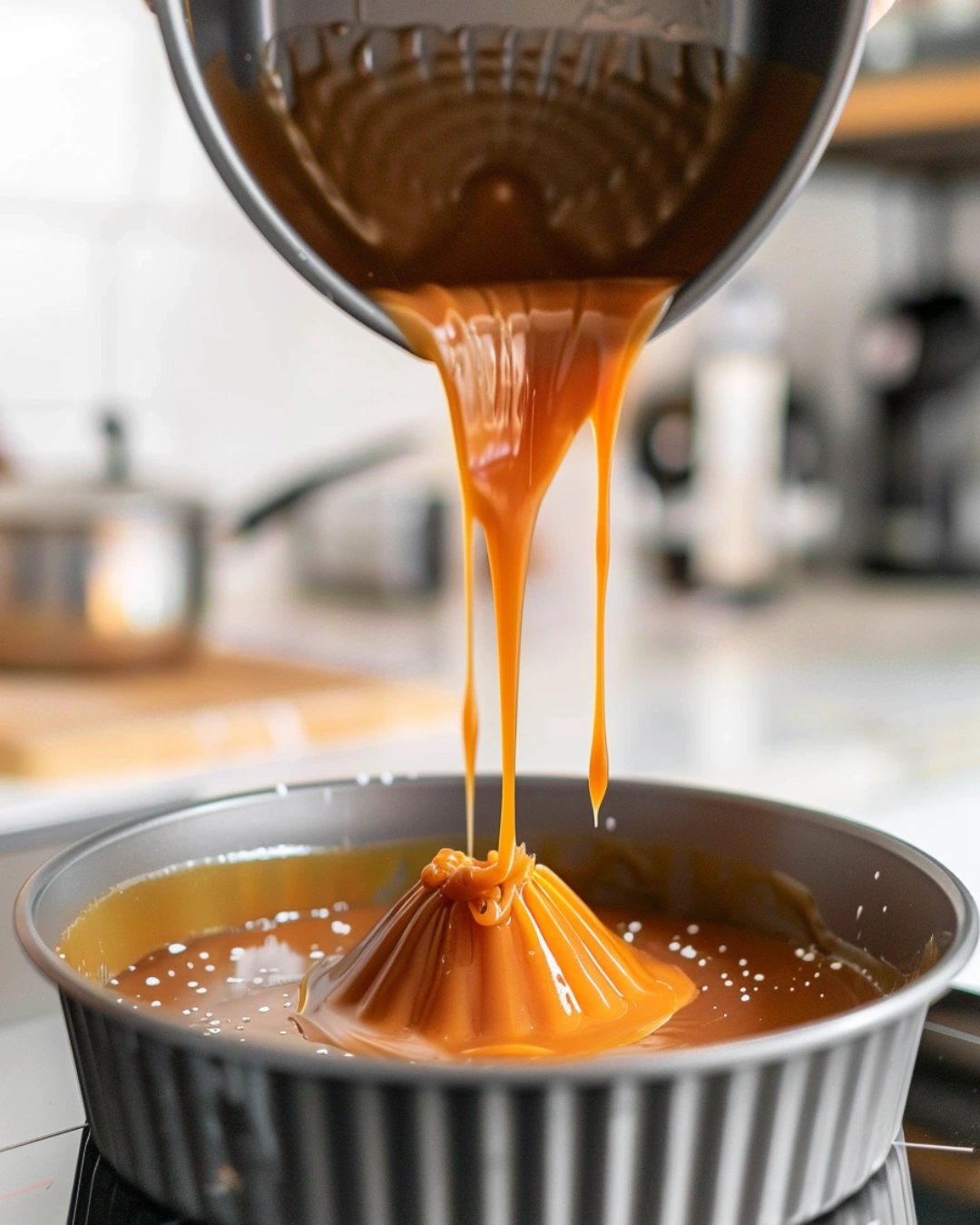
Caramel gives chocoflan both its elegance and structure. Heating sugar to 175°C creates an amber syrup that coats the bundt tin, ensuring a clean release and providing a bittersweet counterpoint to the creamy custard. It’s essential to swirl the caramel immediately after melting, hesitation causes crystallization. The thin caramel layer also insulates the flan from direct heat, protecting its smooth consistency.
Equally vital is the bain-marie, or water bath. It surrounds the tin with gentle steam, helping the custard set evenly while keeping the chocolate moist. Without it, the flan would curdle, and the cake would dry out. Professionals use preheated water and heavy roasting pans for thermal stability. A foil cover prevents surface bubbles while maintaining humidity.
The technique mirrors the moisture-retention approach I used in the Cream Pie recipe, where even baking and controlled heat create a unified, creamy texture from simple ingredient
Ingredients, Ratios, and Layer Control of Chocoflan
Balancing Each Component for Structure and Texture
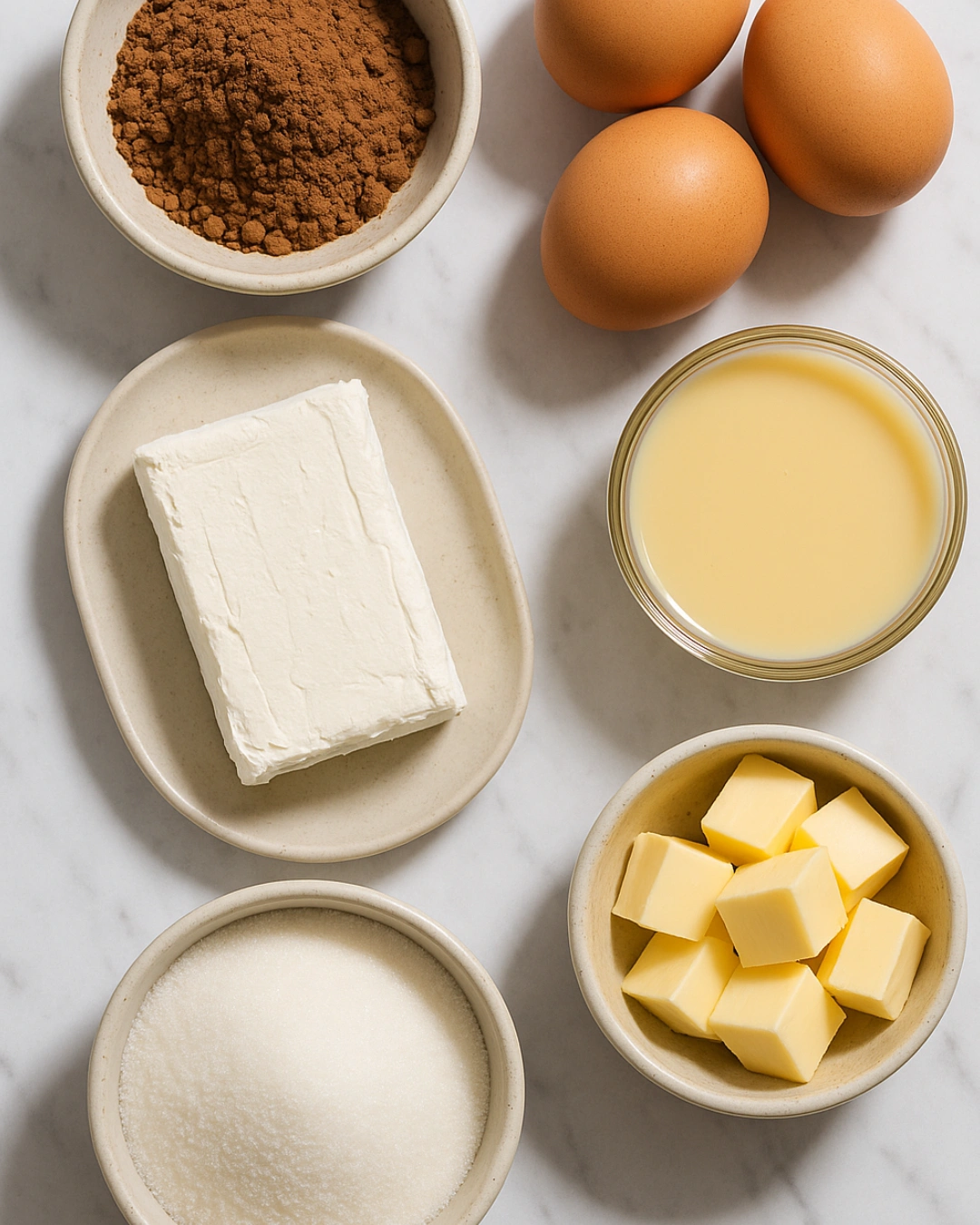
The magic of chocoflan lies in its three components: caramel, flan, and chocolate cake. Each requires balance to achieve stability. The caramel (200 g sugar) adds both sweetness and shine. For the flan, four large eggs supply protein, 120 g cream cheese gives body, and the condensed and evaporated milks balance richness and lightness. A tablespoon of vanilla and a pinch of salt fine-tune flavor.
The chocolate cake must contrast without overpowering. Cocoa and instant coffee deepen flavor, while butter and oil ensure moisture. Buttermilk adds tenderness and a mild tang that offsets sweetness. Baking soda, activated with vinegar, guarantees lift without toughness. When poured over the flan base, the batters self-separate, a perfect marriage of chemistry and craftsmanship.
For more dairy balance examples, see Mini Lemon Cheesecakes, which also depend on emulsification between proteins and fats.
Techniques for Flawless Layering and Baking
Begin by preparing the caramel, coating the pan evenly. Blend and strain the flan mixture twice to eliminate bubbles. Pour it over the cooled caramel, then slowly add the chocolate batter on top. Even if the batters mix slightly, they will invert during baking.
Bake covered for 40 minutes, allowing the flan to partially set, then uncover and bake another 50–60 minutes until a toothpick in the cake comes out clean. Cool at room temperature before refrigerating overnight. Professionals never rush this step, cooling stabilizes the structure and enhances separation. To unmold, briefly dip the pan in warm water or torch the sides.
The Gelatin Manufacturers Institute of America notes that egg-based custards set best at 80–85°C, aligning perfectly with chocoflan’s baking temperature range.
Ingredients of Chocoflan
For the Caramel:
- 200 g granulated sugar (1 cup)
For the Flan Layer:
- 4 large eggs
- 120 g cream cheese (½ cup)
- 380 g condensed milk (1 can, 14 oz)
- 360 ml evaporated milk (1½ cups)
- 1 tablespoon vanilla extract
- ¼ teaspoon salt
For the Chocolate Cake Layer:
- 50 g cocoa powder (½ cup)
- 1 teaspoon instant coffee
- 80 ml hot water (⅓ cup)
- 120 g unsalted butter (½ cup)
- 100 ml vegetable oil (⅓ cup + 1 tbsp)
- 120 g granulated sugar (½ cup)
- 120 g light brown sugar (½ cup)
- 4 large eggs
- 120 ml buttermilk (½ cup)
- 200 g plain flour (1½ cups)
- 1 teaspoon baking soda
- 2 teaspoons white vinegar
Flavor, Texture, and Professional Presentation of Chocoflan
Flavor Harmony Between Cake and Flan
A well-made chocoflan balances intensity and lightness. The chocolate layer delivers cocoa richness and a subtle coffee undertone, while the flan adds creamy sweetness and delicate vanilla aroma. The caramel connects both with its bittersweet complexity. This trio of contrasts, sweet, bitter, and creamy, is what makes chocoflan universally appealing.
Professionally, chefs may enhance the chocolate base with espresso or dark rum, or infuse the flan with citrus zest for brightness. Chilling overnight deepens flavor and improves texture as caramel seeps gently into the cake, creating a unified, luxurious mouthfeel.
If you enjoy desserts that contrast flavor and texture, try my Caramel Apple Crumble Bars for another balance of sweet and bitter notes.
Professional Plating and Finishing
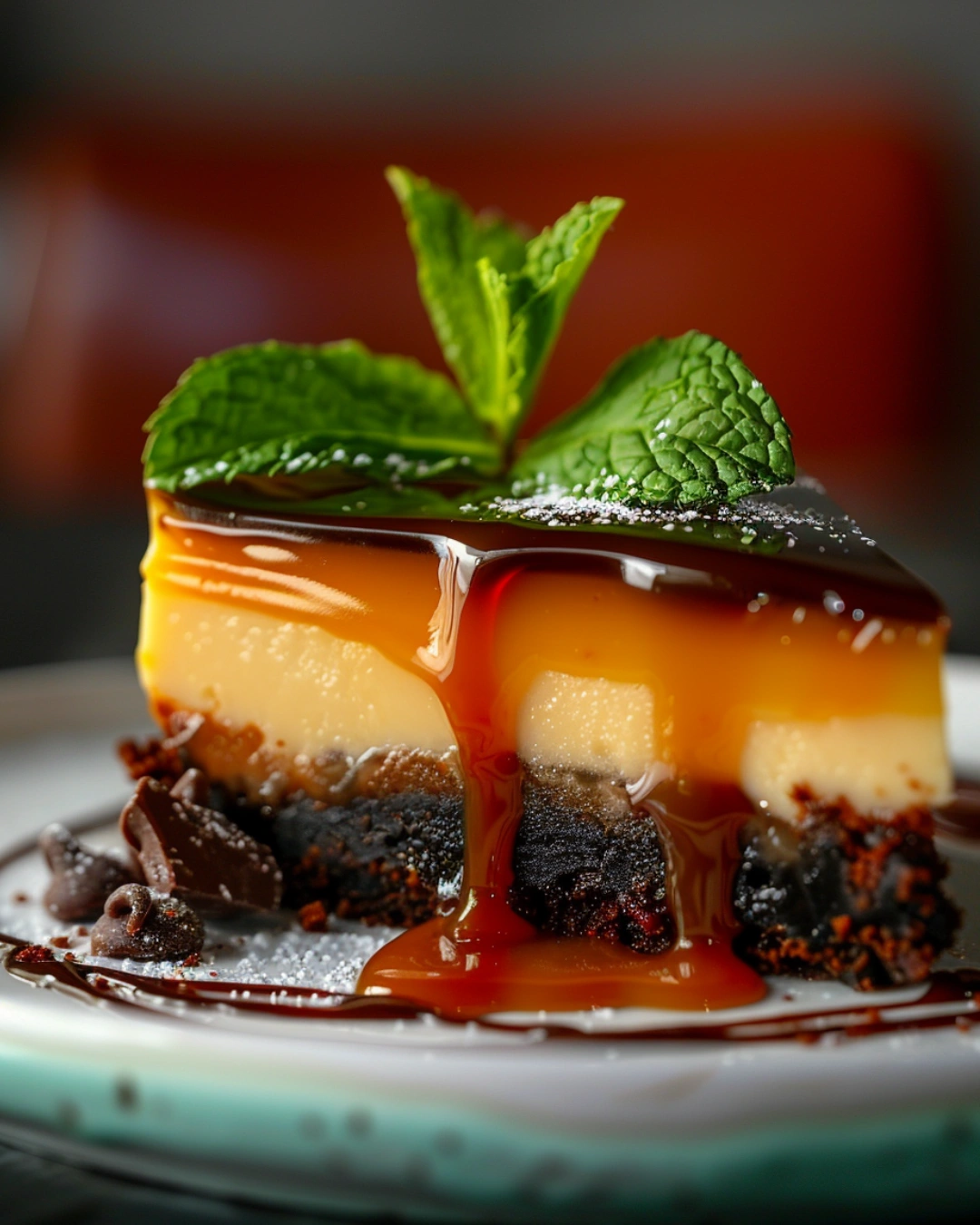
In restaurant service, chocoflan is often sliced to display its perfect layers. Serve chilled, not frozen, to preserve gloss. Minimal garnishes work best, a few berries, a mint sprig, or light whipped cream. Precision cuts and a clean plate elevate presentation.
A glossy caramel top signals correct temperature control. For a modern look, drizzle a touch of coulis or chocolate ganache beside each slice. Contrast enhances appeal and suggests technical skill.
Serving, Storage, and Troubleshooting of Chocoflan
Serving Chocoflan at Its Best
Serve chocoflan cold, around 5–7°C. This temperature keeps the flan firm and the cake moist. Before slicing, dip a knife in warm water and wipe it clean between cuts for professional edges. Avoid leaving the dessert at room temperature for more than an hour, as caramel begins to soften and weep.
When plated, a thin drizzle of caramel sauce or raspberry coulis adds a refined finish. Each serving should show defined, even layers.
For chilled dessert guidance, see Blue Chia Pudding, a similar set-style dessert that thrives on cool serving temperatures.
Storage and Common Issues
Chocoflan can be stored for up to five days, covered and refrigerated. Avoid freezing, thawing compromises the custard texture. Overbaking causes a rubbery flan, while underbaking prevents proper inversion. If your layers blend, check batter temperature; the flan should be cool before adding the cake mixture.
A successful unmolding depends on caramel consistency. Warm the pan slightly or dip it in hot water for a few seconds. You’ll hear a soft release, the sound of perfection.

Chocoflan Recipe
Ingredients
Equipment
Method
- Preheat oven to 180°C. Grease a 9-inch bundt pan.
- Melt sugar in a pan until amber. Pour into bundt tin and set aside.
- Blend flan ingredients until smooth. Strain twice for silkiness.
- Pour flan over caramel.
- Cover pan with foil and bake in a water bath for 40 minutes.
- Prepare chocolate batter while flan bakes.
- Mix cocoa, coffee, and water. Add butter, oil, and sugars. Beat until smooth.
- Add eggs, buttermilk, and flour. Stir until combined.
- Add baking soda mixed with vinegar. Stir briefly.
- Pour batter over flan. Bake uncovered for 50–60 minutes.
- Cool completely, then chill overnight.
- Unmold by warming tin briefly. Slice and serve cold.
Nutrition
Notes
Strain flan mixture to remove air bubbles.
Cool completely before chilling overnight.
Unmold when cold for a clean release.
From your stove to our hearts
share your delicious take!FAQs About Chocoflan
What is chocoflan made of?
Chocoflan combines three layers — caramel, vanilla flan, and chocolate cake. The flan layer uses eggs, cream cheese, and two kinds of milk for richness. The cake layer features cocoa, buttermilk, and coffee for depth, while the caramel provides a glossy, bittersweet finish.
Why is chocoflan called the Impossible Cake?
It’s called “impossible” because the batters invert themselves during baking. The denser flan sinks beneath the chocolate layer, creating perfect separation without manual layering — a natural inversion that feels like magic.
What is the difference between flan and chocoflan?
Flan is a classic custard dessert with caramelized sugar, while chocoflan adds a chocolate cake layer. The result is a two-textured dessert with more flavor contrast and visual appeal.
What makes a chocoflan so unique?
Its dual identity, soft cake and silky flan, makes chocoflan distinct. The caramel ties both together, giving it an elegant finish. Its self-separating structure also highlights baking chemistry and precision.
Conclusion: Chocoflan Recipe
Chocoflan represents everything refined pastry should be: a balance between technique, flavor, and presentation. Its seemingly “impossible” transformation is pure culinary science, a beautiful demonstration of density, heat, and patience. Each slice reveals the baker’s skill, from the flawless caramel sheen to the clean division between flan and cake.
In professional kitchens, chocoflan is admired for its reliability and versatility. It can be adapted with espresso, citrus, or dark chocolate, yet its foundation remains timeless. When made with care, this Chocoflan stands as a symbol of craftsmanship, one that rewards attention to detail and celebrates the intersection of art and chemistry in baking.
As La Cucina Italiana describes, traditional custard-based desserts like chocoflan endure because they merge technique and emotion, turning simple ingredients into extraordinary results.
