

There’s something deeply comforting about baking your own bread, especially when it’s this Focaccia Bread , a loaf that transforms simple ingredients into something truly special. The aroma of olive oil, the soft give of dough beneath your hands, and the gentle crackle of a golden crust as it cools every part of the process feels grounding and calm. Focaccia doesn’t ask for speed; it invites you to slow down, be present, and enjoy the moment.
This Focaccia Bread captures that same quiet joy with an easy, dependable method that creates bread so light it almost melts in your mouth. Whether topped with rosemary, sea salt, or caramelized onions, each slice turns an ordinary day into a small, delicious celebration. In this post, we’ll explore its history, what makes it unique, and how you can bake your own perfectly golden focaccia right at home.
The Story & Inspiration Behind the Focaccia Bread
From Family Kitchens to Italian Shores
My love for this Focaccia Bread Recipe began long before I even knew what focaccia was. As a kid, weekends in our kitchen were filled with the scent of warm yeast and the slow, steady rhythm of kneading. My mother would hum softly as she worked the dough, her hands moving with the quiet confidence that only years of baking can bring. She always said that good bread needed two things time and care.
Even though we weren’t from Italy, our home carried that same respect for simple food made with love. Years later, while wandering through a small village near Liguria, I tasted focaccia that changed the way I understood bread. Its olive oil shimmered in the sunlight, the edges were crisp yet soft within, and every bite spoke of salt, patience, and the beauty of waiting.
The first few times weren’t perfect too dense, too rushed, much like my early attempts at Banana Walnut Bread. But like all good things, this Focaccia Bread taught me patience and the rhythm of slow baking
A Recipe Rooted in Memory and Mindfulness
When I came home, I couldn’t stop thinking about that bread. So I began experimenting measuring, mixing, and letting the dough rest, until I slowly found my own way. The first few tries weren’t great: too dense, too dry, too rushed. But like most things in life, focaccia has a way of teaching you patience.
The dough showed me how to slow down and trust the process, how to find a kind of peace in waiting. With every rise, I learned something new, how olive oil gives the bread its tender crumb, how stretching instead of kneading keeps the texture light and airy, and how a sprinkle of sea salt adds that final, essential touch.
Now, every time I bake this Focaccia Bread , I’m reminded of my mother’s kitchen and that sunlit bakery by the sea, two very different places, both bound by the same truth. Good bread doesn’t need to be perfect; it just needs your time, your hands, and a little love.
Ingredients & Secrets to Soft, Airy Focaccia
The Heart of Every Focaccia: Simple Ingredients, Big Flavor
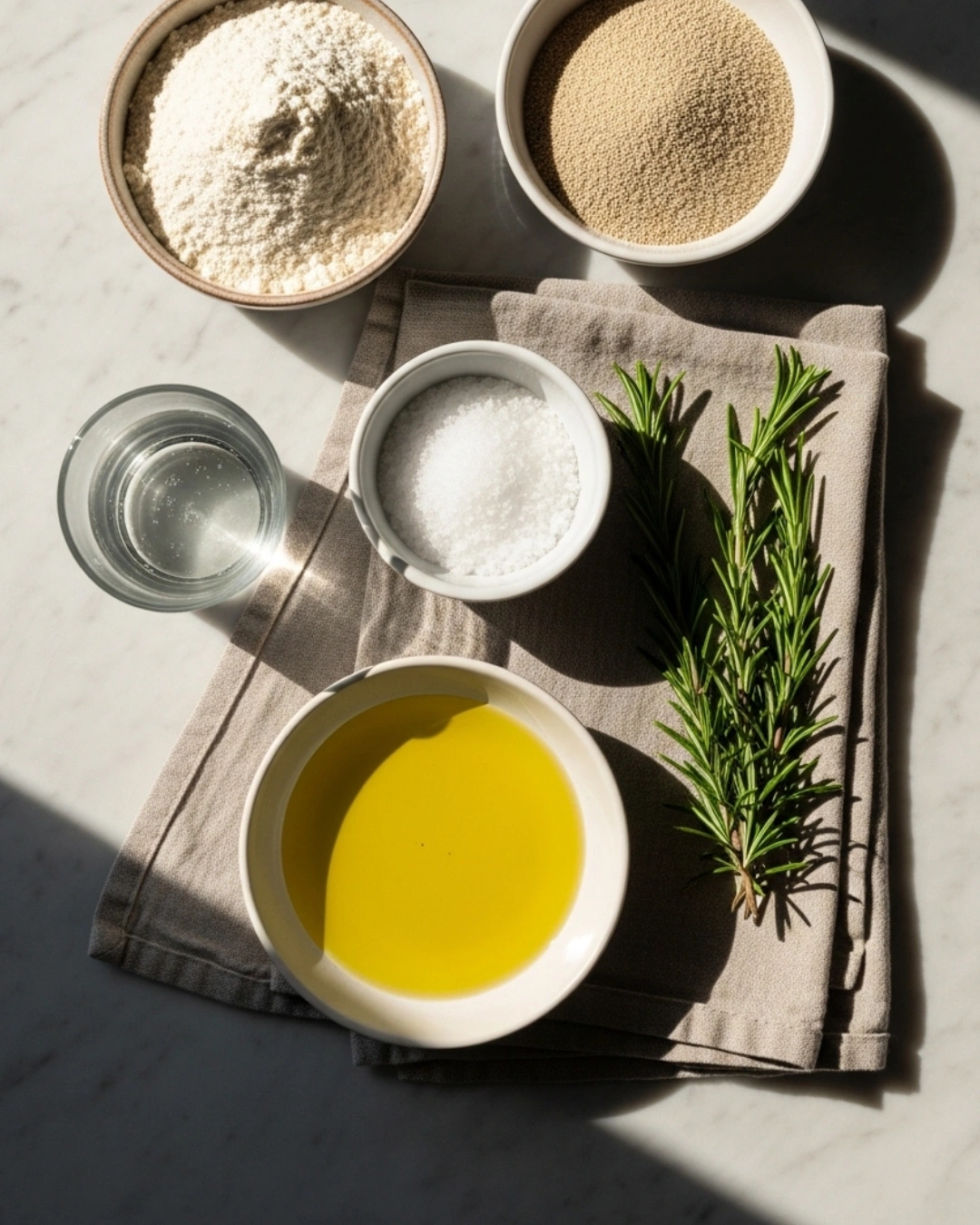
The beauty of this Focaccia Bread lies in its simplicity. Each ingredient plays a quiet but essential role, creating layers of texture and taste that make focaccia so irresistible. The flour provides structure, yeast brings life, olive oil adds depth, and salt balances everything with flavor. Together, they create a loaf that’s soft inside, crisp on top, and endlessly fragrant.
Below is a clear breakdown of what you’ll need for one golden pan of homemade focaccia:
| Ingredient | Quantity | Purpose |
|---|---|---|
| All-purpose or bread flour | 4 cups (512 g) | Gives body and chew |
| Kosher salt | 2–3 tsp | Balances flavor and strengthens dough |
| Instant yeast | 2 tsp (8 g) | Creates rise and airy texture |
| Lukewarm water | 2 cups (455 g) | Hydrates and activates yeast |
| Olive oil | 4 tbsp, divided | Adds flavor and helps browning |
| Flaky sea salt | To taste | For the classic crisp topping |
| Fresh rosemary (optional) | 1–2 tsp | Adds aroma and Mediterranean charm |
If you’re curious about how flour type and hydration ratios influence texture, the King Arthur Baking Company’s Focaccia Guide offers wonderful insight into balancing water and flour for that perfect chewy crumb. Their approach aligns beautifully with this recipe’s gentle hydration method, enough to make the dough springy yet light.
The Little Secrets Behind Perfect Focaccia
What makes a great Focaccia Bread isn’t just the ingredients, it’s how you treat them. Start with lukewarm water to awaken your yeast gently. After mixing, give the dough time to rest; this slow fermentation is what builds its signature airy structure. When stretching and folding, use wet hands to avoid sticking and remember, gentle movements are key. Coat the dough generously in olive oil before refrigerating overnight; it prevents dryness and creates that deep golden sheen as it bakes.
Before baking, press your fingertips into the dough to form dimples, they’re not just pretty, they help the oil and salt settle beautifully on top. Sprinkle with flaky sea salt or rosemary for aroma, then bake until the crust turns crisp and amber. When you pull it from the oven, you’ll understand why focaccia is often called the soul of Italian bread. It’s humble, honest, and endlessly satisfying.
Step-by-Step Baking & Texture Tips For Focaccia Bread
From Sticky Dough to Silky Perfection
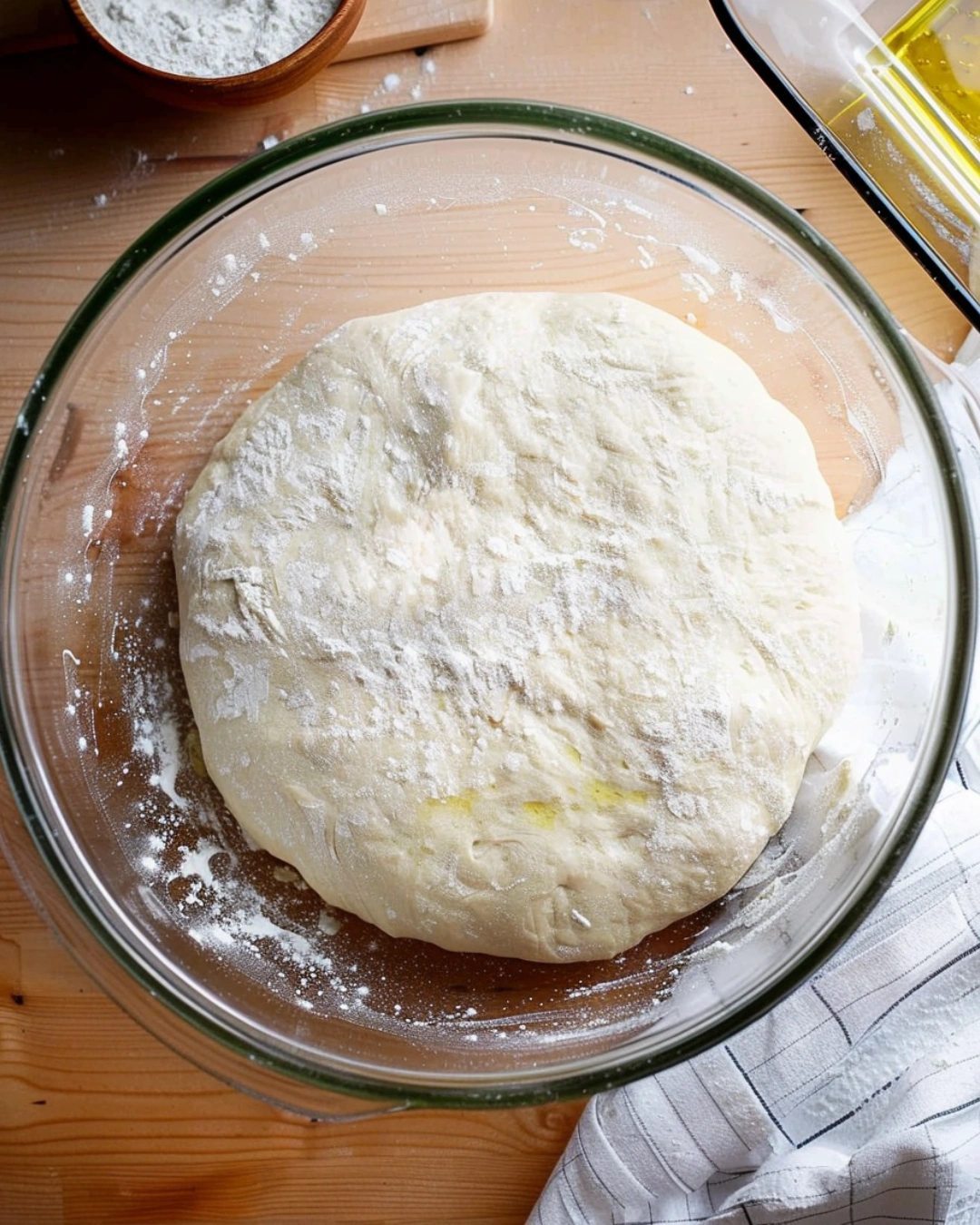
This Focaccia Bread is less about precision and more about touch. Once your ingredients come together, the dough should feel sticky, that’s a good sign. Cover it and let it rest for 30 minutes to allow the gluten to begin forming naturally. During this first rest, the dough relaxes, and you can almost feel it breathe.
After resting, wet your hands and perform a series of gentle stretch and folds. Instead of kneading, lift one side of the dough and fold it over itself, rotating the bowl with each fold. This strengthens the structure without deflating the air bubbles that give focaccia its soft, open crumb. Repeat 8–10 times. You’ll notice the texture shift from rough to supple, a transformation that signals your dough is alive and ready.
When your dough feels smooth, rub it lightly with olive oil, cover it, and refrigerate for 12 to 24 hours. This slow proofing deepens the flavor, giving your Focaccia Bread a subtle tang and that signature chew.
Baking for That Golden, Crackly Crust
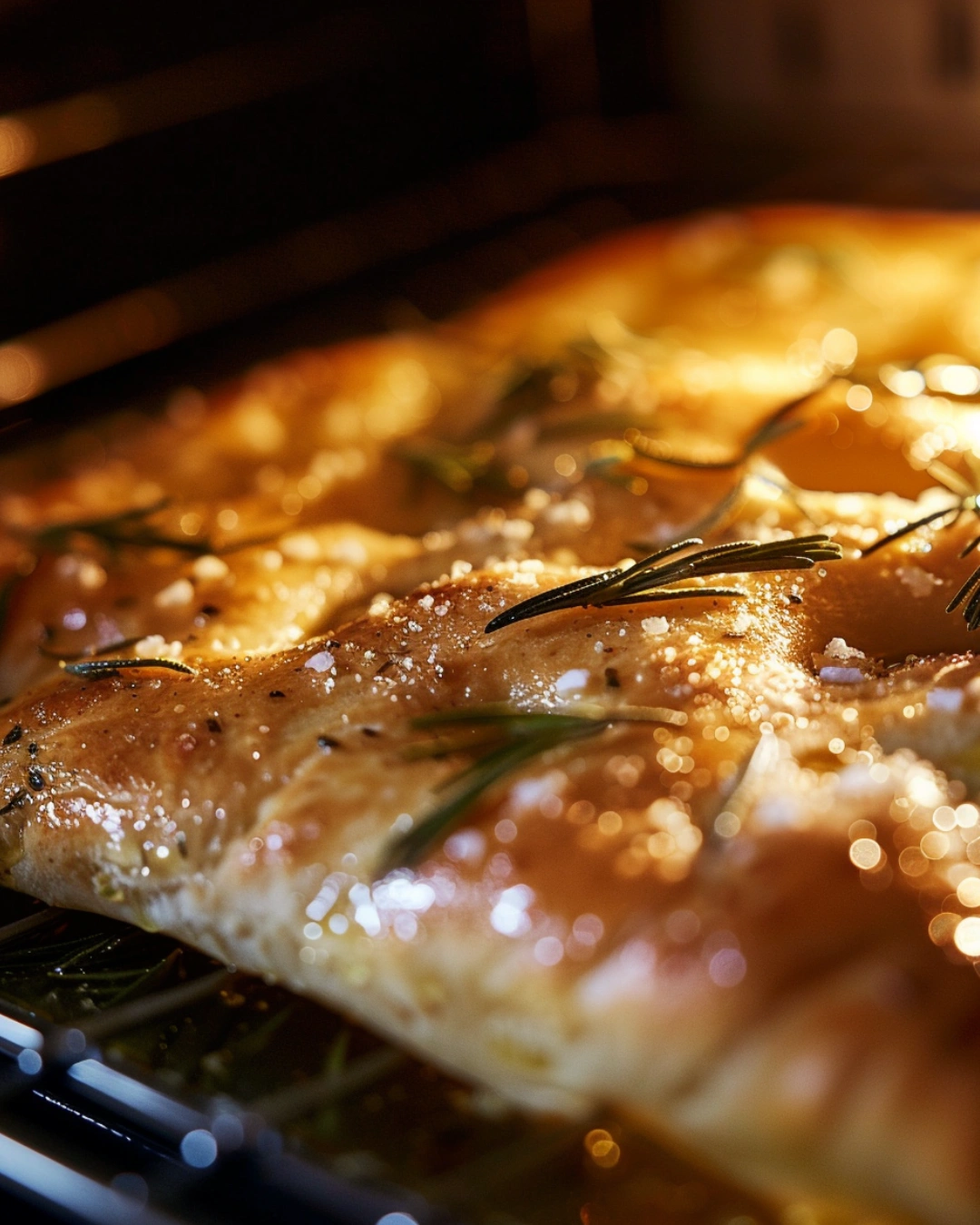
When you’re ready to bake, line your pan with parchment or butter it generously. Drizzle olive oil into the center, then place your dough on top, turning it once to coat every side. Let it rise at room temperature for 3–4 hours, uncovered. You’ll know it’s ready when the dough looks puffed and dimpled with bubbles.
Preheat your oven to 425°F. Using your fingertips, press straight down to make dimples across the surface — these hold the olive oil and flaky sea salt beautifully. Add rosemary if desired, and drizzle once more with oil. Bake for 25–30 minutes, until the underside is golden and crisp. The smell at this point, buttery, salty, herbal, is pure warmth.
Remove from the pan and let cool on a rack for at least 10 minutes before slicing. If you plan to use it for sandwiches, let it cool completely. Reheat leftovers at 350°F to revive the crust’s crunch.
If you love the soft crumb and golden crust of this focaccia, you’ll also enjoy my Honey Butter Pull-Apart Rolls — another bake that fills your kitchen with that same warm, buttery scent.
Serving, Storage For Focaccia Bread
The Joy of Serving Homemade Focaccia
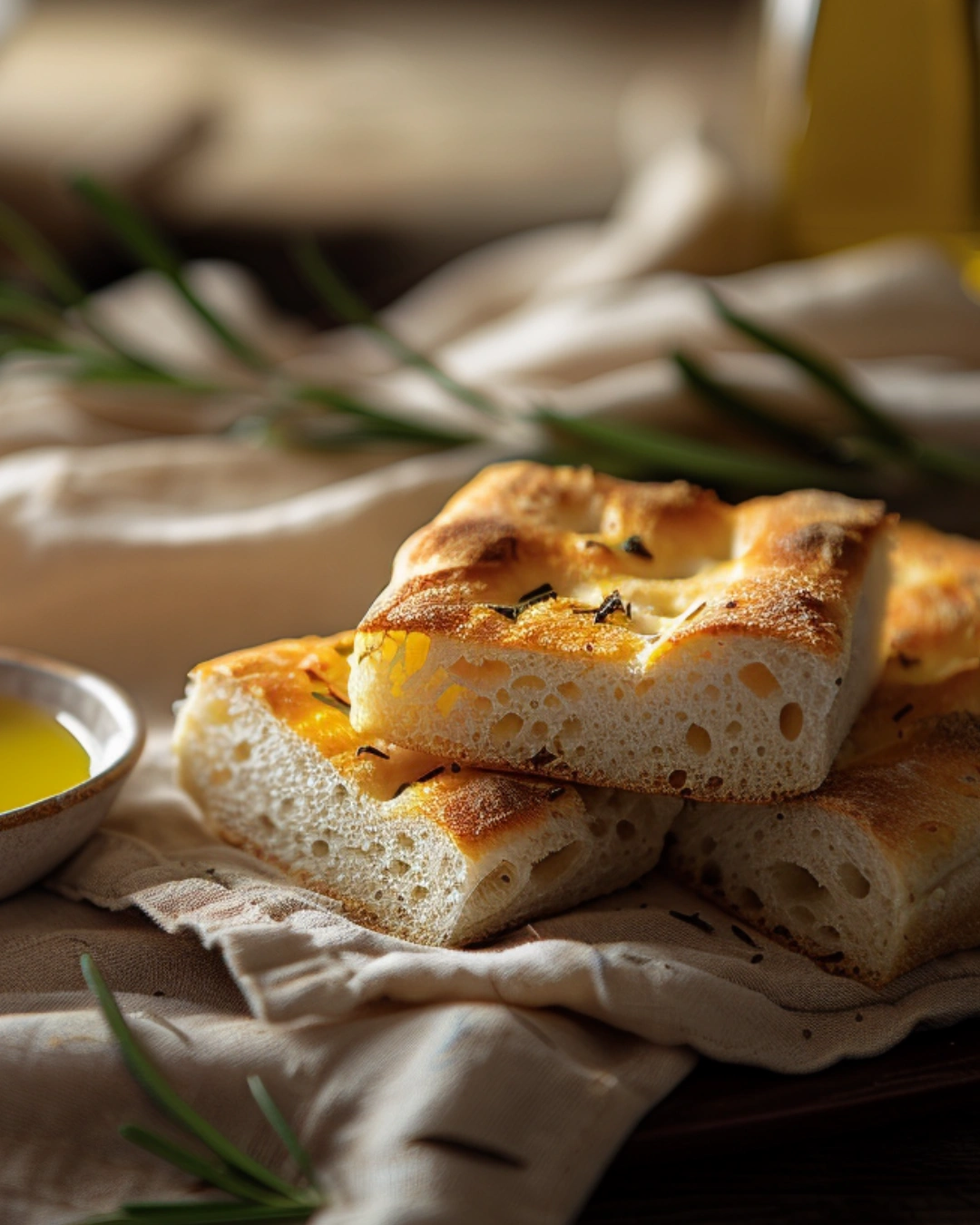
There’s something special about the first slice of freshly baked focaccia, the way the crust cracks softly beneath your knife, revealing a golden, airy interior. Serve this Focaccia Bread slightly warm, drizzled with a little extra olive oil or dipped into a small dish of balsamic vinegar. It’s wonderful alongside soups, salads, or even as the base for rustic sandwiches. I often pair it with roasted tomato soup or a soft cheese spread, where the bread soaks up every bit of flavor.
For gatherings, slice it into squares and serve it as an appetizer with marinated olives and a sprinkle of fresh herbs. The bread holds up beautifully for hours, remaining soft and fragrant even after cooling.
Serve this Focaccia Bread warm with soup or end your meal with something sweet, like my Cinnamon Apple Crisp Skillet for the ultimate cozy evening.
How to Store and Revive Focaccia Bread
After cooling completely, store your focaccia in an airtight bag or container at room temperature for up to three days. If you’d like to keep Focaccia Bread longer, freeze it for up to three months. When you’re ready to enjoy it again, reheat in the oven at 350°F for about 15 minutes. This simple step brings back that crisp, golden crust as if it just left the oven.
If you’re using leftover focaccia, try slicing it horizontally for sandwiches, it makes a delicious base for grilled vegetables, fresh mozzarella, or even breakfast eggs.


Focaccia Bread Recipe
Ingredients
Equipment
Method
- In a large bowl, mix flour, salt, and yeast. Add lukewarm water and stir to form a sticky dough. Cover and let rest 30 minutes.
- With wet hands, perform stretch and folds by lifting and folding the dough over itself, rotating the bowl. Repeat 8–10 times until supple.
- Rub top with olive oil, cover the bowl, and refrigerate 12–24 hours for slow fermentation.
- Generously oil a 9×13-inch pan or line with parchment. Place dough in pan and turn to coat. Let rise uncovered at room temp for 3–4 hours.
- Preheat oven to 425°F. Dimple the dough using your fingertips. Sprinkle flaky sea salt and rosemary, then drizzle with olive oil.
- Bake for 25–30 minutes until golden brown with a crisp underside. Let cool at least 10 minutes before slicing.
Nutrition
Notes
From your stove to our hearts
share your delicious take!FAQs About Focaccia Bread
What makes focaccia different than bread?
Unlike standard loaves, focaccia uses more olive oil, giving it a rich, moist texture and crisp crust. It’s also dimpled before baking, allowing oil and salt to collect and create its signature flavor.
What is the secret to good focaccia?
Time and olive oil. Long fermentation and generous oiling produce that airy crumb and golden finish. Using quality extra-virgin olive oil is key.
Is focaccia healthier than regular bread?
Focaccia tends to include more olive oil than standard loaves, which gives it its signature richness. But when made with high-quality extra-virgin olive oil, it can actually be a nourishing choice.
According to the Harvard T.H. Chan School of Public Health, olive oil is rich in monounsaturated fats and antioxidants that support heart health and help reduce inflammation. So while focaccia is indulgent, it also offers the goodness of real, wholesome fat, making it both comforting and beneficial in moderation.
What are the two types of focaccia?
Focaccia Genovese is the classic Italian version, fluffy, oily, and golden, while focaccia Barese includes mashed potato in the dough for a softer, chewier texture. Both are delicious variations of this simple bread.
Conclusion
Making this Focaccia Bread is a quiet kind of joy, the kind that fills your kitchen with warmth and your day with calm. From the first stretch of dough to the golden crust that emerges from the oven, each step reminds you that simple ingredients can create something truly special.
The olive oil, the air pockets, the sea salt, they come together in a loaf that’s both rustic and elegant. I hope this Focaccia Bread becomes one of those you return to often, the one you bake on slow weekends or when you want your home to smell like comfort. Because focaccia isn’t just bread, it’s a pause, a moment to breathe, and a reminder that the sweetest parts of life often come from the simplest things, made by hand, and shared with love.
